How To Defend The Side Kick
0
Side Kick·Gabriel Varga
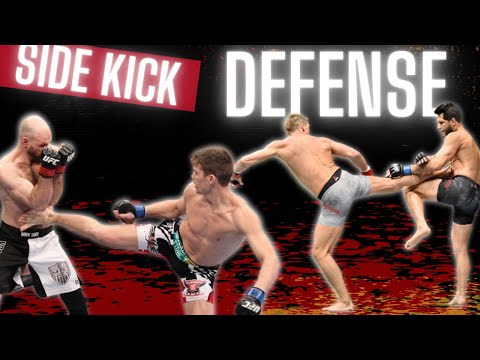
We are talking about defending body side kicks, leg & head level side kicks AND spinning side kicks. There's loads of i…
Translation: side kick
The Side Kick family groups kicking techniques delivered laterally, where the kicker turns the hip over and thrusts the foot (heel or blade) sideways into the target in a linear trajectory perpendicular to the body's frontal plane. [1] The side kick is one of the most powerful linear kicks in martial arts, as it uses the full extension of the leg in combination with hip thrust to drive the heel into the opponent's midsection, ribcage, or knee with penetrating force. [1],[2] Side kicks are classified by their execution speed and intent: snapping side kicks prioritise speed and retraction, while thrusting side kicks emphasise power and follow-through. [2],[3] The technique is fundamental to karate (yoko geri), taekwondo (yeop chagi), and plays an important role in MMA as a range-management and counter-attacking tool. [3]
The side kick has ancient roots in Asian martial arts, appearing in Chinese kung fu, Okinawan karate, and Korean taekwondo as a fundamental technique. [1] In karate, yoko geri (side kick) was classified by Gichin Funakoshi into keage (snapping) and kekomi (thrusting) variants, paralleling the front kick classification. [1],[2] The side kick became iconic in Western popular culture through Bruce Lee, who made it a signature technique in his films and Jeet Kune Do methodology, emphasising the lead-leg side kick as a primary weapon. [2],[3]
The side kick is a fundamental technique in TKD, karate, and was famously used by Bruce Lee. [1]
Used in TKD, karate, and MMA competition. [1]
No images yet for this technique.
Sign in to suggest an image.
We are talking about defending body side kicks, leg & head level side kicks AND spinning side kicks. There's loads of i…
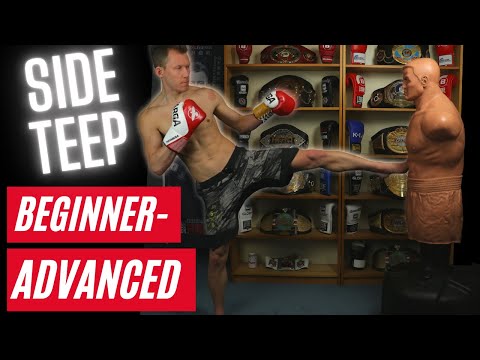
This is a fiercely under utilized kick in North America. It has range and surprise like no other kick. In this episod…
No instructional courses yet for this technique.
Sign in to suggest a course.
Risk of injury to the person this technique is applied to
Linear thrust kick; generates highest force among basic kicks
Skill level needed to execute this technique reliably
Whether this technique is allowed under major competition rule sets
Muay Thai: The Art of Fighting (Yod Ruerngsa, Khun Kao Charuad & James Cartmell, 2002)
Alias sources — [1] Dynamic Karate (Nakayama, 1966) [2] Kukkiwon Textbook (2006)
Effectiveness sources — [1] Comprehensive Asian Fighting Arts (Draeger & Smith, 1969) [2] Muay Thai Unleashed (Delp, 2006)
Official karate technique names (和語/漢語)
Established Japanese martial arts naming convention — native Japanese term (和語/漢語)
Alias sources — [1] Dynamic Karate (Nakayama, 1966) [2] Kukkiwon Textbook (2006)
Effectiveness sources — [1] Comprehensive Asian Fighting Arts (Draeger & Smith, 1969) [2] Muay Thai Unleashed (Delp, 2006)
hip abduction power, lateral hip flexibility, single-leg balance
flexible hips for high side kicks
gluteus medius, hip abductors, quadriceps, core
Every move, in any martial art, shares a few universal traits. Mix and match below to pinpoint the right tool — or compare equivalents across styles.
The Back Side Kick is a side kick delivered toward the rear, targeting an opponent who has moved behind or to the side of the practitioner. [1] Without fully turning to face the opponent, the kicker chambers and extends the side kick backward, using peripheral vision or feeling to guide the strike. [1] This technique is particularly effective in multiple-attacker scenarios or when an opponent has circled to the flank. [1]
The Bent-Body Side Kick uses an exaggerated lateral body lean away from the target, bending at the waist toward the ground on the non-kicking side, to extend the effective reach of the side kick by approximately 12-18 inches beyond the standard version. [1] In a standard side kick (yoko geri kekomi), the torso remains relatively upright, and the kicking range is determined by the length of the leg plus the hip's lateral displacement. [1] The Bent-Body variant dramatically increases this range by tilting the entire torso away from the kick — as the body leans toward the floor on the non-kicking side, the kicking hip rises correspondingly, allowing the foot to travel further toward the target. [1] The trade-off is explicit: the extreme lean sacrifices balance (the centre of gravity shifts far from the base of support) in exchange for reach that can surprise opponents who believe they are standing safely beyond kicking distance. [1] De Bremaeker and Faige document the Bent-Body Side Kick as particularly useful against taller opponents or when the opponent is retreating and has created more distance than a standard side kick can cover. [1] The technique appears in competition karate, taekwondo, and kickboxing, where fighters use the extended reach to score points or deliver damage from ranges that the opponent considers safe. [1] Bill 'Superfoot' Wallace, the undefeated middleweight kickboxing champion famous for his side kick, frequently used the bent-body lean to extend his already formidable side kick range — opponents who thought they were out of range were caught by the extra 12-18 inches the lean provided. [2] The critical skill is knowing when the extra reach is worth the balance sacrifice: the Bent-Body Side Kick should be used as a single explosive action, not as a sustained position, because the extreme lean leaves the kicker unable to follow up, block, or evade until they recover their upright posture. [1]
The Double Side Kick is an advanced technique where the fighter delivers two side kicks in rapid succession or simultaneously to different heights or directions. [1] In Taekwon-Do, the first kick typically targets low (knee or thigh) while the second targets mid or high (ribs or head). [1] In Wing Chun, a variation involves simultaneous double kicks to both sides. [2] The technique requires exceptional balance and hip flexibility, as the fighter must chamber, extend, retract, and re-chamber rapidly while maintaining structural integrity on one leg. [1]
The Drop Side Kick is a sacrifice technique where the practitioner intentionally drops their body toward the ground while simultaneously thrusting a side kick at a low or mid-level target, creating an unexpected attack angle from below the opponent's visual field. [1] The combination of the side kick's powerful linear thrust with the dropping body's angular change produces a kick that arrives from a direction standing opponents are not conditioned to defend — most defensive frameworks are calibrated for kicks coming from an upright position, not from a body that is descending toward the floor. [1] The mechanics merge the standard side kick's hip abduction and heel thrust with the Drop Front Kick's controlled descent: as the body begins its controlled fall (typically dropping the non-kicking side toward the floor), the kicking leg chambers and thrusts laterally into the target, powered by the same hip mechanics as a standing side kick but angled upward due to the body's lowered position. [1] The technique is classified alongside other drop kicks (drop front kick, drop roundhouse kick, drop back kick) as a family of sacrifice techniques where the practitioner deliberately abandons standing balance in exchange for surprise and angular advantage. [1] De Bremaeker and Faige document the Drop Side Kick as the side kick variant within this sacrifice kick family, noting its appearance in capoeira (where ground-level kicks are a core element of the art), kung fu (particularly Southern Chinese ground-transition styles), and in the modern MMA context where ground-level kicks (up-kicks) from guard have proven effective at the highest competition levels. [1] The Drop Side Kick is the most powerful of the drop kick variants because the side kick's linear thrusting mechanism generates more penetrating force than the circular trajectory of a drop roundhouse or the upward arc of a drop front kick — the heel drives straight into the target with the full structural support of the aligned leg. [1]
The Front Chamber Side Kick is chambered with the knee pointing forward rather than to the side, disguising it as a potential front kick until the hip rotates and the foot drives out sideways. [1] This deception is effective because the front-facing chamber looks identical to a front kick setup, causing the opponent to defend the wrong angle. [1] The hip rotation happens explosively at the last moment, converting the apparent front kick into a powerful side kick. [1]
The Front Leg Side Kick is a side kick delivered with the lead leg by sliding the rear foot forward to close distance before executing the kick. [1] As with the front leg front kick, the rear foot slides forward without upper body movement to avoid telegraphing, then the formerly front leg chambers laterally and extends as a side kick. [1] This technique provides faster delivery than the rear-leg version at the cost of some power, and is effective as a defensive stop-kick or range-management tool. [1]
The Hand-on-the-Floor Side Kick is delivered with one hand touching the ground for support, maximising reach and enabling kicks from unusually low or extended positions. [1] By using the hand as an additional support point, the practitioner can extend the kicking range significantly while maintaining balance. [1] This technique appears in various martial arts including capoeira and certain karate styles that incorporate ground-level transitions. [1]
The Kneeling-Up Side Kick is a side kick delivered while rising from a kneeling or ground position, often as a surprise counter-attack. [1] As the practitioner rises, they use the upward momentum to power the side kick, turning a vulnerable ground position into an offensive opportunity. [1] This technique is particularly valuable in situations where the practitioner has been knocked down or has gone to ground deliberately. [1]
The Oblique Back Side Kick is delivered diagonally backward at approximately 45 degrees, combining the mechanics of a back kick with the thrusting trajectory of a side kick. [1] This angle is optimal for reaching opponents who have moved to the practitioner's rear quarter, a position too far back for a standard side kick but not directly behind for a back kick. [1] The oblique angle provides both reach and power while maintaining reasonable balance. [1]
The Penetrating Side Kick is the foundational side kick that drives through the target using the heel or blade of the foot, traveling in a straight line parallel to the floor. [1] Unlike the snapping side kick which retracts quickly, the penetrating version pushes through the opponent's body with full hip extension, generating maximum force. [1] The kick chambers with the knee raised to the side, then the hip rotates and the leg extends laterally with the foot blade or heel as the striking surface. [1] This is the most powerful variation of the side kick and the one most commonly trained as the base technique across multiple martial arts. [1]
The Snapping Side Kick subfamily covers side kicks executed with a fast, snapping motion that prioritises speed and retraction over penetrating force. [1] The snapping side kick chambers by lifting the knee, extends the foot laterally to strike the target, and immediately retracts the leg back to the chambered position, minimising exposure time. [1,2] This variation is useful for scoring in point-based competition, testing distance, and setting up follow-up techniques without committing fully to the kick. [2,3]
The Spin-Back Side Kick combines a full 180-degree spin with a thrusting side kick, generating tremendous rotational power that makes it one of the most powerful kicks in any martial art. [1] The practitioner pivots on the front foot, spinning the rear shoulder forward until the back is momentarily facing the opponent, then chambers and thrusts the side kick at the moment the hips are squared to the target — the entire body's rotational momentum funnels through the hip and into the heel, producing impact forces significantly greater than a standard standing side kick. [1,2] The spin is initiated by turning the lead foot inward (pivoting on the ball) while the rear shoulder drives forward and the head turns to locate the target over the shoulder — this head turn is critical because it provides visual tracking of the target during the spin, without which the kick arrives blind. [1] De Bremaeker and Faige document the Spin-Back Side Kick as one of the most powerful techniques in their 89-kick compilation, noting that it combines the linear thrust of the side kick with the rotational acceleration of a spinning technique — a combination that produces forces measured at up to 1,500 pounds of impact in laboratory testing of elite taekwondo practitioners. [1,3] In taekwondo, where it is called dwi yop chagi, the Spinning Side Kick is one of the signature power techniques of the art and has produced numerous spectacular knockouts in both WT (Olympic) and ITF competition. [3] The technique is a staple of MMA striking: fighters such as Bas Rutten, Mirko 'Cro Cop' Filipovic, and Robert Whittaker have used the spinning side kick to devastating effect in UFC and PRIDE competition. [4] The kick's primary limitation is the momentary blind spot during the spin (approximately 0.1-0.2 seconds where the back is to the opponent), which an experienced counter-fighter can exploit. [1]
The Thrusting Side Kick subfamily covers side kicks executed with a powerful forward thrust that drives through the target, emphasising penetrating force over speed and retraction. [1] The thrusting side kick extends the leg fully and pushes the hip through the target, sending the opponent backward with substantial force, making it effective for stopping forward charges and creating distance. [1,2] This variation generates more impact force than the snapping variant but takes longer to execute and leaves the kicker more committed to the technique. [2,3]
The Universal Chamber Side Kick is initiated from a neutral chambered position that can transition into a front, side, or roundhouse kick, disguising the kicker's true intent until the last moment. [1] The knee is raised to a mid-height chamber with the foot tucked — a position common to multiple kick types — before committing to the side kick trajectory. [1] This makes it an excellent feinting tool, as the opponent cannot determine the kick type during the chamber phase. [1]
The Upward Side Kick is a side kick variation that travels in an upward arc rather than a straight horizontal line, snapping upward toward the target and retracting quickly. [1] While the penetrating side kick drives through the opponent, the upward side kick lifts into the target from below — striking the chin, ribs, or armpit with a rising trajectory. [1] The striking surface is typically the edge or blade of the foot. This kick is faster than the penetrating version but generates less forward force, trading power for speed and the ability to attack targets that are difficult to reach with horizontal kicks. [1]
Yoko Keage is the rising/snapping side kick in karate — the leg swings upward laterally in a snapping arc, striking with the edge of the foot (sokuto) and retracting quickly. [1] Unlike the thrusting side kick (yoko kekomi) which drives through the target horizontally, keage rises upward into the target from below. [1] It is one of the two fundamental side kick forms in traditional karate (keage/snap and kekomi/thrust). [1]
Bruce Lee considered the side kick the single most effective kick and featured it prominently in Jeet Kune Do. The side kick generates the most linear force of any kick due to the hip extension and body weight alignment behind the heel. (Lee, Tao of Jeet Kune Do; De Bremaeker & Faige, Essential Book of Martial Arts Kicks)
Gabriel Varga recommends two main options: first, hollow out your hips and back up while keeping your lead leg bent to avoid hyperextension; second, lift your leg straight up the middle (not at a 45-degree angle) to block it, being careful not to lift too high or your shin will buckle. You can also scoop the leg out to the side with your hand and counter with a low kick.
When you see the spinning movement coming, move away from the power source (opposite to the direction of the spin) and slightly in, getting your hip to your opponent's glute to exit the threat zone completely. Keep your hands up in case it's a spinning back fist or hook kick instead.
Gabriel Varga emphasizes catching and sweeping the kicking leg—catch it, pull it off to the side, step in, get your hand in their face, and sweep them onto their back. If you scoop the kick instead, follow up immediately with a low kick counter to discourage them from throwing the side kick again.
A Thai side kick uses the ball of the foot (with toes pulled back) instead of the heel, and involves a full hip pivot on a 45-degree angle rather than straight across. The shoulders also play a bigger role—they must rotate forward with the hips rather than staying square as they do in a front kick.
The Side Kick family groups kicking techniques delivered laterally, where the kicker turns the hip over and thrusts the foot (heel or blade) sideways into the target in a linear trajectory perpendicular to the body's frontal plane. The side kick is one of the most powerful linear kicks in martial arts, as it uses the full extension of the leg in combination with hip thrust to drive the heel into the opponent's midsection, ribcage, or knee with penetrating force.
The side kick has ancient roots in Asian martial arts, appearing in Chinese kung fu, Okinawan karate, and Korean taekwondo as a fundamental technique. In karate, yoko geri (side kick) was classified by Gichin Funakoshi into keage (snapping) and kekomi (thrusting) variants, paralleling the front kick classification.
Unified MMA: legal — Legal striking technique; WBC/Boxing: banned — All kicks prohibited in boxing; WKF: legal — Legal, chudan (body) kick scores 2 points, jodan (head) kick scores 3 points; Kyokushin: legal — Legal at full power to body and head; WT: legal — Legal, body kick 2 points, head kick 3 points, spinning body 4 points, spinni…; WAKO: legal — Legal in Full Contact and Low Kick formats; K: legal — 1/GLORY — Legal; IFMA: legal — Legal — kicks are a core Muay Thai technique
Danger rating 6/10. High — linear thrust kick; generates highest force among basic kicks
The standard setup chain: Stance and Range → Chamber the Leg → Execute the Kick → Recover.
Standard counters include: Check (Shin Block) — raise the shin to intercept the kick before it lands / Catch and Sweep — catch the kicking leg and sweep the standing leg / Step Inside — close distance inside the kick's effective range to smother it.
Common variants: Standard side kick (driving the heel or blade of the foot laterally with hip …); Checking side kick (low side kick targeting the knee to stop the opponent's a…); Spinning side kick (adding a spin for extra rotational power); Step-through side kick (stepping through for deeper penetration).
Used in TKD, karate, and MMA competition.
Top errors to watch for: Not turning the body sideways, which limits reach and turns the kick into an angled front kick / Kicking with the toes or flat of the foot instead of the heel or blade — causes foot injuries / Not driving the hip into the kick, resulting in a leg-only push with no power / Leaning too far away from the kick, which reduces force and compromises balance.
The Side Kick is also known as Yoko-geri, Yoko Geri, Yeop Chagi.