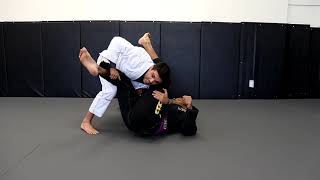
Introduction to Guard Passing
Guard passing is the fundamental technique for transitioning from a defensive position where the opponent controls the space between the knees and shoulders—a position of advantage for submissions—to an offensive position such as mount or side control. The primary objective is to gain control of this central space to isolate limbs and create attacking opportunities.
Combat Base Positioning
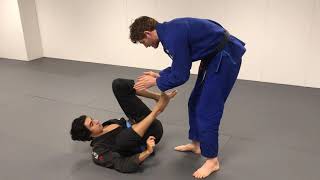
Combat base is established by standing on one leg with the shin vertical while keeping the elbow connected to the knee, creating a straight line from arm through shin. This positioning prevents the opponent from inserting their legs for closed guard or submission attempts such as triangles or arm locks, as the arm blocks going over and the leg blocks going under.
Hand Positioning Rules
Effective guard passing requires maintaining either both arms in front of the opponent or both arms underneath the legs—never positioning one arm in and one arm out. The asymmetrical positioning leaves the passer vulnerable to submission attacks such as triangles from the guard.
Two-Stage Passing Approach
Guard passing occurs in sequential stages rather than one continuous movement. The first stage involves pinning the opponent's near leg to the ground, which prevents knee flexion, exposes the space between shoulders and knees, and immobilizes the opponent. The second stage involves establishing upper body control through cross-face and underhook techniques.
Leg Pinning Mechanics
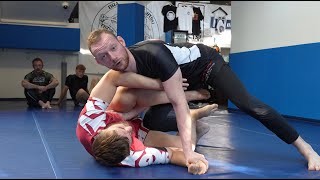
The near leg is pinned by placing the passer's shin across the opponent's thigh with weight distributed between knee on one side and foot on the other. This weight distribution prevents the opponent from moving away and maintains control of the lower body while the passer transitions to upper body control.
Cross-Face Control Technique
The cross-face is executed by reaching the arm across the opponent's face and gripping underneath the far shoulder, with the shoulder positioned low beneath the chin. The passer then drives the shoulder across and slightly upward, rotating the opponent away and preventing them from turning toward the passer to escape—the elbow should be deep to maximize pressure.
Underhook Control and Application
An underhook is achieved by placing the arm underneath the opponent's arm, which determines control of the space between shoulders and hips and often decides whether the passer achieves mount position or the opponent escapes. When the passer controls the underhook, the opponent cannot bump them forward; when the opponent has it, they can lift and move the passer forward.
Connecting Cross-Face and Underhook
Connecting the hands between the cross-face and underhook reinforces control by preventing the opponent from turning toward the passer or being bumped forward. This unified upper body control, combined with leg pinning and combat base, creates a stable platform for advancing to mount position.
Transition to Mount Position
From the pinned leg position with cross-face and underhook control, the passer steps the near-side knee toward the opposite knee and slides it over the opponent's thigh. Once both shins are positioned on the opponent's thighs, the passer steps the feet off and establishes full mount position.
Common Passing Errors
Critical mistakes include allowing one arm to go in and one out (creating submission vulnerability), opening the elbow away from the knee during leg pinning, and positioning the cross-face hand too high on the face rather than low under the chin. Maintaining elbow-to-knee connection and proper hand positioning throughout the pass prevents the opponent from recovering guard or establishing submissions.
Basic Guard Pass
Key Takeaways
- •Introduction to Guard Passing
- •Combat Base Positioning
- •Hand Positioning Rules
- •Two-Stage Passing Approach
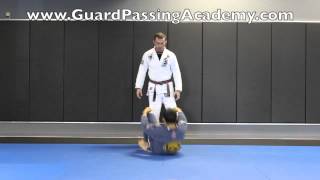
Full Course Playlist → https://youtube.com/playlist?list=PLDrQXekZsfYZfV1QZ4T5UkxLwFwQ12EbP Find the Introduction course here → https://submeta.io/@lachlangiles/courses/introduction In the last lesson, we finished by opening the guard. This lesson continues from there and starts with your first basic guard pass. Those new to grappling will discover for the first time the concept of passing the guard. In this video, we discuss why we look to pass guard and how. We detail the most common pitfalls for the guard passer and breakdown the near side knee through. More from Lachlan https://www.submeta.io/@lachlangiles Subscribe to watch a huge range of courses all designed to plan, personalize and optimize your game. Follow SUBMETA https://www.instagram.com/submeta.io https://www.facebook.com/submeta.io
Related Techniques
Frequently Asked Questions
What does this video teach about fundamental guard pass?
This video covers introduction to guard passing, combat base positioning, hand positioning rules. It provides detailed instruction from Absolute MMA St Kilda - Melbourne.
How long does it take to learn fundamental guard pass?
The basic mechanics can be understood in a single session, but developing reliable execution requires consistent drilling over weeks of practice. This 10-part breakdown helps structure your training by isolating each phase of the technique.
What are the key details for finishing fundamental guard pass?
From the pinned leg position with cross-face and underhook control, the passer steps the near-side knee toward the opposite knee and slides it over the opponent's thigh. Once both shins are positioned on the opponent's thighs, the passer steps the feet off and establishes full mount position.