Overview and Structure
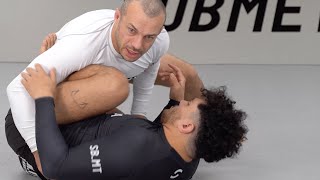
The toreando pass is presented as both the simplest and most complicated guard pass in Brazilian Jiu-Jitsu. The technique is broken down into two main components: the finish and the setup, with the setup containing four primary variables that affect execution.
Definition and Core Concept
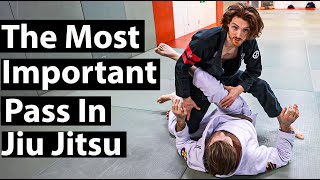
The toreando pass involves going around the opponent's legs rather than passing inside or underneath. The fundamental objective is to rotate the opponent's hips away while controlling both legs simultaneously, which prevents defensive options like the lasso guard.
Finish Variations
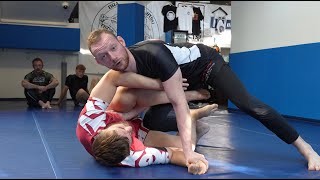
Two primary finish positions exist: a neon belly side control finish achieved by driving the hips forward, or a north-south finish used when the opponent maintains a tight elbow-knee connection. The north-south variation allows the passer to drop and apply pressure by pushing the legs downward from a top position.
Pressure Application Mechanics
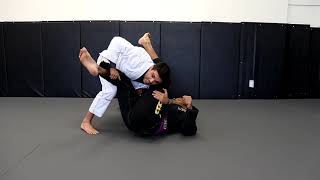
Correct pressure distribution requires the top arm to drive the leg laterally while the inside arm pulls the leg outward. The passer should maintain an upright posture with legs spread wide rather than collapsing forward, which allows the opponent's defensive tightness to contribute to the rotation.
Opponent Body Positioning Variable
The opponent's leg height affects pass difficulty: low legs present the easiest scenario, mid-level legs (pointed toward the passer's chest) require grip adjustments, and high legs (near self-stacking) may require combining the toreando with other techniques. Additionally, whether the opponent is centered or fighting on their side requires different directional approaches.
Grip Selection Variable
Grip choice depends on multiple factors including pants fit, presence of knee pads, and opponent body type. The passer can grab the shin, inside or outside pants, adapting to whatever the situation presents rather than relying on one standardized grip.
Opponent Grip Defense Variable
The opponent's defensive grips significantly alter the pass setup. If the opponent controls both sleeves without feet in the bicep, the toreando becomes easier due to lack of framing. Different grip configurations—such as gripping the passer's leg or pants—require the passer to establish separation or adjust their approach accordingly.
Combination with Other Techniques
The toreando pass functions as part of a larger passing system that integrates with other techniques based on opponent responses and positioning variables. Understanding when to combine the toreando with alternative approaches represents a key aspect of the overall system.
Toreando Pass - Complete Guide
Key Takeaways
- •Overview and Structure
- •Definition and Core Concept
- •Finish Variations
- •Pressure Application Mechanics
This is my comprehensive breakdown of the toreando pass. I will follow this video up with a series of videos covering different variations and aspects of the pass. ---- Follow on IG at JonThomasBJJ for techniques and updates on the training in our Gym @ValhallaJiuJitsu
Frequently Asked Questions
What does this video teach about toreando pass?
This video covers overview and structure, definition and core concept, finish variations. It provides detailed instruction from JonThomasBJJ.
How long does it take to learn toreando pass?
The basic mechanics can be understood in a single session, but developing reliable execution requires consistent drilling over weeks of practice. This 8-part breakdown helps structure your training by isolating each phase of the technique.
What are the key details for finishing toreando pass?
The opponent's defensive grips significantly alter the pass setup. If the opponent controls both sleeves without feet in the bicep, the toreando becomes easier due to lack of framing. Different grip configurations—such as gripping the passer's leg or pants—require the passer to establish separation or adjust their approach accordingly.