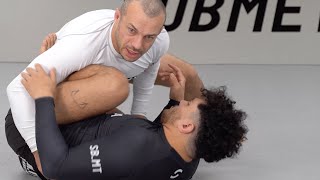
Initial Setup and Positioning
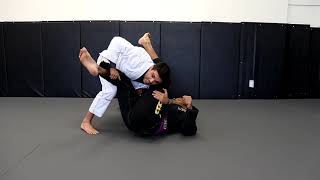
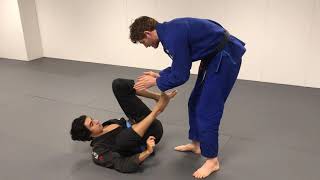
The leg drag pass begins from the deli human guard with the top player adopting a low, controlled position. The practitioner maintains tight elbow control while keeping sufficient distance to avoid being pulled off balance. Control of both the opponent's legs is established as the foundational grip before initiating the pass.
Clearing the Hook
The top player identifies which leg is creating the most resistance and clears it first by straightening the leg against the hook. The knee is then brought back to maintain control and prepare for the drag motion. This clearing action is essential before committing to the full passing sequence.
The Leg Drag Motion
As the opponent reacts to the forward pressure, the top player steps in while simultaneously popping the hips back and dragging the opponent's leg across their body. The head drops tight to the opponent's hip while collar control is established. This combined motion transitions the opponent from guard to a compromised position.
Establishing Head Control and Underhook
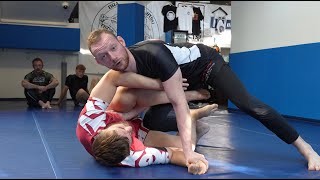
After securing the leg drag position, the top player transitions their head to the opposite side to obtain head control. An underhook is obtained on the near side while maintaining pressure. This combination of grips locks in control and prevents guard recovery.
Re-Drag Counter to Guard Recovery
When the opponent counters by hipping out and attempting to recover guard, the top player catches the escaping leg and executes a re-drag. The bottom leg is shoved down while the knee drops tight, immediately transitioning to drag the opposite leg across. This maintains pressure without allowing the opponent time to reset their guard.
Grip Transition During Re-Drag
During the re-drag sequence, the hand controlling the first leg switches to collar control while maintaining hip proximity. The practitioner stays tight to the opponent's body throughout the transition. This coordinated grip switch ensures continuous control during the rapid leg exchange.
Final Position and Guard Passage
From the re-drag position, the top player maintains tight contact while dropping the head and securing head control on the opposite side. An underhook is obtained to complete positional dominance. The combination of these grips and pressure facilitates passage through the opponent's guard.
Leg Drag Pass plus Variation
Key Takeaways
- •Initial Setup and Positioning
- •Clearing the Hook
- •The Leg Drag Motion
- •Establishing Head Control and Underhook
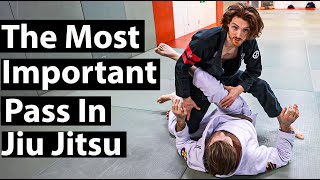
Leg Drag Pass Instructional Video. Also for more videos on how to pass the guard check out http://www.GuardPassingAcademy.com In this video I teach How to do the Leg Drag Pass using 2 Variations !! If you are looking for a high percentage way to pass the guard then I suggest you study and drill this De La Riva Guard Pass and use it on your BJJ game.
Frequently Asked Questions
What does this video teach about leg drag pass?
This video covers initial setup and positioning, clearing the hook, the leg drag motion. It provides detailed instruction from ZombieBJJ.
How long does it take to learn leg drag pass?
The basic mechanics can be understood in a single session, but developing reliable execution requires consistent drilling over weeks of practice. This 7-part breakdown helps structure your training by isolating each phase of the technique.
What are the key details for finishing leg drag pass?
During the re-drag sequence, the hand controlling the first leg switches to collar control while maintaining hip proximity. The practitioner stays tight to the opponent's body throughout the transition. This coordinated grip switch ensures continuous control during the rapid leg exchange.