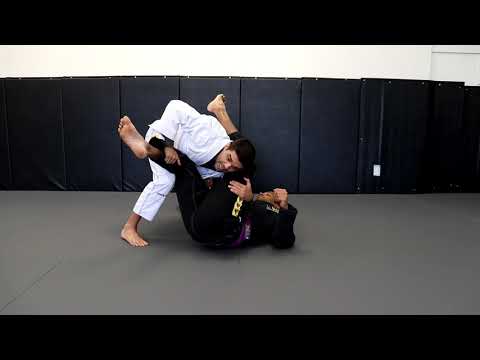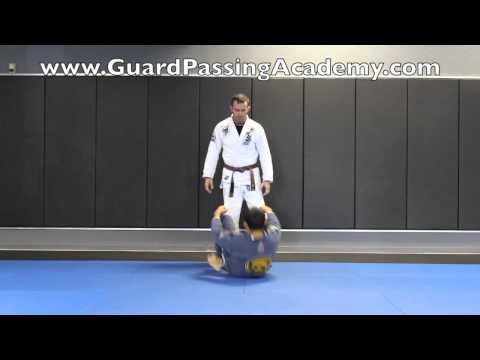
Leg Drag Pass plus Variation
0
Leg Drag Pass·ZombieBJJ
Leg Drag Pass Instructional Video. Also for more videos on how to pass the guard check out http://www.GuardPassingAcadem…
Not yet documented
The Leg Drag Pass family covers the technique of gripping one of the opponent's legs and dragging it across their body to clear the passing lane — one of the most dominant and controlling guard passes in modern competition BJJ. [1] The leg drag was popularised by the Mendes brothers (Guilherme and Rafael) and became a staple of modern sport BJJ, where the pass creates a devastating angle that gives the passer simultaneous access to side control, back take, and mount. [1],[2] The pass works by controlling one leg at the knee or ankle and pulling it across the opponent's body to their far hip, then pinning it there while the passer advances to a perpendicular or back-angle position. [2],[3] The leg drag is considered one of the most dominant passes because once established, the guard player has extremely limited recovery options — the dragged leg blocks their hip movement in the passed direction. [3]
The leg drag was popularised by the Mendes brothers (Guilherme and Rafael Mendes) in the late 2000s-2010s, becoming a signature technique of the modern sport BJJ passing game. [1] Their competition success (multiple World Championship titles) demonstrated the leg drag's effectiveness at the highest level. [1],[2]
The leg drag is one of the most commonly executed passes at IBJJF black belt level. The Mendes brothers won multiple World Championships using the leg drag. [1]
No images yet for this technique.
Sign in to suggest an image.
Leg Drag Pass Instructional Video. Also for more videos on how to pass the guard check out http://www.GuardPassingAcadem…
To know more about this course click here 👇 https://bjjfanatics.com/collections/all/products/guard-passing-beyond-the-b…
No instructional courses yet for this technique.
Sign in to suggest a course.
Risk of injury to the person this technique is applied to
The leg drag is very safe for the passer; the primary risk is the opponent framing and recovering guard during the dragging motion
Skill level needed to execute this technique reliably
Whether this technique is allowed under major competition rule sets
The Guard (Ed Beneville & Joe Moreira, 2003)
Description sources — [1] Rafael and Guilherme Mendes competition career [2] IBJJF passing analysis
Standard katakana transliteration of Western martial arts terminology (外来語) — used in Japanese MMA, boxing, and BJJ communities
Description sources — [1] Rafael and Guilherme Mendes competition career [2] IBJJF passing analysis
grip strength (holding the pant/knee grip during the drag), hip dropping ability, lateral movement speed
quick lateral movement, strong grip, good hip pressure
forearms (grip), hip flexors (pinning), core (lateral movement), legs (stepping around)
Every move, in any martial art, shares a few universal traits. Mix and match below to pinpoint the right tool — or compare equivalents across styles.
The leg drag was popularized by the Mendes Brothers (Rafael and Guilherme) and the Miyao Brothers in the early 2010s. It has become one of the most dominant passing positions in modern competition BJJ. (Mendes Brothers, instructional series)
According to the Lisboa Brothers, start by getting closer to your opponent while already working the leg drag angle. Grab your opponent's hand with one hand and their pants with your cross hand, then as you step closer, push their leg out of the way and pull their chin up to create the drag situation.
The Lisboa Brothers emphasize that as you engage and work the leg drag, your opponent's most common reaction is to escape their hips and push your chest away to recover the guard. They may also throw their leg over and press your head down as an alternative recovery.
ZombieBJJ stresses that you should get really low and not be too close so your opponent can't take you off balance. Control both of your opponent's legs with tight elbows, and make sure to clear the leg that's bothering you first by straightening your leg to hook it.
ZombieBJJ explains that if your opponent hips out and tries to pull their leg over to recover, you should catch that leg and shove their bottom leg down, then perform a re-drag while maintaining tight hip control and looking for an underhook.
The Leg Drag Pass family covers the technique of gripping one of the opponent's legs and dragging it across their body to clear the passing lane — one of the most dominant and controlling guard passes in modern competition BJJ. The leg drag was popularised by the Mendes brothers (Guilherme and Rafael) and became a staple of modern sport BJJ, where the pass creates a devastating angle that gives the passer simultaneous access to side control, back take, and mount.
The leg drag was popularised by the Mendes brothers (Guilherme and Rafael Mendes) in the late 2000s-2010s, becoming a signature technique of the modern sport BJJ passing game. Their competition success (multiple World Championship titles) demonstrated the leg drag's effectiveness at the highest level.
IBJJF: legal — Legal, guard pass scores 3 points; IJF: legal — Legal — transitioning past opponent's legs is part of newaza; ADCC: legal — Legal, guard pass scores 3 points; Unified MMA: legal — Legal; FIAS Sport Sambo: legal — Legal
Danger rating 2/10. Low — the leg drag is very safe for the passer; the primary risk is the opponent framing and recovering guard during the dragging motion
The standard setup chain: Strip Guard Grips → Grip the Leg (knee or ankle) → Drag Laterally → Pin with Hip → Advance → Finish.
Standard counters include: Frame on the Hip — pushing the passer's hip to prevent the pin / Granby Roll — inverting to recover guard / Underhook — fighting for the underhook as the passer advances / Re-guard with Far Leg — using the un-dragged leg to re-establish guard.
Common variants: Standard leg drag (gripping the pants and dragging to side control [1]); Leg drag to back take (continuing around to the back after the drag); Leg drag from standing (initiated from standing position in front of open guard); Leg drag from passing (transitioning to leg drag mid-pass when another pass is d…); Ankle-grip leg drag (gripping the ankle instead of the knee for the drag [2]).
The leg drag is one of the most commonly executed passes at IBJJF black belt level. The Mendes brothers won multiple World Championships using the leg drag.
Top errors to watch for: Not pinning the dragged leg — the hip must drop onto the dragged leg to complete the pass / Dragging without stepping around — the feet must advance past the leg line during the drag / Gripping too high on the leg — the grip should be at the knee or ankle, not the thigh / Not addressing the opponent's frames — the opponent's far-side arm creates frames that block advancement.
The Leg Drag Pass is also known as Leg Drag, Traction Pass.