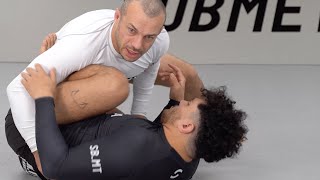
Introduction to Pressure Application from Half Butterfly Guard
The instructor introduces pressure passing concepts from the top half butterfly guard position. Prior instructional content on safety positioning and conceptual drilling is referenced as prerequisite knowledge for applying effective pressure.
Weave Control and Weight Distribution
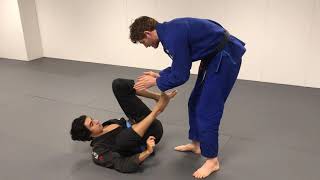
From half butterfly guard with the weave grip established, the top player controls the bottom player's hand while directing full body weight onto the butterfly hook. The instructor demonstrates adjusting positioning through drilling to locate the point where the bottom player begins to feel genuine discomfort and attempts to push away.
Balancing Pressure Application and Safety
The relationship between forward movement and pressure creation is inverse to defensive safety—moving further forward enables passing but increases vulnerability. The instructor identifies the bottom player's push-away response as the signal that optimal pressure positioning has been achieved.
Transitioning from Weave to Hip Pin Grip
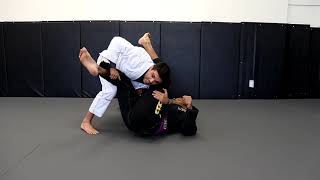
The top player can transition grip styles by moving under the bottom player's leg to establish a hip pin while gripping the head. This grip transition, combined with pummeling before continuing, increases pressure while simultaneously creating passing angles and limiting the bottom player's counter-options.
Positioning for Collapsed Pressure
Effective pressure positioning forces the bottom player into limited choices: explosive escape or submission. The top player identifies a safe baseline position first, then methodically applies pressure by controlling the bottom player's push response and cycling back to safety to reapply pressure.
Technical Pressure Alternatives to Weight
Pressure can be generated through technical positioning rather than relying solely on body weight. The instructor demonstrates the V-grip approach and references an alternative heel-based method where pressure comes from structural angles that threaten leg extension, forcing the bottom player into limited positional responses.
Head Control Method for Forward Pressure
An alternative pressure method involves hand placement on the head with forward pulling motion, providing safety while enabling substantial pressure through movement rather than weight distribution. This approach accommodates variable hook positioning and allows pressure escalation while maintaining defensive integrity.
Personalized Pressure Development
The instructor emphasizes that pressure passing requires individual exploration rather than exact replication of demonstrated techniques. Players should establish their own safe baseline position, then systematically test pressure application methods suited to their body type and movement preferences.
Pass with pressure.
Key Takeaways
- •Introduction to Pressure Application from Half Butterfly Guard
- •Weave Control and Weight Distribution
- •Balancing Pressure Application and Safety
- •Transitioning from Weave to Hip Pin Grip
This is a video from my Patreon https://www.patreon.com/c/dimamurovanni Passing isn’t just technique vs. technique—it’s about forcing stress and defensive reactions by applying pressure: with weight, movement, and technical control. In this video we look at examples from the half butterfly guard. Once you understand the why, you can move on to the how. I’ll show two methods used by two of the best grapplers in the world—Jozef Chen and Declan Moody. Understand the why, and find your how.
Frequently Asked Questions
What does this video teach about pressure pass?
This video covers introduction to pressure application from half butterfly guard, weave control and weight distribution, balancing pressure application and safety. It provides detailed instruction from Dima Murovanni Bjj.
How long does it take to learn pressure pass?
The basic mechanics can be understood in a single session, but developing reliable execution requires consistent drilling over weeks of practice. This 8-part breakdown helps structure your training by isolating each phase of the technique.
What are the key details for finishing pressure pass?
An alternative pressure method involves hand placement on the head with forward pulling motion, providing safety while enabling substantial pressure through movement rather than weight distribution. This approach accommodates variable hook positioning and allows pressure escalation while maintaining defensive integrity.