Toreando Pass Comprehensive Guide
0
Toreando Pass·JonThomasBJJ
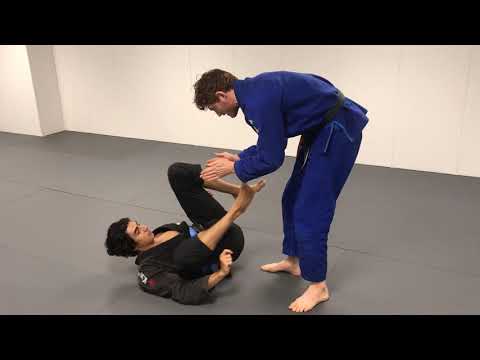
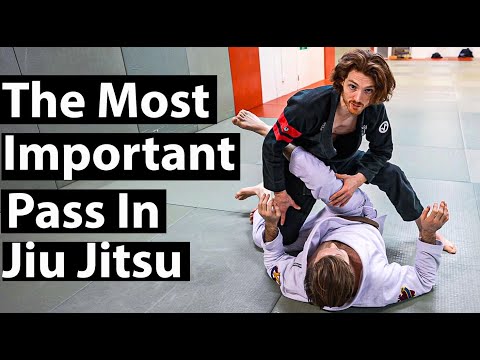
This video I go through in my opinion the most important pass to understand in jiu jitsu, the toreando pass. The torean…
Not yet documented
The Toreando (bullfighter) Pass family covers the classic standing guard pass where the passer grips both of the opponent's pant legs (gi) or knees (no-gi) and throws them to one side while stepping around — named after the bullfighter's cape movement because the passer redirects the guard player's legs like a matador redirecting a bull. [1] The toreando is the most fundamental standing guard pass in BJJ, taught as the first standing pass in virtually every academy worldwide, and remains effective at the highest levels of competition when executed with speed and proper timing. [1],[2] The pass works by controlling both legs simultaneously and using a quick lateral direction change to outflank them, landing in side control before the guard player can recover. [2],[3] Leandro Lo (5x IBJJF World Champion) was the greatest toreando passer in BJJ history, demonstrating that the 'basic' toreando could defeat the world's best guard players when executed with elite timing. [3]
The toreando pass has roots in judo ne waza passing and became a staple of BJJ passing from the art's earliest competition era. [1] The pass gained its 'bullfighter' nickname from the similarity to a matador's cape movement. Leandro Lo (5x World Champion, tragically killed in 2022) elevated the toreando to an art form, demonstrating its effectiveness against every guard system at the highest level of competition. [1],[2]
The toreando is one of the most commonly executed passes at all levels of IBJJF competition. Leandro Lo won 5 World Championships with toreando-dominant passing. [1]
No images yet for this technique.
Sign in to suggest an image.
This video I go through in my opinion the most important pass to understand in jiu jitsu, the toreando pass. The torean…
This is my comprehensive breakdown of the toreando pass. I will follow this video up with a series of videos covering di…
No instructional courses yet for this technique.
Sign in to suggest a course.
Risk of injury to the person this technique is applied to
The toreando is a standing pass executed at distance; the primary risk is being swept if the guard player times a counter-sweep during the lateral movement
Skill level needed to execute this technique reliably
Whether this technique is allowed under major competition rule sets
Jiu-Jitsu University (Saulo Ribeiro, 2008)
Description sources — [1] Jiu-Jitsu University (Ribeiro, 2008) [2] Leandro Lo competition career
Standard katakana transliteration of Western martial arts terminology (外来語) — used in Japanese MMA, boxing, and BJJ communities
Description sources — [1] Jiu-Jitsu University (Ribeiro, 2008) [2] Leandro Lo competition career
lateral speed (the pass is a speed race), grip strength (controlling both legs), agility
fast athletes, long arms (grip reach), lateral quickness
legs (lateral stepping), forearms (grip), shoulders (crossface on landing), core (direction changes)
Every move, in any martial art, shares a few universal traits. Mix and match below to pinpoint the right tool — or compare equivalents across styles.
The Cartwheel Pass is a dynamic, acrobatic guard pass where the passer cartwheels over the guard player's legs, landing in side control on the other side — a surprise technique that bypasses the guard entirely through aerial movement. [1] While athletic and visually spectacular, the cartwheel pass is a legitimate competition technique used by agile guard passers to outflank defensive guard players. [1,2]
The Standard Toreando Pass is the classic execution of the bullfighter pass — gripping both pant legs at the knees, throwing the legs to one side while stepping around to the other, landing in side control — the most fundamental standing guard pass in BJJ and the technique that Leandro Lo perfected. [1] This standard version uses the pure speed-and-direction-change mechanic without modifications. [1,2]
The X-Pass is a quick standing guard pass where the passer steps one leg over the opponent's shin/ankle area while driving through to side control — named for the crossing leg motion that navigates past the guard player's legs. [1] The X-pass is one of the fastest standing passes, often catching guard players off guard with its speed and directness. [1,2]
The toreando (bullfighter) pass is one of the fastest guard passes — the passer controls both legs and redirects them to one side while stepping around. Named for the bullfighter's cape movement. (Ribeiro, Jiu-Jitsu University)
A common mistake is maintaining too much distance from your opponent because you're afraid of being tied up, which means even if you clear the legs, your opponent can use their hands to get their legs back in play. According to Jon Thomas, you need to get close enough to be in the danger zone where you can threaten the knee cut while keeping your legs back so your opponent can't control you.
Hinge at your hips, keep your legs relatively straight, and keep your elbows back. This positioning allows you to stay in the danger zone where you can execute a knee cut threat while keeping your legs protected from being controlled by your opponent.
You want to achieve a position where if you drew a line from the center of your chest to your opponent's chest, you'd be right above them, with one leg positioned high and one leg near the hip. This chest-over-chest positioning is crucial before attempting your finish, as coming in too low or trying to go straight to neon belly will allow your opponent to create space and escape.
You should mix the Toreando with other attacks like knee cut threats, stack pass threats, and double under threats rather than forcing it every time. Jon Thomas emphasizes that if you're only committed to the Toreando, it can be very difficult because it may not be the right situation for your opponent's leg positioning.
You don't necessarily need to grab the pant leg, as pants can be unreliable and slide during rolling. According to Jon Thomas, it's more important to develop the ability to use your forearms to control the feet and set up your passes from there, making the technique work in both gi and no-gi.
The Toreando (bullfighter) Pass family covers the classic standing guard pass where the passer grips both of the opponent's pant legs (gi) or knees (no-gi) and throws them to one side while stepping around — named after the bullfighter's cape movement because the passer redirects the guard player's legs like a matador redirecting a bull. The toreando is the most fundamental standing guard pass in BJJ, taught as the first standing pass in virtually every academy worldwide, and remains effective at the highest levels of competition when executed with speed and proper timing.
The toreando pass has roots in judo ne waza passing and became a staple of BJJ passing from the art's earliest competition era. The pass gained its 'bullfighter' nickname from the similarity to a matador's cape movement.
IBJJF: legal — Legal, guard pass scores 3 points; IJF: legal — Legal — transitioning past opponent's legs is part of newaza; ADCC: legal — Legal, guard pass scores 3 points; Unified MMA: legal — Legal; FIAS Sport Sambo: legal — Legal
Danger rating 3/10. Low — the toreando is a standing pass executed at distance; the primary risk is being swept if the guard player times a counter-sweep during the lateral movement
The standard setup chain: Stand Up → Strip Guard Grips → Grip Both Legs → Push and Step → Land in Side Control → Consolidate.
Standard counters include: Hip Movement — recovering the hips faster than the passer moves laterally / Sleeve Grips — gripping the passer's sleeves prevents the leg grip / Feet on Hips — placing feet on the passer's hips prevents the approach / Collar Tie — gripping the passer's collar prevents them from disengaging to pass.
Common variants: Classic toreando (grip both legs, throw to one side, step around [1]); Double-direction toreando (fake one way, pass the other); Toreando to knee cut (starting with toreando then transitioning to knee cut whe…); Toreando to leg drag (transitioning to leg drag when one leg is controlled); Speed toreando (explosive fast-twitch version without heavy pressure); Long-range toreando (executing from further distance against open guards [2]).
The toreando is one of the most commonly executed passes at all levels of IBJJF competition. Leandro Lo won 5 World Championships with toreando-dominant passing.
Top errors to watch for: Gripping only one leg — the toreando requires controlling both legs; one-leg control allows the other leg to re-guard / Moving the legs without stepping around — pushing the legs to the side without the body advancing means the guard pla… / Not establishing crossface — landing in side control without the crossface allows immediate guard recovery / Moving too slowly — the toreando is a speed pass; slow execution gives the guard player time to adjust.
The Toreando Pass is also known as Bullfighter Pass, Toreando, Toreada, Matador Pass.