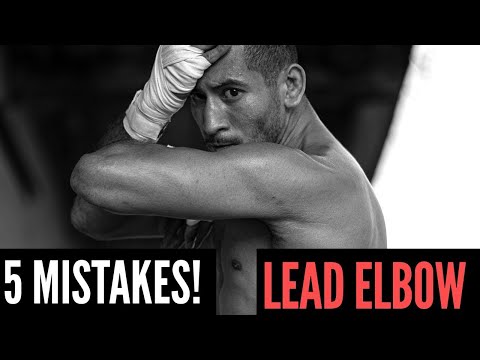
MUAY THAI LEAD ELBOW STRIKE - 5 COMMON MISTAKES!
0
Fundamental Elbow Strike·Ironboy Experience
MUAY THAI LEAD ELBOW STRIKE - 5 COMMON MISTAKES! Are you making any of these mistakes that are keeping you from throwing…
Перевод: fundamental elbow strike
The Fundamental Elbow Strike family covers elbow-striking techniques across all martial arts traditions — the most devastating close-range weapon in combat sports, using the sharp point and hard bone of the elbow to deliver cutting, concussive blows. [1] The elbow is the hardest striking surface on the human body, and elbow strikes generate enormous force over a small contact area, making them exceptionally effective at causing cuts (which can stop fights via doctor stoppage), knockouts, and structural damage. [1],[2] While Muay Thai has the most sophisticated elbow system (sok), elbows are also used extensively in MMA, karate (hiji ate), Krav Maga, Wing Chun, and various Southeast Asian martial arts. [2],[3] In MMA, elbow strikes from the ground (ground-and-pound elbows from guard, mount, or side control) have become one of the most common fight-finishing techniques. [3]
Elbow strikes are central to Muay Thai, where they are one of the eight weapons (two fists, two elbows, two knees, two feet) that define the Art of Eight Limbs. [1] Thai boxing has used elbows for centuries in Thai stadium fights, where elbow cuts often determine fight outcomes via doctor stoppage. [1],[2] In MMA, elbows gained prominence as ground-and-pound weapons in the early 2000s, with fighters like Jon Jones and Tony Ferguson demonstrating their devastating effectiveness from multiple positions. [2],[3] Karate's hiji ate (elbow strikes) appear in classical kata, and many Southeast Asian martial arts (Lethwei, Silat) feature elbow strikes as primary weapons. [3]
Elbow strikes are among the most effective close-range weapons in combat — they combine the hardness of bone with concentrated impact area to produce cuts and knockouts at a very high rate. [1] In Muay Thai, elbow cuts are one of the most common methods of fight stoppage in Thai stadium fights. [2] In MMA, ground elbows (ground-and-pound) account for a significant percentage of TKO finishes, and Jon Jones' creative elbow striking has redefined what is possible from various positions. [3]
Изображений для этой техники пока нет.
Войдите, чтобы предложить изображение.
MUAY THAI LEAD ELBOW STRIKE - 5 COMMON MISTAKES! Are you making any of these mistakes that are keeping you from throwing…
Учебных курсов по этой технике пока нет.
Войдите, чтобы предложить курс.
Риск травмы для человека, к которому применяется техника
Elbow strikes are among the most dangerous legal techniques in combat sports; the sharp elbow easily causes lacerations requiring stitches, and the concentrated force can produce knockouts and orbital fractures; ground elbows to a downed opponent are among the most fight-ending techniques in MMA
Уровень мастерства, необходимый для надёжного выполнения техники
Разрешена ли техника по основным соревновательным правилам
Muay Thai: The Art of Eight Limbs (Kraitus & Kraitus, 1988)
Description sources — [1] Muay Thai: The Art of Eight Limbs (Kraitus, 1988) on sok system [2] MMA competition evolution [3] Dynamic Karate (Nakayama, 1966) on hiji ate
History sources — [1] Thai boxing tradition [2] UFC/MMA competition history [3] Southeast Asian martial arts traditions
Description sources — [1] Muay Thai: The Art of Eight Limbs (Kraitus, 1988) on sok system [2] MMA competition evolution [3] Dynamic Karate (Nakayama, 1966) on hiji ate
History sources — [1] Thai boxing tradition [2] UFC/MMA competition history [3] Southeast Asian martial arts traditions
close-range comfort (elbows only work at clinch distance), hip rotation, elbow conditioning
sharp elbows (some fighters have naturally more prominent olecranon), strong hip rotation, clinch ability
hip flexors and rotators (power generation), shoulders (driving the elbow), core (connecting rotation to the strike)
Каждое движение в любом боевом искусстве обладает рядом универсальных свойств. Комбинируйте параметры ниже, чтобы найти нужный инструмент или сравнить аналоги из разных стилей.
The Downward Grinding Elbow is delivered from side control or mount, using body weight to drive the elbow point downward into the opponent's face. [1]
The Grinding Elbow from Half Guard is a short-range elbow strike delivered while in the top half guard position, grinding the point of the elbow into the opponent's face or temple. [1]
Hiji Chudan Mae Ate (Middle Forward Elbow Strike) is a Kyokushin Karate forward-driving elbow strike to the midsection, driving the point of the elbow into the solar plexus. [1] Mas Oyama, founder of Kyokushin Karate, demonstrated this as a fundamental combat technique requiring proper body mechanics and spirit. [1] The technique emphasises full-body power generation through hip rotation and proper weight transfer. [1]
Hiji Jodan Ate (High Elbow Strike) is a Kyokushin Karate rising elbow strike to the upper level (jodan), targeting the chin. [1] Mas Oyama, founder of Kyokushin Karate, demonstrated this as a fundamental combat technique requiring proper body mechanics and spirit. [1] The technique emphasises full-body power generation through hip rotation and proper weight transfer. [1]
The Over the Top Elbow is a looping elbow strike delivered from guard top or mount, arcing over the opponent's guard and dropping down onto the face. [1]
Sok Chieng is the diagonal rising elbow, delivered at a 45-degree upward angle targeting the chin, temple, or cheekbone. [1] It combines the upward power of the uppercut elbow with the angular approach of the elbow chop, creating a hybrid trajectory. [1]
Sok Chieng Lang is the skew back elbow, delivered diagonally backward when the fighter's side is turned to the opponent. [1] It is used as a counter-attack when a punch, kick, or elbow has missed and the fighter has rotated past the target. [1]
Sok Fan Nah (the Elbow Chop) is the most fundamental elbow strike in Muay Thai, delivered in a diagonal downward arc from high to low, mimicking the swift motion of a sickle clearing a field — a motion the Thai language calls Tarng Pa (ตรงปา). [1] Of all the 24 traditional elbow techniques (Cherng Sok 24 Cherng) preserved in classical Muay Thai, the Sok Fan Nah is considered the foundation upon which all other elbow attacks are built. [1] The strike uses the sharp point of the olecranon (elbow bone) as the primary weapon, driving it downward at approximately 45 degrees from the attacker's shoulder level into the opponent's forehead, eyebrow ridge, cheekbone, or bridge of the nose. [1,2] The elbow is the hardest and sharpest bony prominence on the human body, and when driven diagonally downward with the full rotation of the hips and shoulders, it produces devastating cutting injuries — the typical result of a clean Sok Fan Nah is a deep laceration above the eye that bleeds profusely, often leading to a TKO stoppage due to blood obscuring the fighter's vision. [1,2] In Muay Thai stadium competition at Lumpinee and Rajadamnern (Bangkok's two premier stadiums), the elbow is responsible for more fight stoppages via cuts than any other weapon, and the Sok Fan Nah is the most commonly used elbow strike. [2,3] The technique is delivered from the standard Muay Thai stance by stepping forward with the lead foot, rotating the hips and shoulders in the direction of the strike, and swinging the elbow down at a 45-degree angle — the same body mechanics used for a hook punch, except the striking surface is the elbow point rather than the fist. [1] Yod Ruerngsa, Khun Kao Charuad and James Cartmell document the Sok Fan Nah as the first of the 24 traditional elbow techniques in Muay Thai: The Art of Fighting, noting that it can be used offensively (as an attack), defensively (as a counter), and as an escape tool (striking while retreating). [1]
Sok Hud is the pulling elbow, where the fighter grabs the opponent's head or neck and pulls it down into a rising elbow. [1] The combined force of the pull and the rising elbow creates devastating impact. [1] It is particularly effective in the clinch. [1]
Sok Klab (the Reverse Spinning Elbow) is one of the most spectacular and devastating techniques in Muay Thai, delivered by turning the body 180 degrees and swinging the elbow backward into the opponent's face or jaw, combining full rotational momentum with the hardest striking surface on the human body. [1] The technique is used when the fighter's side or back is turned to the opponent — either deliberately (as a surprise attack from a feinted position) or as a recovery weapon when a previous technique has missed and the body has rotated past the target. [1] Yod Ruerngsa documents the Sok Klab as one of the 24 traditional Muay Thai elbow techniques (Cherng Sok 24 Cherng), noting that it converts the body's rotational momentum from a missed or feinted attack into a devastating counter that arrives from the opponent's blind side. [1] The spinning elbow generates significantly more force than a standing elbow because the entire body's mass rotates through 180 degrees, accumulating angular momentum that is released through the point of the olecranon at the moment of impact — biomechanical studies have measured spinning elbow forces at 2-3 times those of standing elbows. [1,2] The technique achieved international fame through multiple spectacular UFC knockouts: Tony Ferguson's spinning elbow KO of Anthony Pettis (UFC 229, 2018), Jon Jones's spinning elbow against numerous opponents, and most dramatically, Matt Brown's spinning elbow KO of Diego Sanchez (UFC on Fox 12, 2014). [3] In Muay Thai stadium competition (Lumpinee and Rajadamnern), the spinning elbow is relatively rare but when it connects, it almost always produces a fight-ending knockout or severe laceration due to the enormous force concentrated on the sharp olecranon point. [1,2]
Sok Klab Koo combines two reverse elbows in rapid succession, with the body completing a full rotation to deliver the second elbow from the opposite side. [1] This advanced technique requires precise timing and body control. [1]
Sok Ku is the twin or double elbow strike, delivering both elbows simultaneously or in rapid succession to overwhelm the opponent's defence. [1] Both elbows can strike horizontally from opposite sides, creating a vice-like crushing action on the opponent's guard or head. [1]
Sok Ngad (the Uppercut Elbow) drives the point of the elbow vertically upward into the opponent's chin from below, combining the knockout mechanics of a boxing uppercut with the devastating hardness of the elbow's olecranon bone. [1] The technique is the third fundamental elbow in Muay Thai's classical 24-elbow system (Cherng Sok 24 Cherng), after the diagonal Sok Fan Nah and the horizontal Sok Tad — it completes the three-directional elbow arsenal (diagonal, horizontal, and VERTICAL) that gives Muay Thai fighters the ability to attack with the elbow from any angle. [1] The Sok Ngad is executed from close range by bending the elbow fully (bringing the fist to the same-side shoulder), then driving the elbow point straight upward using hip extension and a slight rising body motion — the ascending elbow enters under the opponent's chin from below, targeting the mandible (jawbone) from its most vulnerable direction. [1,2] Yod Ruerngsa documents the Sok Ngad as particularly effective in the Muay Thai clinch, where the fighters are chest-to-chest and the opponent's chin is exposed directly above — the rising elbow needs only 6-8 inches of vertical travel to reach the chin from this range. [1] The chin is the human body's optimal knockout target because the mandible acts as a first-class lever: when struck from below, the jaw rotates the head backward with angular acceleration that exceeds the brain's tolerance for shearing forces, producing immediate loss of consciousness. [1,2] When the impact surface is the elbow (1 cm² of olecranon bone, the hardest striking surface on the body) rather than the fist (8-10 cm²), the pressure at the contact point is approximately 8-10x higher than a boxing uppercut of the same force — this extreme pressure concentration is what makes the Sok Ngad capable of breaking the jaw, fracturing the palate, and producing instantaneous unconsciousness from a single strike. [1,2]
Sok Sab is the downward elbow strike, driving the point of the elbow from high to low onto the opponent's forehead, bridge of the nose, or crown of the head. [1] The raised elbow-joint drops with body weight behind it, making this one of the most devastating strikes when the opponent is bent forward. [1]
Sok Tad (the Horizontal Elbow) is the second foundational elbow strike in Muay Thai's classical 24-elbow system (Cherng Sok 24 Cherng), delivered in a sweeping horizontal arc parallel to the ground, targeting the opponent's jaw, temple, or cheekbone from the side. [1] While the Sok Fan Nah (Elbow Chop) travels diagonally downward, the Sok Tad travels straight across on a horizontal plane — the body mechanics mirror those of a hook punch, with the critical difference that the striking surface is the razor-sharp point of the olecranon bone rather than the fist. [1,2] The horizontal trajectory makes the Sok Tad particularly effective against the temporal region of the skull, where the bone is thinnest and a concussive blow can cause immediate unconsciousness. [2] In Muay Thai competition, the Sok Tad is the elbow most commonly responsible for knockouts (as opposed to cuts, which are more often caused by the diagonal Sok Fan Nah), because its horizontal arc generates rotational force on the head — the same rotation that causes knockout in hook punches, but delivered with a bone-hard, point-concentrated weapon. [2,3] The strike requires the same full-body rotation as a hook punch: the hips, shoulders, and rear foot pivot simultaneously, with the lead foot grounded as the base. [1] The attacker must lean the body slightly away from the elbow to ensure the sharp olecranon point — not the flat of the forearm — makes contact. [1] Yod Ruerngsa documents the Sok Tad as a technique used for attack, defence, and escape, emphasising that it is effective both as a lead and a finishing strike in combinations. [1]
Sok Tong is the spearing or prodding elbow, used as a jabbing motion with the point of the elbow to create distance or set up other attacks. [1] Unlike power elbows, the Sok Tong prioritises speed and disruption over knockout power. [1]
According to Mike Gomber from Ironboy Experience, you should put your palm out rather than inward. Turning your palm outward makes your elbow pointier and creates more damage on impact.
Mike Gomber emphasizes covering yourself with your other hand during an elbow strike, since if you can elbow your opponent, they can also elbow you. Your non-striking hand can be palm-in or palm-out, but it should provide defense and cover as much of yourself as possible.
According to Ironboy Experience, you should pop your shoulder forward just like you would in a punch, keep your core tight, and use your torso power in one unified motion. Additionally, lift your back heel slightly during the turn to allow better momentum and range of motion.
Mike Gomber explains that not lifting your back heel during the turn causes you to get stuck with limited range of motion. Picking up your heel slightly allows the momentum to carry you through and gives you greater range of motion to extend your elbow further forward.
The Fundamental Elbow Strike family covers elbow-striking techniques across all martial arts traditions — the most devastating close-range weapon in combat sports, using the sharp point and hard bone of the elbow to deliver cutting, concussive blows. The elbow is the hardest striking surface on the human body, and elbow strikes generate enormous force over a small contact area, making them exceptionally effective at causing cuts (which can stop fights via doctor stoppage), knockouts, and structural damage.
Elbow strikes are central to Muay Thai, where they are one of the eight weapons (two fists, two elbows, two knees, two feet) that define the Art of Eight Limbs. Thai boxing has used elbows for centuries in Thai stadium fights, where elbow cuts often determine fight outcomes via doctor stoppage.
Unified MMA: разрешён — Legal — all elbow strikes permitted; WBC/Boxing: запрещён — All elbow strikes prohibited in boxing; WKF: запрещён — Elbow strikes not a legal technique in sport karate; Kyokushin: запрещён — Elbow strikes prohibited; WT: запрещён — Prohibited; ITF: запрещён — Prohibited; WAKO: запрещён — Prohibited in all kickboxing formats; K: запрещён — 1/GLORY — Prohibited — key difference from Muay Thai; IFMA: разрешён — Legal — elbows are a core Muay Thai weapon (art of eight limbs)
Оценка опасности 9/10. Very high — elbow strikes are among the most dangerous legal techniques in combat sports; the sharp elbow easily causes lacerations requiring stitches, and the concentrated force can produce knockouts and orbital fractures; ground elbows to a downed opponent are among the most fight-ending techniques in MMA
Стандартная цепочка подготовки: Close Distance → Establish Position → Generate Rotation → Strike → Follow Up → Disengage or Maintain Clinch.
Стандартные контрприёмы: Create Distance — stepping back out of elbow range neutralises the threat / Clinch Control — securing double underhooks or a body lock prevents the opponent from generating elbow rotation / Lean Back — pulling the head back from close range makes elbows fall short / Cover and Clinch — covering with the arms while entering a tighter clinch reduces the arc available for elbows.
Распространённые варианты: Horizontal elbow (sok tat) (the standard cutting elbow; driven horizontally across th…); Uppercut elbow (sok ngad) (driven upward from below; targets the chin); Downward elbow (sok sab) (driven straight down onto the crown of a bent opponent's …); Diagonal elbow (sok chieng) (angled downward strike; versatile and commonly used); Spinning elbow (sok klap/sok klap koo) (full 360 rotation; the most spectacular elbow technique); Reverse elbow (sok klap lang) (backward elbow driven into an opponent who is behind or b…); Ground elbow (downward elbow from top position in MMA ground-and-pound).
Elbows are the signature weapon of Muay Thai, accounting for numerous fight stoppages via cuts in Thai stadium fights. In MMA, ground elbows are one of the most common TKO finishes.
Основные ошибки, на которые стоит обратить внимание: Throwing elbows from too far away — elbows require clinch or very close range; from punching distance, the forearm la… / Not rotating the hip — arm-only elbows have minimal power; the hip drives the strike / Telegraphing spinning elbows — winding up or pausing before the spin signals the technique / Using elbows without setting them up — naked elbows are easily blocked; use punches and clinch entries to set up elbo….
Fundamental Elbow Strike также известен как Fandamentaru Hiji Uchi, Elbow Strike, Elbow Technique, Sok (Thai), Hiji Ate.