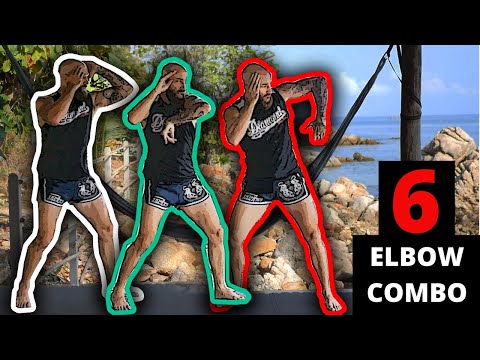
KILLER Elbow Combo - 6 Badass Muay Thai Elbow Strikes
0
Sok Fan Nah·Sean "Muay Thai Guy" Fagan
Ready to unlock your full potential and get daily Muay Thai insights? 💥 Click the link below to join my EXCLUSIVE Nak M…
Перевод: Sok (ศอก) = elbow, Fan (ฟัน) = to chop/slash, Nah (หน้า) = front/face — the front-facing elbow chop. Also called Tarng Pa (ตรงปา) from the ancient farming sickle-clearing motion.
Sok Fan Nah (the Elbow Chop) is the most fundamental elbow strike in Muay Thai, delivered in a diagonal downward arc from high to low, mimicking the swift motion of a sickle clearing a field — a motion the Thai language calls Tarng Pa (ตรงปา). [1] Of all the 24 traditional elbow techniques (Cherng Sok 24 Cherng) preserved in classical Muay Thai, the Sok Fan Nah is considered the foundation upon which all other elbow attacks are built. [1] The strike uses the sharp point of the olecranon (elbow bone) as the primary weapon, driving it downward at approximately 45 degrees from the attacker's shoulder level into the opponent's forehead, eyebrow ridge, cheekbone, or bridge of the nose. [1],[2] The elbow is the hardest and sharpest bony prominence on the human body, and when driven diagonally downward with the full rotation of the hips and shoulders, it produces devastating cutting injuries — the typical result of a clean Sok Fan Nah is a deep laceration above the eye that bleeds profusely, often leading to a TKO stoppage due to blood obscuring the fighter's vision. [1],[2] In Muay Thai stadium competition at Lumpinee and Rajadamnern (Bangkok's two premier stadiums), the elbow is responsible for more fight stoppages via cuts than any other weapon, and the Sok Fan Nah is the most commonly used elbow strike. [2],[3] The technique is delivered from the standard Muay Thai stance by stepping forward with the lead foot, rotating the hips and shoulders in the direction of the strike, and swinging the elbow down at a 45-degree angle — the same body mechanics used for a hook punch, except the striking surface is the elbow point rather than the fist. [1] Yod Ruerngsa, Khun Kao Charuad and James Cartmell document the Sok Fan Nah as the first of the 24 traditional elbow techniques in Muay Thai: The Art of Fighting, noting that it can be used offensively (as an attack), defensively (as a counter), and as an escape tool (striking while retreating). [1]
The Sok Fan Nah is the foundation technique of the Cherng Sok (24 traditional Muay Thai elbow techniques), part of the classical Muay Thai curriculum that has been preserved and transmitted through Thai boxing camps for centuries. [1] The name Tarng Pa (ตรงปา) connects the technique to Thailand's agricultural heritage — the swinging motion of a farmer's sickle clearing fields before harvest is the same diagonal arc used in the elbow chop. [1] This cultural connection between farming and fighting is characteristic of Muay Thai, which developed among Thai commoners and soldiers rather than among aristocratic martial artists. [2] In Muay Thai's evolution from Muay Boran (ancient boxing) to the modern ring sport, the elbow techniques were among the most controversial: when Western boxing gloves were introduced in the 1920s (replacing the traditional hemp hand wraps called Kad Chuek), there was debate about whether elbows should remain legal. [1],[2] Thailand preserved them as integral to the art, and the elbow remains the defining weapon that distinguishes Muay Thai from all other kickboxing styles. [1],[2],[3] The 24 elbow techniques documented by Ruerngsa, Charuad and Cartmell represent the complete traditional Muay Thai elbow arsenal, with the Sok Fan Nah as technique number one. [1]
The elbow is responsible for more fight stoppages via cuts than any other weapon in Muay Thai stadium competition. [2],[3] The Sok Fan Nah's diagonal trajectory is particularly effective because it targets the eyebrow ridge — the most cut-prone area on the face — where a single clean strike can open a wound severe enough for a referee stoppage. [1] In UFC/MMA, elbows from the clinch and on the ground account for a significant percentage of TKO finishes, with the diagonal elbow being the most common variant. [3] The elbow's effectiveness is amplified in the clinch, where it operates at a range too close for punches to develop full power but ideal for the shorter elbow lever. [1] Statistical analysis of Muay Thai fight records shows that the elbow, despite being used less frequently than kicks and punches, has the highest stoppage rate per strike landed of any technique. [2]
The Sok Fan Nah has been responsible for countless fight stoppages via cuts in Muay Thai stadium competition. Notable examples include Dieselnoi Chor Thanasukarn (the greatest Muay Thai clinch fighter), who used diagonal elbows extensively during his undefeated Lumpinee reign in the 1980s. In MMA, Tony Ferguson's elbow-heavy style produced multiple TKO victories via cuts in the UFC, with the diagonal elbow as his signature weapon. Jon Jones has used the descending elbow from the clinch in multiple UFC title fights.
Изображений для этой техники пока нет.
Войдите, чтобы предложить изображение.
Ready to unlock your full potential and get daily Muay Thai insights? 💥 Click the link below to join my EXCLUSIVE Nak M…
Учебных курсов по этой технике пока нет.
Войдите, чтобы предложить курс.
Риск травмы для человека, к которому применяется техника
The Sok Fan Nah is one of the most injurious legal techniques in combat sports. The sharp elbow point striking thin-skinned facial areas (forehead, eyebrow ridge, cheekbone) produces deep lacerations that bleed profusely. A single clean Sok Fan Nah can open a cut requiring 10-30 stitches and cause an immediate TKO stoppage. The technique can also cause orbital fractures, broken noses, and severe concussions when landing flush on the temple. In Lethwei (Burmese bare-knuckle boxing), elbows are responsible for the majority of fight-ending injuries. [1,2]
Уровень мастерства, необходимый для надёжного выполнения техники
Разрешена ли техника по основным соревновательным правилам
Muay Thai: The Art of Fighting (Ruerngsa, Charuad & Cartmell)
description: [1] Ruerngsa Cherng Sok section, [2] Krauss & Cordoza 2006
Official karate technique names (和語/漢語)
Established Japanese martial arts naming convention — native Japanese term (和語/漢語)
description: [1] Ruerngsa Cherng Sok section, [2] Krauss & Cordoza 2006
The elbow is the hardest and most durable striking surface on the human body — it requires no special conditioning (unlike fists, shins, or iron palms)
deltoids and rotator cuff (for the swinging arc), obliques and hip rotators (for power generation through the trunk)
The technique is accessible to all body types — short-armed fighters actually have an ADVANTAGE with elbows because the shorter lever arm is easier to control
Requires good proprioception to consistently land with the olecranon point rather than the flat forearm
Sok fan nah (downward elbow) drives the elbow straight down — the twelve-to-six trajectory targeting the crown of the head. Appears in 7 passages under 'sok fan.' (Kraitus, Muay Thai: The Art of Fighting)
Elbows are short-range weapons because you need to be in close proximity to land them effectively, which means you must use good footwork and step forward to cover distance before striking.
Keep your hand on the front of your head rather than the side, as this positioning gives you the most range when executing the spear elbow while stepping forward and popping your shoulder.
The tomahawk elbow comes up and down, ideally targeting the collarbone (which can be broken) or the top of the head, especially if you're executing a jumping version.
Your body should rotate while you locate your opponent, and the elbow can be thrown vertically (up and down), horizontally across, or upward between the guard depending on the opening.
Sok Fan Nah (the Elbow Chop) is the most fundamental elbow strike in Muay Thai, delivered in a diagonal downward arc from high to low, mimicking the swift motion of a sickle clearing a field — a motion the Thai language calls Tarng Pa (ตรงปา). Of all the 24 traditional elbow techniques (Cherng Sok 24 Cherng) preserved in classical Muay Thai, the Sok Fan Nah is considered the foundation upon which all other elbow attacks are built.
The Sok Fan Nah is the foundation technique of the Cherng Sok (24 traditional Muay Thai elbow techniques), part of the classical Muay Thai curriculum that has been preserved and transmitted through Thai boxing camps for centuries. The name Tarng Pa (ตรงปา) connects the technique to Thailand's agricultural heritage — the swinging motion of a farmer's sickle clearing fields before harvest is the same diagonal arc used in the elbow chop.
Unified MMA: разрешён — Legal — all elbow strikes permitted; WBC/Boxing: запрещён — All elbow strikes prohibited in boxing; WKF: запрещён — Elbow strikes not a legal technique in sport karate; Kyokushin: запрещён — Elbow strikes prohibited; WT: запрещён — Prohibited; ITF: запрещён — Prohibited; WAKO: запрещён — Prohibited in all kickboxing formats; K: запрещён — 1/GLORY — Prohibited — key difference from Muay Thai; IFMA: разрешён — Legal — elbows are a core Muay Thai weapon (art of eight limbs)
Оценка опасности 9/10. The Sok Fan Nah is one of the most injurious legal techniques in combat sports. The sharp elbow point striking thin-skinned facial areas (forehead, eyebrow ridge, cheekbone) produces deep lacerations that bleed profusely. A single clean Sok Fan Nah can open a cut requiring 10-30 stitches and cause an immediate TKO stoppage. The technique can also cause orbital fractures, broken noses, and severe concussions when landing flush on the temple. In Lethwei (Burmese bare-knuckle boxing), elbows are responsible for the majority of fight-ending injuries.
Стандартная цепочка подготовки: Establish the jab to measure distance → Throw a cross to draw the opponent's guard high → Step inside the opponent's guard range → Rotate hips and shoulders → Deliver the Sok Fan Nah at a 45° diagonal to the opponent's eyebrow/forehead → Drive through the target with the sharp olecranon point → Immediately retract the elbow to guard position → Follow up with a knee or continued elbows → From the clinch: establish head control → As the clinch breaks or opponent pushes away → Fire the Sok Fan Nah at the moment of separation → Follow with a knee if they remain in range.
Стандартные контрприёмы: Step back out of range — the elbow's effective range is approximately 12-14 inches from shoulder to point; staying be… / Lean back — pulling the head back as the elbow descends causes it to fall short / Block with the forearms — crossing the forearms in front of the face absorbs the elbow's impact (though this can stil… / Counter with a knee — as the opponent commits to the elbow, their body is momentarily open to a rising knee to the mi….
Распространённые варианты: Standard diagonal Sok Fan Nah (the 45° descending chop, the most common version); Reverse Sok Fan Nah (delivered with the lead elbow stepping back, targeting an…); Jumping Sok Fan Nah (leaping into the air and delivering the descending elbow …); Double Sok Fan Nah (two successive diagonal elbows from alternating sides); Sok Fan Nah from clinch break (delivered as the fighters separate from the clinch, a com…); Close-range Sok Fan Nah (minimal wind-up version for when the fighters are chest-t…).
The Sok Fan Nah has been responsible for countless fight stoppages via cuts in Muay Thai stadium competition. Notable examples include Dieselnoi Chor Thanasukarn (the greatest Muay Thai clinch fighter), who used diagonal elbows extensively during his undefeated Lumpinee reign in the 1980s.
Основные ошибки, на которые стоит обратить внимание: Hitting with the forearm instead of the elbow point — this is the most common error and reduces the cutting effect dr… / Not using hip rotation — attempting to chop with arm strength alone produces a weak elbow with no penetrating power; … / Dropping the opposite hand — the non-striking hand must remain up protecting the face; dropping it exposes the chin t… / Telegraphing by lifting the elbow high before striking — the elbow chop should begin from the guard position, not fro….
Sok Fan Nah также известен как Sok Fan Nah (Thai: ศอกฟันหน้า), Elbow Chop, Diagonal Elbow, Tarng Pa, Sok Tee.