Most Important Guard Principles
0
Position·JonThomasBJJ
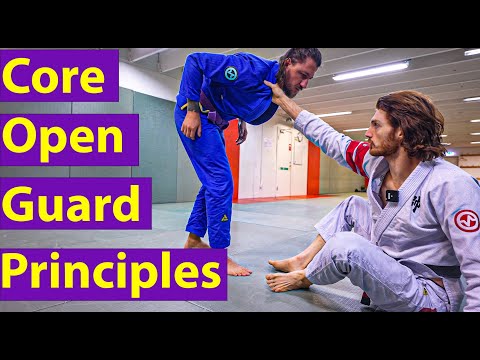
This video I go through 6 of the most important principles for developing an open guard. Open guard can be very complic…
Translation: position/posture
The Position class encompasses all distinct body configurations and spatial relationships between fighters that define the tactical landscape of grappling and striking combat. [1] Positions are the foundational framework of fighting — every technique exists within the context of a position, and positional hierarchy determines who has the mechanical advantage in a fight. [1],[2] This class covers ground positions (mount, side control, guard variants, back control, knee-on-belly, north-south, turtle), standing positions (stances, distance management), and the transitions between them. [2],[3] Understanding positional hierarchy — which positions are dominant and which are inferior — is the most fundamental concept in grappling, forming the basis upon which all offensive and defensive technique is built. [3],[4]
Positional theory has been central to fighting systems since antiquity, with ancient wrestling traditions recognising dominant and inferior positions. [1] Judo formalised ground positions through its osaekomi-waza (pinning techniques), establishing the first systematic positional hierarchy. [2] Brazilian Jiu-Jitsu revolutionised positional understanding by developing the most comprehensive positional hierarchy in grappling history, recognising the guard as a viable fighting position and establishing the mount and back control as the ultimate dominant positions. [2],[3] MMA further expanded positional theory to integrate standing and ground positions into a unified fighting framework. [3],[4]
Positional hierarchy is the single most predictive factor in grappling outcomes — fighters in dominant positions win the vast majority of exchanges. [1] Saulo Ribeiro emphasises that position before submission is the foundational strategic principle of BJJ, and that achieving and maintaining dominant positions is more important than any individual technique. [2] In MMA, fighters who achieve dominant positions (mount, back control, side control) finish fights at dramatically higher rates than those fighting from inferior positions. [3]
Positional theory traces from judo's osaekomi-waza (pinning techniques) formalised by Jigoro Kano in the 1880s, [1] through the Gracie family's development of comprehensive positional hierarchy in BJJ, [2] to John Danaher's modern systematisation of positional concepts into a unified framework. [3] Helio Gracie's emphasis on leverage-based positional control for smaller practitioners established the principle that position trumps strength. [2]
No images yet for this technique.
Sign in to suggest an image.
This video I go through 6 of the most important principles for developing an open guard. Open guard can be very complic…
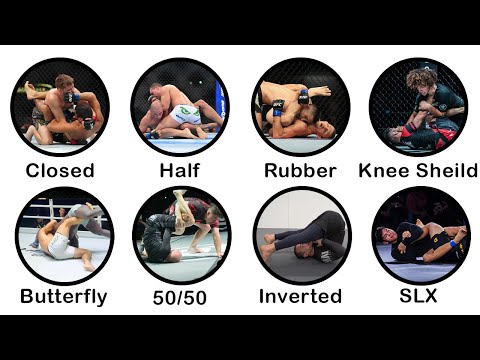
Every Jiu Jitsu Guard Explained in 8 minutes! XMartial: https://www.xmartial.com/?ref=joshrich Code:JOSHRICH 0:00 Cl…
No instructional courses yet for this technique.
Sign in to suggest a course.
Risk of injury to the person this technique is applied to
Positional techniques are primarily about control; direct injury risk is low
Skill level needed to execute this technique reliably
Whether this technique is allowed under major competition rule sets
Drysdale, Robert. Opening Closed-Guard: The Origins of Jiu-Jitsu in Brazil (2020). ISBN: 979-8680602287
Alias sources — [1] IBJJF Rules (2024) [2] Kodokan Judo (Kano, 1986) [3] Kodokan Judo (Kano, 1986)
Effectiveness sources — [1] Mastering Jujitsu (Gracie & Danaher, 2003) [2] Jiu-Jitsu University (Ribeiro, 2008) [3] UFC official statistics (ufcstats.com)
Standard Japanese martial arts terminology (kanji/hiragana)
Established Japanese martial arts naming convention — native Japanese term (和語/漢語)
Alias sources — [1] IBJJF Rules (2024) [2] Kodokan Judo (Kano, 1986) [3] Kodokan Judo (Kano, 1986)
Effectiveness sources — [1] Mastering Jujitsu (Gracie & Danaher, 2003) [2] Jiu-Jitsu University (Ribeiro, 2008) [3] UFC official statistics (ufcstats.com)
hip flexibility, active legs, grip management
long legs for distance control and guard retention
hip flexors, adductors, quadriceps, core, grip
Every move, in any martial art, shares a few universal traits. Mix and match below to pinpoint the right tool — or compare equivalents across styles.
The Back Position group encompasses all positions where one fighter has achieved control from behind the opponent, considered the most dominant positional category in grappling. [1] Back positions are the pinnacle of the positional hierarchy because the controlling fighter has access to devastating attacks (primarily the rear naked choke) while the controlled fighter cannot see or effectively counter-attack. [1,2] This group covers back control variants (hooks, body triangle, seatbelt, crucifix), rear mount positions (seated and supine), and the chair sit position. [2,3]
The guard is a ground grappling position where the bottom fighter uses their legs to control, defend, and attack the top player — widely considered Brazilian Jiu-Jitsu's most revolutionary contribution to martial arts. [1] Unlike traditional wrestling and judo where being on bottom is purely disadvantageous, the guard transforms the bottom position into an offensive platform capable of sweeps, submissions, and transitions to dominant positions. [1,2] The guard family has expanded enormously since the 1990s, growing from basic closed guard into dozens of specialised variations — open guard, half guard, butterfly guard, De La Riva, spider guard, X-guard, worm guard, and many more — each with its own sweep, submission, and retention systems. [2,3] Modern competition BJJ is largely defined by the interplay between guard players and guard passers, with entire competitive careers built around mastery of a single guard variation. [3]
Guard passing encompasses all techniques used by the top player to navigate past the bottom player's legs and achieve a dominant position — it is the yin to the guard's yang and arguably the most complex skill set in all of grappling. [1] The guard passer must solve a dynamic puzzle: the bottom player's legs are powerful, dexterous barriers with hooks, frames, and grips that must be systematically neutralised to advance to side control, mount, or back control. [1,2] Three fundamental passing philosophies exist — pressure passing (using bodyweight to flatten and immobilise), speed passing (using quickness and timing to outrun the guard player's reactions), and traction passing (using grip-based pulling to move the opponent's legs out of the way) — and elite passers blend all three. [2,3] Guard passing is scored 3 points in IBJJF and ADCC competition, reflecting its difficulty and strategic importance. [3]
The Guard Position group encompasses all positions where the bottom fighter uses the legs to control, manage distance, attack, and defend against the top fighter. [1] The guard is BJJ's most revolutionary contribution to martial arts — the recognition that the bottom fighter can be tactically effective and even dominant through leg-based control. [1,2] This group covers closed guard (legs locked around the waist), half guard (controlling one leg), open guards (feet on hips/biceps with distance), butterfly guard (hooks inside thighs), rubber guard (overhook with leg flexibility), worm guard (lapel-based), and X-guard (dual leg hook), representing the full spectrum of bottom-position fighting. [2,3]
The Guard Top group covers all positions, techniques, and strategies for the fighter on top when the opponent is playing guard — the offensive counterpart to the guard player's sweeps and submissions. [1] Being in someone's guard requires a specific skill set: maintaining posture to prevent being pulled into submissions, establishing base to resist sweeps, and systematically working to pass the guard to achieve a dominant position. [1,2] In MMA, guard top includes the critical skill of ground-and-pound — delivering strikes from inside the guard while avoiding submission attempts — which is one of the most common ways fights are finished on the ground. [2,3] The top player must balance defensive awareness (avoiding triangles, armbars, and guillotines) with offensive progression (passing the guard to side control or mount). [3]
The mount is the most dominant ground position in grappling, where one fighter sits astride the opponent's torso with knees planted on either side, applying gravitational pressure and controlling the fight from above. [1] It is universally recognised as the pinnacle of positional hierarchy — in BJJ competition it awards 4 points (the maximum for any position), and in self-defence scenarios the mounted fighter has near-total striking and submission access while the bottom fighter is extremely limited. [1,2] The Gracie family built their entire self-defence system around the premise that achieving mount wins fights, famously demonstrating at UFC 1–4 that a skilled mount player can control and finish much larger opponents. [2,3] Mount variations include low mount (grapevined legs for maximum control), high mount (chest-to-face with arms trapped), S-mount (modified for armbar entries), and technical mount (one knee up for back-take transitions). [3]
Side control is a dominant ground position where the top player lies chest-to-chest across the opponent's torso, perpendicular to their body, using a combination of crossface, underhook, and chest pressure to pin the bottom player to the mat. [1] It is the most common dominant position reached after passing the guard and serves as the central hub of the BJJ positional hierarchy — from side control, the top player can transition to mount, knee-on-belly, back control, or north-south, or attack with submissions directly. [1,2] In judo, the equivalent position (yoko shiho gatame, 'side four-corner hold') is one of the primary osaekomi (pin) positions, scoring waza-ari after 10 seconds and ippon after 20 seconds of unbroken control. [2,3] In MMA, side control provides a strong platform for ground-and-pound while severely limiting the bottom player's offensive options. [3]
The Standing Position group encompasses all positions that occur while both fighters are on their feet, including stances, distance management frameworks, and standing guard positions. [1] Standing positions are the starting point of virtually all combat exchanges — the stance determines the fighter's balance, power generation, and defensive posture, while distance management determines which techniques are available at any given moment. [1,2] This group covers fighting stances (orthodox, southpaw, square, wrestling), distance management zones (close, mid, long range), and standing guard positions used in grappling. [2,3]
The Top Position group encompasses all dominant ground positions where the fighter on top has passed the opponent's guard and achieved a controlling position. [1] Top positions represent the upper half of grappling's positional hierarchy — they provide the controlling fighter with the ability to apply pins, generate striking force (in MMA), and attack with submissions while the bottom fighter's options are limited. [1,2] This group covers side control, mount (full, high, low, S-mount, mounted crucifix), knee-on-belly (standard, reverse, knee-on-chest), and north-south positions. [2,3]
The Turtle Position group encompasses all positions related to the turtle — the defensive curled-up posture on hands and knees — from both the perspective of the turtled fighter and the attacking fighter on top. [1] The turtle is a transitional position that occurs frequently in grappling during guard pull defence, takedown defence, sweep defence, and scrambles. [1,2] This group covers defensive turtle positions (standard turtle, tight turtle), attacking positions against the turtle (front headlock, seatbelt), and the wrestling referee position. [2,3]
Position — where you are relative to your opponent — determines what techniques are available to both fighters. In BJJ, positional hierarchy (back > mount > knee-on-belly > side control > half guard > guard > turtle) is the strategic framework. 'Mount' appears in 3,445 passages and 'guard' in thousands more across our corpus. (200+ books; Ribeiro, Jiu-Jitsu University; IBJJF scoring system)
According to Jon Thomas BJJ, your defense should not be based on any particular guard—instead, focus on being able to defend without relying on grips, using proper blocking, framing, and mechanics so that when you do develop specific guards, you have a solid foundation.
Jon Thomas BJJ explains that having both shoulder blades on the mat gives you only two points of contact, which makes it hard to spin and move; instead, keep at least one shoulder blade elevated to maintain mobility.
Jon Thomas BJJ recommends grabbing the biceps instead of pushing on the legs—this way, when your opponent moves their hands or walks, your feet and their biceps stay connected, allowing you to track their movement effectively.
Jon Thomas BJJ identifies three critical elements: keeping your feet pointed at your opponent (alignment), maintaining elbow-knee space so your opponent can't close the gap, and proper foot tracking to control distance and position.
The Position class encompasses all distinct body configurations and spatial relationships between fighters that define the tactical landscape of grappling and striking combat. Positions are the foundational framework of fighting — every technique exists within the context of a position, and positional hierarchy determines who has the mechanical advantage in a fight.
Positional theory has been central to fighting systems since antiquity, with ancient wrestling traditions recognising dominant and inferior positions. Judo formalised ground positions through its osaekomi-waza (pinning techniques), establishing the first systematic positional hierarchy.
IBJJF: legal — Legal; IJF: legal — Legal; ADCC: legal — Legal; Unified MMA: legal — Legal; UWW: legal — Legal; FIAS Sport Sambo: legal — Legal
Danger rating 2/10. Low — positional techniques are primarily about control; direct injury risk is low
The standard setup chain: Achieve Guard Contact → Control Grips → Manage Distance → Threaten Submissions/Sweeps.
Standard counters include: Guard Pass — systematically work to clear the legs and establish a dominant position / Leg Pin — control one or both legs to neutralize guard retention / Pressure Passing — use heavy chest pressure to flatten and immobilize the guard player.
Common variants: Standard guard (primary leg and grip configuration for control and attack…); Offensive guard (configured for sweeps and submissions); Defensive guard (prioritising distance management and preventing passes); Transition guard (moving between guard types to adjust to the opponent's pa…).
Positional control is the foundation of scoring in BJJ, judo, and wrestling, and directly affects fight outcomes in MMA.
Top errors to watch for: Chasing submissions without securing position first — 'position before submission' is the foundational principle / Not understanding the positional hierarchy — knowing which positions are dominant guides all decision-making / Treating positions as static endpoints — positions are dynamic; constant adjustment is required to maintain control / Ignoring transitions between positions — the transitions are where most submissions and escapes happen.
The Position is also known as Taisei, Positions, Positional Hierarchy, Ichi (位置).