The 5 best mount submissions
0
Mount·Jedi Does Jiujitsu
Here are the 5 best mount submissions (bjj) ranked from most safe to most risky Always be sure that you can maintain you…
Translation: Mount
The mount is the most dominant ground position in grappling, where one fighter sits astride the opponent's torso with knees planted on either side, applying gravitational pressure and controlling the fight from above. [1] It is universally recognised as the pinnacle of positional hierarchy — in BJJ competition it awards 4 points (the maximum for any position), and in self-defence scenarios the mounted fighter has near-total striking and submission access while the bottom fighter is extremely limited. [1],[2] The Gracie family built their entire self-defence system around the premise that achieving mount wins fights, famously demonstrating at UFC 1–4 that a skilled mount player can control and finish much larger opponents. [2],[3] Mount variations include low mount (grapevined legs for maximum control), high mount (chest-to-face with arms trapped), S-mount (modified for armbar entries), and technical mount (one knee up for back-take transitions). [3]
The mount has been recognised as a dominant position throughout combat history — ancient pankration, medieval wrestling manuals, and virtually every grappling tradition acknowledge the superiority of the top-straddling position. [1] In Brazilian Jiu-Jitsu, the mount was elevated to the highest position in the positional hierarchy by Hélio Gracie, who built his self-defence system around the sequence: takedown → pass guard → achieve mount → submit. [1],[2] Royce Gracie's UFC performances (1993–1994) demonstrated mount's dominance to the world, and Roger Gracie's competition career (7x World Champion) showed that a masterful mount game alone could defeat the best grapplers in the world. [2],[3]
Mount is the most effective dominant position in grappling and self-defence contexts, providing the top player with overwhelming control and attack options. [1] In MMA, achieving mount is one of the strongest predictors of winning a fight — ground-and-pound from mount is responsible for a significant percentage of TKO/KO finishes. [2] Roger Gracie's competition record demonstrates mount's supremacy in pure grappling: he submitted multiple IBJJF World Championship opponents with the cross-collar choke from mount, proving that even at the highest levels, a perfected mount game is nearly unstoppable. [3]
The mount position was formalised in judo as tate shiho gatame (vertical four-corner hold) and adopted into Brazilian Jiu-Jitsu through the Gracie lineage. [1] Hélio Gracie positioned mount as the ultimate goal of the positional hierarchy, and this philosophy was transmitted through his sons and students. [1],[2] Roger Gracie's competition career (2004–2017) demonstrated the mount's effectiveness at the highest level and inspired a generation of mount-focused competitors. [2]
Mount is scored as the highest-value position in BJJ (4 points IBJJF, 2 points ADCC) and is a recognised pin in judo (tate shiho gatame, scoring ippon after 20 seconds of hold-down). [1] Roger Gracie won 7 IBJJF World Championships and 2 ADCC titles largely through mount-based submissions, particularly the cross-collar choke from mount. [1],[2] In UFC/MMA history, ground-and-pound from mount has ended hundreds of fights by TKO, making it one of the most decisive positions in professional fighting. [2]
No images yet for this technique.
Sign in to suggest an image.
Here are the 5 best mount submissions (bjj) ranked from most safe to most risky Always be sure that you can maintain you…
In order to attack, you need to have a solid foundation and be comfortable in a position. Here are some of the key point…
No instructional courses yet for this technique.
Sign in to suggest a course.
Risk of injury to the person this technique is applied to
Very high for the bottom player — the mounted fighter faces unrestricted ground-and-pound in MMA, multiple submission threats (armbar, cross-collar choke, americana, ezekiel), and extreme difficulty generating escape leverage; for the top player, risk is minimal (potential reversal from careless position)
Skill level needed to execute this technique reliably
Whether this technique is allowed under major competition rule sets
Jiu-Jitsu University (Saulo Ribeiro, 2008)
Description sources — [1] Jiu-Jitsu University (Ribeiro, 2008) on mount as apex of positional hierarchy [2] Mastering Jujitsu (Gracie & Danaher, 2003) on Gracie positional theory [3] Roger Gracie competition analysis
History sources — [1] Ancient combat and wrestling traditions [2] The Gracie Way (Kid Peligro, 2003) [3] Roger Gracie IBJJF competition record
Effectiveness sources — [1] Jiu-Jitsu University (Ribeiro, 2008) [2] UFC fight statistics (ufcstats.com) [3] Roger Gracie's 7x World Championship record
Official Kodokan ground technique classification system
Description sources — [1] Jiu-Jitsu University (Ribeiro, 2008) on mount as apex of positional hierarchy [2] Mastering Jujitsu (Gracie & Danaher, 2003) on Gracie positional theory [3] Roger Gracie competition analysis
History sources — [1] Ancient combat and wrestling traditions [2] The Gracie Way (Kid Peligro, 2003) [3] Roger Gracie IBJJF competition record
Effectiveness sources — [1] Jiu-Jitsu University (Ribeiro, 2008) [2] UFC fight statistics (ufcstats.com) [3] Roger Gracie's 7x World Championship record
balance and base (staying mounted while the opponent bridges and bucks), hip dexterity (adjusting position dynamically), upper body control (isolating arms for submissions)
heavy bodyweight (more difficult to escape), long legs (easier to grapevine), strong core (riding bridges), good cardio (maintaining active mount is physically demanding)
adductors (squeezing the opponent), core (balance and riding), glutes (driving weight down), forearms (grip fighting and arm isolation)
Every move, in any martial art, shares a few universal traits. Mix and match below to pinpoint the right tool — or compare equivalents across styles.
The mount is the most dominant position in ground fighting. In early UFC events, Royce Gracie consistently achieved mount and finished opponents from there. In IBJJF, mount scores 4 points — the highest positional score. (IBJJF Rules v6.0; Ribeiro, Jiu-Jitsu University)
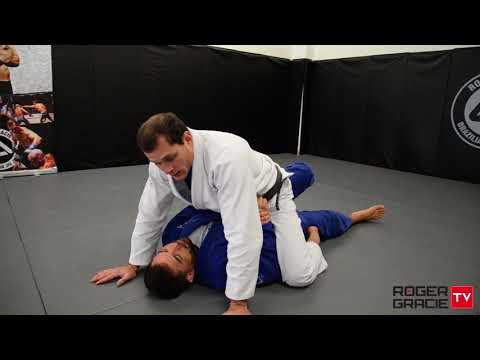
Roger Gracie emphasizes that you must secure the mount position first before attempting submissions. Once you're comfortable and can spend time in the position, then you can work on submissions without constantly repositioning yourself.
According to Roger Gracie, the two most common mount escapes are the bridge (upa) where they hold one arm and bridge over to reverse you, and pushing your leg to put you back in guard.
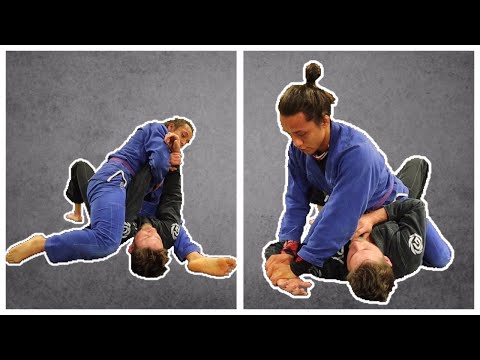
Jedi Does Jiujitsu recommends being as close to your partner's head as possible, driving weight on their chest, arching your back, and keeping your feet glued to their body—any gap between your foot and their body creates space for escape.
Jedi Does Jiujitsu suggests grabbing the cross face, crossing your ankles underneath their legs, and arching your back to make yourself heavier while posting out with your hands to stabilize the high mount.
The mount is the most dominant ground position in grappling, where one fighter sits astride the opponent's torso with knees planted on either side, applying gravitational pressure and controlling the fight from above. It is universally recognised as the pinnacle of positional hierarchy — in BJJ competition it awards 4 points (the maximum for any position), and in self-defence scenarios the mounted fighter has near-total striking and submission access while the bottom fighter is extremely limited.
The mount has been recognised as a dominant position throughout combat history — ancient pankration, medieval wrestling manuals, and virtually every grappling tradition acknowledge the superiority of the top-straddling position. In Brazilian Jiu-Jitsu, the mount was elevated to the highest position in the positional hierarchy by Hélio Gracie, who built his self-defence system around the sequence: takedown → pass guard → achieve mount → submit.
IBJJF: legal — Legal, mount scores 4 points — highest-scoring position; IJF: legal — Legal, osaekomi (pin) — 10-19 seconds scores waza-ari, 20 seconds scores ippon; ADCC: legal — Legal, mount scores 2 points; Unified MMA: legal — Legal dominant position; UWW: legal — Legal, back exposure scores points, pin ends match by fall; FIAS Sport Sambo: legal — Legal, pin scores points
Danger rating 8/10. Very high for the bottom player — the mounted fighter faces unrestricted ground-and-pound in MMA, multiple submission threats (armbar, cross-collar choke, americana, ezekiel), and extreme difficulty generating escape leverage; for the top player, risk is minimal (potential reversal from careless position)
The standard setup chain: Establish Mount → Consolidate Control → Advance to High Mount → Isolate an Arm → Attack → Chain Submissions.
Standard counters include: Trap and Roll (Upa) — trap the opponent's arm and same-side foot, bridge explosively to reverse to guard top / Elbow-Knee Escape (Shrimp) — frame against the hips, hip escape to create space, recover half guard or full guard / Foot Drag — trap one of the mounted player's feet with your own, bridge to the trapped side, and recover half guard / Going to Turtle — when escape to guard fails, turn to turtle as an intermediate position before standing up.
Common variants: Low mount (hips heavy, grapevine hooks locking the opponent's legs; …); High mount (hips walked up to the opponent's chest/face, knees pinnin…); S-mount (one leg posted forward beside the head with the shin acro…); Technical mount (one knee up with the foot on the ground (like a lunge), t…); Rear mount (mount achieved from behind with hooks in; combines mount …); Mounted crucifix (arms trapped under the mount player's legs; devastating c…).
Mount is scored as the highest-value position in BJJ (4 points IBJJF, 2 points ADCC) and is a recognised pin in judo (tate shiho gatame, scoring ippon after 20 seconds of hold-down). Roger Gracie won 7 IBJJF World Championships and 2 ADCC titles largely through mount-based submissions, particularly the cross-collar choke from mount.
Top errors to watch for: Sitting too high without base — high mount is powerful but requires careful weight distribution; leaning too far forw… / Crossing ankles under the opponent — in both BJJ and MMA, crossed ankles from mount expose a foot lock; keep ankles u… / Going for submissions too early — rushing an armbar from mount before consolidating control often results in losing t… / Staying flat on the opponent's chest — while heavy pressure is good for control, it limits striking and submission op….
The Mount is also known as Maunto, Mount Position, Full Mount, Mounted Position, Tate Shiho Gatame.