How To Take The Back From A Tight Turtle Position
0
Back Position·MMA Leech
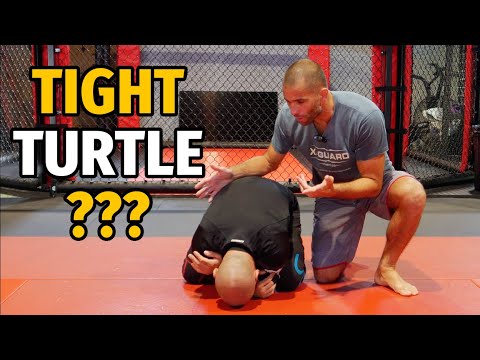
Taking the Back from turtle position can be very challenging sometimes, especially when your opponent is playing it very…
Translation: back position
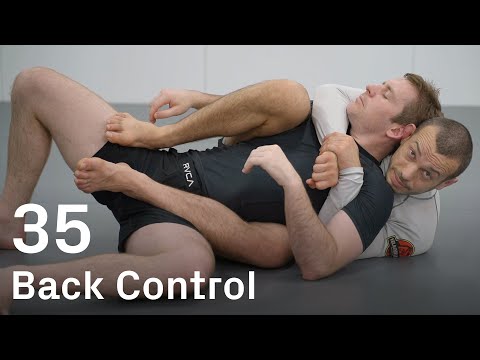
The Back Position group encompasses all positions where one fighter has achieved control from behind the opponent, considered the most dominant positional category in grappling. [1] Back positions are the pinnacle of the positional hierarchy because the controlling fighter has access to devastating attacks (primarily the rear naked choke) while the controlled fighter cannot see or effectively counter-attack. [1],[2] This group covers back control variants (hooks, body triangle, seatbelt, crucifix), rear mount positions (seated and supine), and the chair sit position. [2],[3]
Back control has been recognised as a dominant position throughout the history of grappling, but BJJ elevated it to the highest-scoring position in its competitive framework. [1] The IBJJF awards four points for achieving back control, the highest positional score in the system, reflecting its tactical supremacy. [2],[3]
Back control is statistically the most dominant position in both grappling and MMA. [1] The rear naked choke, applied primarily from back control, is the single most successful submission in UFC history, accounting for more finishes than any other submission. [2] Danaher identifies back control as the position with the highest finish rate because the attacker has access to the neck while the defender cannot see or counter-attack effectively. [1]
Back control methodology was refined through generations of BJJ competition, from the Gracie family's early use of rear chokes [1] through Marcelo Garcia's revolutionary back-taking systems in the 2000s, [2] to John Danaher's systematisation of back attack sequences with the Danaher Death Squad. [3]
The rear naked choke from back control is the most common submission finish in UFC history, with over 300 finishes recorded through 2024. [1] ADCC absolute champions consistently demonstrate elite back control — Marcelo Garcia won four ADCC gold medals (2003, 2005, 2007, 2009) with back control as his primary attacking position. [2]
No images yet for this technique.
Sign in to suggest an image.
Taking the Back from turtle position can be very challenging sometimes, especially when your opponent is playing it very…
Full Course Playlist → https://youtube.com/playlist?list=PLDrQXekZsfYZfV1QZ4T5UkxLwFwQ12EbP Find the Introduction course…
No instructional courses yet for this technique.
Sign in to suggest a course.
Risk of injury to the person this technique is applied to
Back control is dominant position; enables rear chokes (Danaher 2021)
Skill level needed to execute this technique reliably
Whether this technique is allowed under major competition rule sets
Mastering Jujitsu (Renzo Gracie & John Danaher, 2003)
Alias sources — [1] Jiu-Jitsu University (Ribeiro, 2008) [2] Mastering Jujitsu (Gracie & Danaher, 2003) [3] Mastering Jujitsu (Gracie & Danaher, 2003) [4] Kodokan Judo (Kano, 1986)
Effectiveness sources — [1] Mastering Jujitsu (Gracie & Danaher, 2003) [2] UFC official statistics (ufcstats.com)
Standard Japanese martial arts terminology (kanji/hiragana)
Established Japanese martial arts naming convention — native Japanese term (和語/漢語)
Alias sources — [1] Jiu-Jitsu University (Ribeiro, 2008) [2] Mastering Jujitsu (Gracie & Danaher, 2003) [3] Mastering Jujitsu (Gracie & Danaher, 2003) [4] Kodokan Judo (Kano, 1986)
Effectiveness sources — [1] Mastering Jujitsu (Gracie & Danaher, 2003) [2] UFC official statistics (ufcstats.com)
base stability, heavy hips, ride ability
heavier build with strong hips for pressure
hip adductors, core, glutes, quadriceps
Every move, in any martial art, shares a few universal traits. Mix and match below to pinpoint the right tool — or compare equivalents across styles.
The Back Control family covers the various methods of controlling an opponent from behind, using combinations of hooks, body triangles, and upper body grips. [1] Back control is defined by having the chest against the opponent's back with some form of lower body control (hooks or body triangle) and upper body control (seatbelt, harness, or collar grip). [1,2] The family encompasses hook-based controls (single and double hooks inside the thighs), body triangle controls (legs locked in a figure-four around the torso), seatbelt configurations (over-under arm control from behind), and the crucifix (extreme back control with both arms trapped). [2,3]
The Chair Sit family covers the back control position where the controlling fighter sits behind the opponent with both fighters' hips on the mat, the controlling fighter's legs wrapped around the opponent's waist. [1] The chair sit is a transitional back position that provides control while the controlling fighter works to establish full back control with hooks or a body triangle. [1,2] It is named for the seated posture resembling sitting in a chair behind the opponent. [2,3]
The Leg Ride Control family covers the technique of using the legs to ride and control the opponent from behind — a wrestling-based control system where the top wrestler threads one or both legs between the opponent's legs from the back/turtle position, creating a 'leg ride' that is extremely difficult to escape. [1] Leg rides are primarily a folkstyle wrestling control technique used to accumulate riding time (a folkstyle-specific scoring mechanism), but they have been adapted into BJJ (as part of the crucifix and Truck positions) and MMA (as a back control variation). [1,2] The basic leg ride involves threading one leg (the 'ride leg') between the opponent's legs from behind, hooking the opponent's thigh, and using this hook to control their lower body movement while the arms control the upper body. [2,3] Advanced leg rides include the 'turk' (figure-four legs around one of the opponent's legs from behind), which provides near-total lower body control and is the gateway to tilts and near-fall exposure. [3]
The Rear Mount family covers the fully established back control positions where the controlling fighter has both hooks or a body triangle secured from behind the opponent. [1] Rear mount is the ultimate dominant position in grappling's positional hierarchy — the controlling fighter has maximum attacking potential (primarily the rear naked choke) while the controlled fighter has minimum defensive capability. [1,2] Rear mount can be maintained from a seated position (controlling fighter sitting upright behind) or a supine position (controlling fighter lying on their back with the opponent on top). [2,3]
Back position (rear mount with hooks or body triangle) is the most dominant position in grappling — scoring 4 points in IBJJF and giving access to the rear naked choke. Back control appears in 61 passages across 11 books. Danaher considers it the pinnacle of positional hierarchy. (11+ books; Danaher, Back Attacks; IBJJF Rules v6.0)
MMA Leech recommends bringing the guy down to open him up and force him to react. Start by mirroring his leg with your knee by his knee and hip by his hip, keeping your knee off the mat so you have weight on top of him—if your knee touches the ground, he can escape more easily.
According to Absolute MMA St Kilda, you need both leg hooks (or a foot across the hip to prevent lateral escape) and proper upper body control with the seat belt grip. Additionally, position your head on the same side as your underhook and keep it tight against their head to prevent them from rotating away or scooting lower.
No—Absolute MMA St Kilda emphasizes that crossing your feet is a common mistake because your opponent can step over your legs and bridge in, which could injure your ankle or knee. Instead, keep your hooks open or use a foot across the hip.
Absolute MMA St Kilda explains that the seat belt grip (one arm under the armpit, one around the shoulder) prevents your opponent from rotating away and stops them from dropping down your body to escape. You should grip it with your choking hand covered by your other hand so they can't peel off your choking hand.
The Back Position group encompasses all positions where one fighter has achieved control from behind the opponent, considered the most dominant positional category in grappling. Back positions are the pinnacle of the positional hierarchy because the controlling fighter has access to devastating attacks (primarily the rear naked choke) while the controlled fighter cannot see or effectively counter-attack.
Back control has been recognised as a dominant position throughout the history of grappling, but BJJ elevated it to the highest-scoring position in its competitive framework. The IBJJF awards four points for achieving back control, the highest positional score in the system, reflecting its tactical supremacy.
IBJJF: legal — Legal, back control with hooks or body triangle scores 4 points; IJF: legal — Legal — back control leads to pin or submission opportunities; ADCC: legal — Legal, back mount scores 3 points (4 from sweep); Unified MMA: legal — Legal — dominant position for ground-and-pound and rear naked choke; UWW: legal — Legal — back exposure is the primary scoring mechanism in wrestling; FIAS Sport Sambo: legal — Legal
Danger rating 4/10. Moderate — back control is dominant position; enables rear chokes (Danaher 2021)
The standard setup chain: Pass the Guard → Settle Weight → Control Arms → Threaten Submissions.
Standard counters include: Bridge (Upa) — explosive hip elevation to off-balance the top player / Elbow-Knee Escape (Shrimp) — create space by driving elbow to knee and hip-escaping / Frame — establish forearm frames to prevent the top player from settling weight.
Common variants: Low mount (hips heavy on the opponent's belly, grapevines in for sta…); High mount (knees under the armpits, arms isolated for submissions); S-mount (one knee high under the armpit, other leg across for arm …); Technical mount (one leg hooked, one knee posted, modified for back-take t…).
The rear naked choke from back control is the most common submission finish in UFC history, with over 300 finishes recorded through 2024. ADCC absolute champions consistently demonstrate elite back control — Marcelo Garcia won four ADCC gold medals (2003, 2005, 2007, 2009) with back control as his primary attacking position.
Top errors to watch for: Taking the back without establishing control — hooks and seatbelt must be secured immediately / Crossing the feet when applying hooks — crossed feet expose you to ankle locks / Focusing on the choke before establishing control — secure the position first, then attack / Allowing the opponent to turn and face you — maintain hooks and seatbelt to prevent the turn.
The Back Position is also known as Haimen Taisei, Back Control, Back Mount, Rear Control, Ushiro.