A JJM Guard Pass Encyclopedia
0
Guard Pass·JeanJacquesMachado
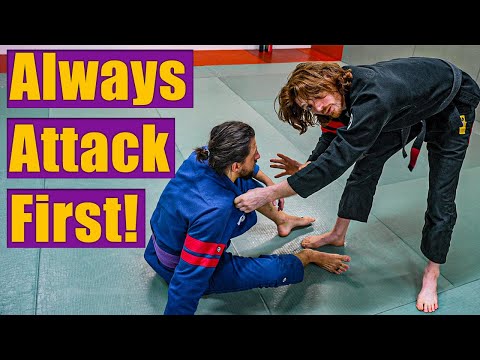
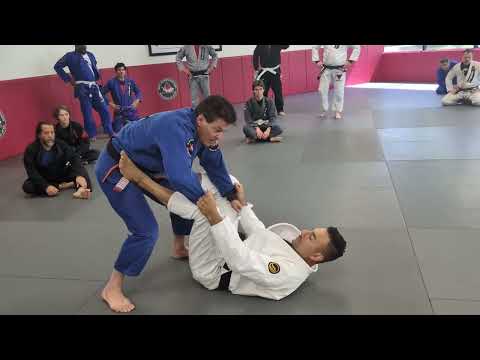
#escapes #jeanjacquesmachado #bjj One of the pioneers of the art of Brazilian Jiu-Jitsu and one of its greatest champi…
Translation: Guard pass
Guard passing encompasses all techniques used by the top player to navigate past the bottom player's legs and achieve a dominant position — it is the yin to the guard's yang and arguably the most complex skill set in all of grappling. [1] The guard passer must solve a dynamic puzzle: the bottom player's legs are powerful, dexterous barriers with hooks, frames, and grips that must be systematically neutralised to advance to side control, mount, or back control. [1],[2] Three fundamental passing philosophies exist — pressure passing (using bodyweight to flatten and immobilise), speed passing (using quickness and timing to outrun the guard player's reactions), and traction passing (using grip-based pulling to move the opponent's legs out of the way) — and elite passers blend all three. [2],[3] Guard passing is scored 3 points in IBJJF and ADCC competition, reflecting its difficulty and strategic importance. [3]
Guard passing has been a critical skill since the emergence of the guard in BJJ — once the Gracie family demonstrated that the guard was a viable offensive position, passing the guard became the essential top-game skill. [1] Early guard passing was relatively simple — stack passes and basic toreando movements dominated until the 2000s. [1],[2] The modern guard passing revolution began with competitors like Fernando 'Tererê' Augusto (speed passing), Bernardo Faria (over-under pressure passing), the Mendes brothers (leg drag and berimbolo response), Leandro Lo (toreando and knee-cut mastery), and Gordon Ryan (systematic body-lock passing), who each contributed passing systems that transformed the art. [2],[3]
Guard passing is one of the most decisive skills in grappling competition — achieving a guard pass scores 3 points and typically leads to dominant positions where submissions or further points are available. [1] In high-level BJJ competition, the ability to pass guard often determines match outcomes, with elite passers like Leandro Lo, Roger Gracie, and Gordon Ryan building championship careers on passing excellence. [2] In MMA, guard passing from inside the guard to side control or mount is one of the strongest predictors of a round win in judging criteria. [3]
Guard passing traces from basic judo ne waza escapes from the guard through the Gracie BJJ lineage to modern sport jiu-jitsu. [1] Key innovators include Fernando Tererê (speed passing revolution), Bernardo Faria (over-under pressure system), the Mendes brothers (leg drag and precision passing), Leandro Lo (dynamic toreando), and Gordon Ryan (systematic body-lock and passing hierarchy). [1],[2] The evolution of guard passing has directly mirrored guard innovation — each new guard system spawns counter-passing strategies. [2]
Guard passing is the second-highest scoring action in IBJJF competition (3 points, behind mount's 4 points) and is central to ADCC strategy (3 points). [1] Elite guard passers dominate modern BJJ competition — Leandro Lo won 5 IBJJF World Championship titles across multiple weight classes largely through superior passing, and Gordon Ryan's systematic passing approach has dominated ADCC. [1],[2] In MMA, effective guard passing is one of the primary metrics by which ground fighters are evaluated. [2]
No images yet for this technique.
Sign in to suggest an image.
#escapes #jeanjacquesmachado #bjj One of the pioneers of the art of Brazilian Jiu-Jitsu and one of its greatest champi…
When most grapplers are taught open guard passing, they are taught with their opponents on their back and not sat up in …
No instructional courses yet for this technique.
Sign in to suggest a course.
Risk of injury to the person this technique is applied to
Moderate — guard passing is relatively safe for both players; the primary risks are submission attempts from the guard player (triangle, armbar, guillotine) during the passing attempt, and knee/ankle strain from getting caught in leg entanglements during passing transitions
Skill level needed to execute this technique reliably
Whether this technique is allowed under major competition rule sets
Jiu-Jitsu University (Saulo Ribeiro, 2008)
Description sources — [1] Jiu-Jitsu University (Ribeiro, 2008) on guard passing fundamentals [2] BJJ competition evolution analysis [3] IBJJF and ADCC scoring rules
History sources — [1] The Gracie Way (Kid Peligro, 2003) on early guard passing [2] BJJ competition records 2000–2020 [3] competitor instructional lineages
Effectiveness sources — [1] IBJJF and ADCC scoring (3 points for guard pass) [2] Competition records of Leandro Lo, Roger Gracie, Gordon Ryan [3] UFC fight analysis
Description sources — [1] Jiu-Jitsu University (Ribeiro, 2008) on guard passing fundamentals [2] BJJ competition evolution analysis [3] IBJJF and ADCC scoring rules
History sources — [1] The Gracie Way (Kid Peligro, 2003) on early guard passing [2] BJJ competition records 2000–2020 [3] competitor instructional lineages
Effectiveness sources — [1] IBJJF and ADCC scoring (3 points for guard pass) [2] Competition records of Leandro Lo, Roger Gracie, Gordon Ryan [3] UFC fight analysis
hip mobility (hip switching is the core passing movement), grip strength (controlling legs, stripping guard player's grips), cardio endurance (sustained passing pressure is exhausting)
strong core (driving pressure through the chest), explosive hips (speed passes require quick hip movement), heavy bodyweight (pressure passes are more effective with mass)
hip flexors and extensors (hip switching, sprawling), shoulders (driving crossface pressure), forearms (grip fighting), quadriceps (driving knee-cut and pressure passes), core (connecting upper and lower body during pass transitions)
Every move, in any martial art, shares a few universal traits. Mix and match below to pinpoint the right tool — or compare equivalents across styles.
The Fundamental Guard Pass family covers the core guard passing techniques that form the foundation of every grappler's passing game — the essential methods for navigating past the opponent's legs to achieve side control, mount, or back control. [1] This family includes the basic passes that every BJJ practitioner learns first: the standing guard break and toreando pass, the kneeling guard break with knee-through pass, the stack pass, and foundational passing concepts that apply regardless of the specific guard being passed. [1,2] While modern BJJ has developed highly specialised passing systems (pressure passing, leg drag, body lock), all of them build upon the fundamental passing mechanics covered in this family — posture, base, grip control, and the ability to advance past the leg line while preventing guard recovery. [2,3] Every BJJ World Champion has mastered these fundamental passes before developing their advanced passing systems. [3]
The Headquarters Pass family covers passing techniques from the 'headquarters' stance — the kneeling position with one knee up (foot flat on the mat) and one knee down, positioned between the opponent's legs, which serves as the central launching pad for multiple guard passes. [1] The headquarters position is considered the most tactically versatile passing stance because from this single position, the passer can launch a knee cut pass (to the knee-up side), a backstep pass (to the other side), a toreando (by standing up), or a leg drag (by gripping and pulling). [1,2] The term 'headquarters' was popularised by BJJ instructors who recognised that this position is the 'base of operations' from which all passing decisions are made — the passer reads the guard player's reaction from headquarters and chooses the appropriate pass. [2,3] Headquarters has become the standard intermediate passing position in modern BJJ, replacing the older approach of choosing a specific pass before engaging the guard. [3]
The Knee Pass (knee cut / knee slice) family covers one of the most versatile and highest-percentage guard passing techniques in BJJ — driving one knee across the opponent's thigh while establishing a crossface with the upper body, slicing through the guard to achieve side control. [1] The knee cut pass is considered the Swiss Army knife of guard passing because it works against virtually every guard variation: closed guard (after breaking it open), half guard, De La Riva, butterfly, and open guard all have knee cut entries. [1,2] The pass works from the 'headquarters' position (one knee up, one knee down between the opponent's legs) and uses diagonal forward pressure combined with the knee slice across the thigh to split the opponent's leg defence. [2,3] The knee cut is often the first pass taught to intermediate students and remains the primary pass for many elite black belt competitors. [3]
The Leg Drag Pass family covers the technique of gripping one of the opponent's legs and dragging it across their body to clear the passing lane — one of the most dominant and controlling guard passes in modern competition BJJ. [1] The leg drag was popularised by the Mendes brothers (Guilherme and Rafael) and became a staple of modern sport BJJ, where the pass creates a devastating angle that gives the passer simultaneous access to side control, back take, and mount. [1,2] The pass works by controlling one leg at the knee or ankle and pulling it across the opponent's body to their far hip, then pinning it there while the passer advances to a perpendicular or back-angle position. [2,3] The leg drag is considered one of the most dominant passes because once established, the guard player has extremely limited recovery options — the dragged leg blocks their hip movement in the passed direction. [3]
The Pressure Pass family covers guard passing techniques that use heavy bodyweight, chest-to-chest compression, and methodical forward drive to flatten the guard player, immobilise their hips, and slowly advance past their legs — the grinding, dominant approach to guard passing favoured by heavier grapplers and competitors who prefer control over speed. [1] Pressure passing is exemplified by the over-under pass (one arm under the leg, one arm over), the smash pass (driving the opponent's legs to one side and flattening them), and Bernardo Faria's signature half guard pressure system. [1,2] The philosophy of pressure passing is that the guard player's offensive tools (sweeps, submissions) require hip movement — heavy pressure eliminates hip movement, reducing the guard player to a passive recipient of the pass. [2,3] Pressure passing is considered the most reliable passing approach against dangerous guard players because it minimises risk and creates an inescapable grinding advance. [3]
The Toreando (bullfighter) Pass family covers the classic standing guard pass where the passer grips both of the opponent's pant legs (gi) or knees (no-gi) and throws them to one side while stepping around — named after the bullfighter's cape movement because the passer redirects the guard player's legs like a matador redirecting a bull. [1] The toreando is the most fundamental standing guard pass in BJJ, taught as the first standing pass in virtually every academy worldwide, and remains effective at the highest levels of competition when executed with speed and proper timing. [1,2] The pass works by controlling both legs simultaneously and using a quick lateral direction change to outflank them, landing in side control before the guard player can recover. [2,3] Leandro Lo (5x IBJJF World Champion) was the greatest toreando passer in BJJ history, demonstrating that the 'basic' toreando could defeat the world's best guard players when executed with elite timing. [3]
Guard passing — advancing past the opponent's legs to achieve a dominant position — appears in 289 passages across 19 books. The single most important top-game skill in BJJ. Without passing guard, the top player cannot score points or achieve submissions from dominant positions. (19 books; Ribeiro, Jiu-Jitsu University; Danaher, Guard Passing series)
Jean Jacques Machado emphasizes getting two hands on one leg and moving parallel to your opponent, then driving your knee forward to close the distance and complete the pass. The key is maintaining control of the leg with both hands and not letting go as you drive through.
According to Jean Jacques Machado, don't fight the push—instead, go with the motion and step back, then re-engage and press forward. If your opponent holds a controlling grip on your arm, break the grip and keep moving rather than resisting the hold.
Jon Thomas emphasizes that staying low creates a strong pull on your opponent's shoulder and keeps their shoulders forward, which weakens their ability to defend and sets up the pass more effectively than being positioned high.
Jon Thomas suggests catching the lapel instead and pulling it while staying low, then moving to the side to run around or drop your shin in to create pressure on their hips, which can lead to a successful pass even without the underhook.
Guard passing encompasses all techniques used by the top player to navigate past the bottom player's legs and achieve a dominant position — it is the yin to the guard's yang and arguably the most complex skill set in all of grappling. The guard passer must solve a dynamic puzzle: the bottom player's legs are powerful, dexterous barriers with hooks, frames, and grips that must be systematically neutralised to advance to side control, mount, or back control.
Guard passing has been a critical skill since the emergence of the guard in BJJ — once the Gracie family demonstrated that the guard was a viable offensive position, passing the guard became the essential top-game skill. Early guard passing was relatively simple — stack passes and basic toreando movements dominated until the 2000s.
IBJJF: legal — Legal, guard pass scores 3 points; IJF: legal — Legal — transitioning past opponent's legs is part of newaza; ADCC: legal — Legal, guard pass scores 3 points; Unified MMA: legal — Legal; FIAS Sport Sambo: legal — Legal
Danger rating 3/10. Low-moderate — guard passing is relatively safe for both players; the primary risks are submission attempts from the guard player (triangle, armbar, guillotine) during the passing attempt, and knee/ankle strain from getting caught in leg entanglements during passing transitions
The standard setup chain: Establish Base and Posture → Strip Grips → Choose Passing Lane → Initiate Pass → Navigate the Legs → Consolidate.
Standard counters include: Guard Retention — using hip movement, frames, and grips to prevent the pass and re-establish guard / Sweep During Pass — timing a sweep as the passer commits to a pass attempt (often the highest-percentage sweep timing) / Submission During Pass — attacking with triangles, armbars, or guillotines as the passer creates openings during the … / Inversion — inverting (going upside down) to recover guard when the passer has nearly completed the pass.
Common variants: Pressure passing (using bodyweight and heavy chest/shoulder pressure to fla…); Speed passing (using quickness and timing to outflank the guard player's…); Traction passing (grip-based passing that moves the opponent's legs out of …); Knee-cut (knee slice) pass (splitting the guard by driving one knee across the oppone…); Leg drag (gripping one leg and dragging it across the opponent's bo…); Backstep pass (stepping backward out of the guard to create an angle for…).
Guard passing is the second-highest scoring action in IBJJF competition (3 points, behind mount's 4 points) and is central to ADCC strategy (3 points). Elite guard passers dominate modern BJJ competition — Leandro Lo won 5 IBJJF World Championship titles across multiple weight classes largely through superior passing, and Gordon Ryan's systematic passing approach has dominated ADCC.
Top errors to watch for: Passing without controlling grips — attempting to pass while the guard player has strong sleeve, collar, or pant grip… / Leaning too far forward — over-committing the upper body past the guard player's legs without hip control leads to be… / Using only one passing style — a pure pressure passer who never passes standing, or a pure speed passer who never use… / Ignoring the underhook during pass completion — the pass is not complete until you establish crossface and underhook ….
The Guard Pass is also known as Gādo Pasu, Guard Passing, Pass, Guard Pass Position.