Side control to mount
0
Side Control·Absolute MMA St Kilda - Melbourne
Full Course Playlist → https://youtube.com/playlist?list=PLDrQXekZsfYZfV1QZ4T5UkxLwFwQ12EbP Find the Introduction course…
Translation: Side control
Side control is a dominant ground position where the top player lies chest-to-chest across the opponent's torso, perpendicular to their body, using a combination of crossface, underhook, and chest pressure to pin the bottom player to the mat. [1] It is the most common dominant position reached after passing the guard and serves as the central hub of the BJJ positional hierarchy — from side control, the top player can transition to mount, knee-on-belly, back control, or north-south, or attack with submissions directly. [1],[2] In judo, the equivalent position (yoko shiho gatame, 'side four-corner hold') is one of the primary osaekomi (pin) positions, scoring waza-ari after 10 seconds and ippon after 20 seconds of unbroken control. [2],[3] In MMA, side control provides a strong platform for ground-and-pound while severely limiting the bottom player's offensive options. [3]
Side control (yoko shiho gatame) is one of the five fundamental osaekomi (pinning) positions in Kodokan judo, formalised by Jigoro Kano in the late 19th century. [1] Judo's kesa gatame (scarf hold) variant is among the oldest documented pinning techniques, appearing in classical jujutsu (koryu) traditions. [1],[2] In BJJ, side control evolved from a simple control position into a comprehensive attacking platform, with modern practitioners developing elaborate submission chains and transition systems from the position. [2],[3] In MMA, side control's ground-and-pound potential was demonstrated by fighters like Tito Ortiz and Demian Maia, establishing it as a position for both control and finishing. [3]
Side control is one of the most practically effective dominant positions, providing strong control with relatively low escape risk for the top player. [1] In MMA, side control ground-and-pound accounts for a significant portion of TKO finishes, and the position provides a stable platform from which to advance to mount or back control. [2] In judo competition, yoko shiho gatame and kesa gatame are among the most commonly scored osaekomi pins, with elite judoka using the pin to win by ippon in major international competitions. [2],[3]
Side control traces from classical jujutsu pinning techniques through Kodokan judo's osaekomi waza to modern Brazilian Jiu-Jitsu. [1] The Gracie family incorporated side control into their positional hierarchy, and modern BJJ competitors have developed extensive attacking systems from the position. [1],[2] Catch wrestling contributed its own side control (cross-body ride) traditions, which influenced modern no-gi grappling. [2]
Side control is the most commonly reached dominant position in BJJ competition after a successful guard pass (3 points IBJJF, 3 points ADCC). [1] In judo, yoko shiho gatame and kesa gatame are scored pins that can win matches by ippon after 20 seconds of control. [1],[2] In MMA, side control is one of the three primary positions from which fights are finished on the ground (alongside mount and back control). [2]
No images yet for this technique.
Sign in to suggest an image.
Full Course Playlist → https://youtube.com/playlist?list=PLDrQXekZsfYZfV1QZ4T5UkxLwFwQ12EbP Find the Introduction course…
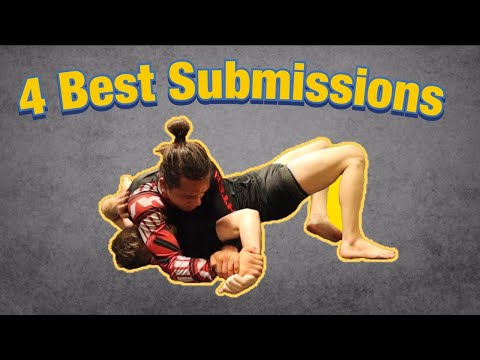
In today’s video we cover the 4 best bjj submissions from side control. Use responsibly ;) 1 americana 2 arm triangle …
No instructional courses yet for this technique.
Sign in to suggest a course.
Risk of injury to the person this technique is applied to
Moderately high for the bottom player — side control restricts breathing (chest compression), enables submissions (americana, kimura, arm triangle, baseball bat choke), and provides ground-and-pound opportunities in MMA; however, it is less dominant than mount and offers more escape pathways
Skill level needed to execute this technique reliably
Whether this technique is allowed under major competition rule sets
Jiu-Jitsu University (Saulo Ribeiro, 2008)
Description sources — [1] Jiu-Jitsu University (Ribeiro, 2008) on side control in positional hierarchy [2] Kodokan Judo (Kano, 1986) on yoko shiho gatame [3] UFC fight analysis
History sources — [1] Kodokan Judo (Kano, 1986) [2] Classical jujutsu traditions [3] MMA competition evolution
Effectiveness sources — [1] Jiu-Jitsu University (Ribeiro, 2008) [2] UFC fight statistics (ufcstats.com) [3] IJF competition records
Official Kodokan ground technique classification system
Description sources — [1] Jiu-Jitsu University (Ribeiro, 2008) on side control in positional hierarchy [2] Kodokan Judo (Kano, 1986) on yoko shiho gatame [3] UFC fight analysis
History sources — [1] Kodokan Judo (Kano, 1986) [2] Classical jujutsu traditions [3] MMA competition evolution
Effectiveness sources — [1] Jiu-Jitsu University (Ribeiro, 2008) [2] UFC fight statistics (ufcstats.com) [3] IJF competition records
chest pressure (the primary control mechanism), hip dexterity (adjusting weight distribution), upper body control (crossface and underhook maintenance)
heavy bodyweight (more crushing pressure), wide shoulders (more surface area for chest pressure), strong forearms (crossface force)
chest and shoulders (pressure and crossface), core (hip switching between variations), forearms (grip and crossface), hip flexors (hip drop for pressure)
Every move, in any martial art, shares a few universal traits. Mix and match below to pinpoint the right tool — or compare equivalents across styles.
Side control (yoko-shiho-gatame in judo, cross-side in wrestling) is the primary controlling position after passing the guard. It scores 3 points in IBJJF competition as a guard pass. (IBJJF Rules v6.0; Ribeiro, Jiu-Jitsu University)
You must always maintain a block on the far side of your opponent to stop them from creating space and moving away. Absolute MMA St Kilda emphasizes that failing to block the far side at all times is a common mistake that allows opponents to escape their hips and recover their legs in front.
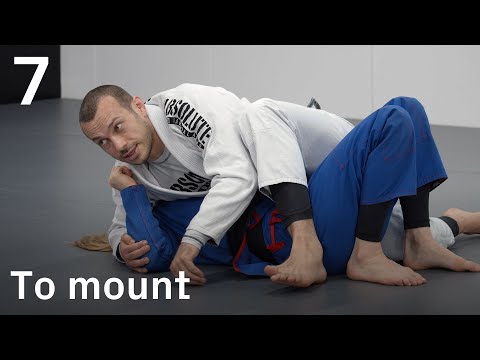
First, switch your base by turning your hips side-on so your bottom knee can pinch the opponent's hip, which gives you better range to step over. Block and pull in the opponent's leg while stepping over high in front of their legs to avoid getting trapped, then transition to controlling their hips and head for the mount. Absolute MMA St Kilda stresses keeping the leg pulled in and blocking rather than stepping in a wide arc where the opponent can trap your leg.
Turning your hips side-on gives your leg much more freedom and range of motion to step over the top. When your hips face downward, you don't have the same movement with your leg, making it harder to complete the transition and easier for your opponent to trap your leg between theirs.
Side control is a dominant ground position where the top player lies chest-to-chest across the opponent's torso, perpendicular to their body, using a combination of crossface, underhook, and chest pressure to pin the bottom player to the mat. It is the most common dominant position reached after passing the guard and serves as the central hub of the BJJ positional hierarchy — from side control, the top player can transition to mount, knee-on-belly, back control, or north-south, or attack with submissions directly.
Side control (yoko shiho gatame) is one of the five fundamental osaekomi (pinning) positions in Kodokan judo, formalised by Jigoro Kano in the late 19th century. Judo's kesa gatame (scarf hold) variant is among the oldest documented pinning techniques, appearing in classical jujutsu (koryu) traditions.
IBJJF: legal — Legal; IJF: legal — Legal; ADCC: legal — Legal; Unified MMA: legal — Legal; UWW: legal — Legal; FIAS Sport Sambo: legal — Legal
Danger rating 6/10. Moderately high for the bottom player — side control restricts breathing (chest compression), enables submissions (americana, kimura, arm triangle, baseball bat choke), and provides ground-and-pound opportunities in MMA; however, it is less dominant than mount and offers more escape pathways
The standard setup chain: Pass the Guard → Establish Side Control → Consolidate → Advance or Attack → Chain Attacks → Maintain Control.
Standard counters include: Hip Escape (Shrimp) — shrimping away from the top player to create space and recover guard; the most fundamental side… / Frame and Turn — using forearm frames against the top player's hip and neck to create space, then turning to recover … / Bridge and Roll — bridging into the top player to off-balance them, then rolling to reverse the position / Underhook Escape — fighting for an underhook on the near side, then using it to come up to the knees or reverse.
Common variants: Standard side control (crossface and underhook with chest pressure; the most com…); Kesa gatame (scarf hold) (head-and-arm control with the hip facing the opponent; ju…); Reverse kesa gatame (facing the opponent's legs instead of their head; strong …); North-south (kami shiho gatame) (head-to-head with chest on the opponent's chest; provides…); Twister side control (100%) (10th Planet system; side control with a far-side underhoo…); Modified side control (knee in) (inserting the near-side knee against the opponent's hip t…).
Side control is the most commonly reached dominant position in BJJ competition after a successful guard pass (3 points IBJJF, 3 points ADCC). In judo, yoko shiho gatame and kesa gatame are scored pins that can win matches by ippon after 20 seconds of control.
Top errors to watch for: Lying flat on the opponent — effective side control requires active pressure through the chest with hips low and legs… / Losing the crossface — without the crossface, the bottom player can turn toward you and begin the shrimping escape; t… / Knees too tight to the opponent's body — keeping both knees tight against the opponent's hip and shoulder creates spa… / Chasing submissions without control — attempting americanas or kimuras before fully consolidating side control often ….
The Side Control is also known as Saido Kontorōru, Side Control, Side Mount, Yoko Shiho Gatame, Cross-Body.