Beginners Guide: Types of Guard in Jiu Jitsu
0
Guard Position·Absolute MMA St Kilda - Melbourne
Closed guard, half guard, outside position guards, inside position guards, and leg entanglements form 5 major categories…
ガードポジション(Gādo Pojishon)
TransliterationTranslation: guard position
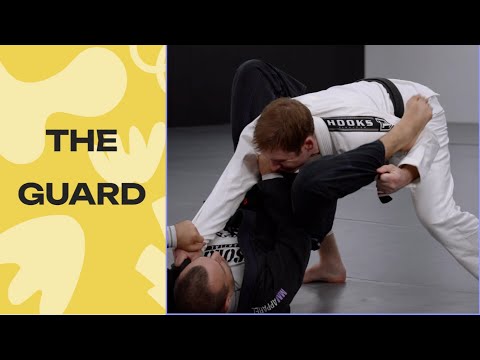
The Guard Position group encompasses all positions where the bottom fighter uses the legs to control, manage distance, attack, and defend against the top fighter. [1] The guard is BJJ's most revolutionary contribution to martial arts — the recognition that the bottom fighter can be tactically effective and even dominant through leg-based control. [1],[2] This group covers closed guard (legs locked around the waist), half guard (controlling one leg), open guards (feet on hips/biceps with distance), butterfly guard (hooks inside thighs), rubber guard (overhook with leg flexibility), worm guard (lapel-based), and X-guard (dual leg hook), representing the full spectrum of bottom-position fighting. [2],[3]
The guard concept as an offensive fighting position was developed by the Gracie family in BJJ, transforming what other grappling arts viewed as a defeated position into a platform for sweeps, submissions, and positional control. [1] Helio Gracie's ability to fight effectively from his back against larger opponents was foundational to BJJ's identity. [2] The guard has since evolved into dozens of distinct variations, each developed by innovative competitors who expanded what was possible from the bottom position. [2],[3]
The guard is the defining positional innovation of Brazilian Jiu-Jitsu — the concept that a fighter on their back can fight effectively and even win from the bottom. [1] Renzo Gracie and John Danaher describe the guard as the position that distinguishes BJJ from all other grappling arts, where the bottom fighter uses legs and hips to control distance and create attacks. [2] Guard effectiveness varies significantly by context: highly effective in pure grappling, less reliable in MMA where strikes are permitted, and of limited utility in self-defence scenarios on hard surfaces. [3]
The guard as an offensive position was developed by the Gracie family, with Helio Gracie pioneering its use as a smaller fighter's weapon against larger opponents. [1] The modern guard system expanded through Rolls Gracie's open guard innovations, [2] Ricardo De La Riva's outside hook guard in the 1980s, and Marcelo Garcia's butterfly and X-guard systems in the 2000s. [3]
Royce Gracie's victories from guard at UFC 1-4 (1993-1994) demonstrated the guard's viability to a global audience, submitting multiple opponents while fighting from his back. [1] IBJJF World Championship data shows guard-based sweeps and submissions account for a significant portion of scoring at black belt level. [2]
No images yet for this technique.
Sign in to suggest an image.
Closed guard, half guard, outside position guards, inside position guards, and leg entanglements form 5 major categories…
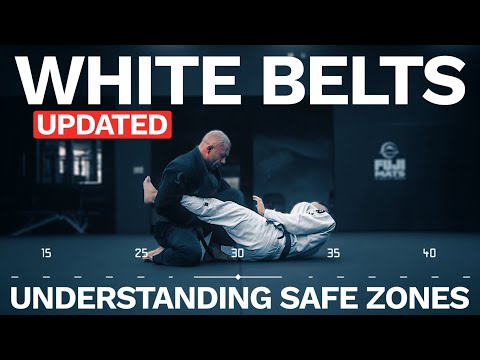
Today we're covering safe zones, being more effective through better decisions/tactics, and overall being more difficult…
No instructional courses yet for this technique.
Sign in to suggest a course.
Risk of injury to the person this technique is applied to
Guard positions are defensive; injury risk comes from transitions, not the position itself
Skill level needed to execute this technique reliably
Whether this technique is allowed under major competition rule sets
Advanced Brazilian Jiu-Jitsu Techniques (Marcelo Garcia, 2011)
Alias sources — [1] IBJJF Rules and Regulations [2] Jiu-Jitsu University (Ribeiro, 2008) [3] Jiu-Jitsu University (Ribeiro, 2008)
Effectiveness sources — [1] Jiu-Jitsu University (Ribeiro, 2008) [2] Mastering Jujitsu (Gracie & Danaher, 2003) [3] Brazilian Jiu-Jitsu: Theory and Technique (Gracie & Gracie, 2001)
Standard katakana transliteration of Western martial arts terminology (外来語) — used in Japanese MMA, boxing, and BJJ communities
Alias sources — [1] IBJJF Rules and Regulations [2] Jiu-Jitsu University (Ribeiro, 2008) [3] Jiu-Jitsu University (Ribeiro, 2008)
Effectiveness sources — [1] Jiu-Jitsu University (Ribeiro, 2008) [2] Mastering Jujitsu (Gracie & Danaher, 2003) [3] Brazilian Jiu-Jitsu: Theory and Technique (Gracie & Gracie, 2001)
hip flexibility, active legs, grip management
long legs for distance control and guard retention
hip flexors, adductors, quadriceps, core, grip
The Back Position Transition family covers techniques for transitioning to and maintaining back control — the second-most dominant position in grappling (after mount in some hierarchies, or the most dominant by many modern accounts) where the attacker controls the opponent from behind with hooks (legs around the waist) and a seatbelt grip (over-under arm control). [1] Back control is unique because the defender cannot see the attacker, limiting their defensive options and creating the primary platform for the rear naked choke — the most commonly finished submission in combat sports history. [1,2] This family covers the transitions that achieve back control: from guard (berimbolo, kiss-of-the-dragon, back take from closed guard), from top position (mount-to-back transition when the opponent turns), from scrambles, and from the standing position (back clinch from takedowns and throws). [2,3] The modern back attack system — combining hooks, body triangle, and systematic choking — has been developed most comprehensively by Marcelo Garcia (back take from butterfly guard) and John Danaher's 'Back Attack' system. [3]
The Butterfly Guard family covers the guard position where the bottom fighter sits with both feet hooked inside the opponent's thighs, using the hooks as levers for sweeping, off-balancing, and transitioning. [1] The butterfly guard is one of the most dynamic and effective guard positions in grappling because the hooks provide powerful lifting leverage and the seated posture allows rapid transitions in multiple directions. [1,2] This family includes the standard seated butterfly guard, the reclined butterfly guard (leaning back for different leverage), and single butterfly hook positions. [2,3]
The Closed Guard family covers the guard position where the bottom fighter wraps the legs around the opponent's waist with ankles crossed behind the back, creating a locked-leg control that keeps the opponent close. [1] The closed guard is the foundational guard position in BJJ and the first guard most students learn, providing a secure platform for sweeps, submissions, and positional control. [1,2] The closed guard's locked legs prevent the top fighter from standing up, backing away, or creating distance, forcing the fight to occur at close range where the bottom fighter's attacks are effective. [2,3]
The Half Guard family covers the guard position where the bottom fighter controls one of the opponent's legs between theirs while the opponent has passed the other leg to achieve a partial guard pass. [1] The half guard was transformed from a stalling, defensive position into one of the most dynamic and attack-rich guard positions in BJJ through the innovations of Roberto 'Gordo' Correa, Lucas Leite, and Bernardo Faria. [1,2] This family covers the standard half guard, deep half guard, Z-guard (knee shield half guard), and the lockdown variation, each offering distinct tactical options. [2,3]
The Leg Entanglement (Ashi Garami) family covers the system of leg-on-leg control positions that serve as the platform for all modern leg lock attacks — the positional hierarchy that revolutionised submission grappling in the 2010s. [1] Ashi garami (足絡み, 'leg entanglement') positions control the opponent's leg by entangling it with both of the attacker's legs, isolating the target leg and preventing escape while creating the specific angles needed for heel hooks, kneebars, toe holds, and ankle locks. [1,2] The four primary ashi garami positions — inside sankaku (inside triangle, the most dominant), outside ashi (standard ashi garami), 50/50 (symmetrical entanglement), and cross ashi (cross body leg entanglement) — each provide different control levels and submission options, forming a positional hierarchy parallel to the traditional mount/side control/back control hierarchy. [2,3] John Danaher's systematisation of ashi garami positions as a coherent positional system is considered one of the most important technical innovations in modern grappling history. [3]
The Open Guard family covers all guard positions where the guard player's legs are not closed around the opponent, instead using feet on hips, hooks, or grip-and-foot combinations to maintain guard control. [1] Open guard is the most diverse and technically sophisticated guard category in grappling, encompassing dozens of distinct positions including De La Riva, spider, collar-sleeve, lasso, sit-up, and shin-on-shin guards. [1,2] Open guards require superior grip fighting and distance management because they lack the closed guard's inherent security of locked legs. [2,3]
The Rubber Guard family covers the guard system developed by Eddie Bravo that uses extreme leg flexibility to control the opponent's posture from the guard by pulling the shin over the opponent's shoulder and controlling it with the hand. [1] The rubber guard eliminates the need for traditional gi grips by using the guard player's own leg as a controlling mechanism, making it specifically designed for no-gi grappling. [1,2] The rubber guard system includes a series of named positions — Mission Control, Chill Dog, New York — that form a progressive pathway to submissions. [2,3]
Silat Stances (kuda-kuda and sikap pasang) are the foundational fighting positions of Pencak Silat, the martial art of the Malay Archipelago. [1] Unlike the upright guards of boxing or karate, Silat stances are characterized by low centers of gravity, wide or asymmetric bases, and constant transitional movement between levels — from standing to deep crouch to ground. [1] The stances serve as the launching platform for Silat's distinctive combination of strikes, sweeps, locks, and throws, and they are designed for the uneven terrain and close-quarters combat environments of Southeast Asia. [2] Each Silat aliran (style) maintains its own set of named stances, but common principles include: weight distribution for rapid direction change, a bladed body angle to minimize the target area, and hands positioned to both guard and redirect incoming attacks. [2] The family includes animal-inspired stances such as Harimau (tiger), which fights from ground level, as well as more conventional standing guards. [1,2]
The Worm Guard family covers the guard position that uses the opponent's own gi lapel as a controlling tool, threading it around the leg and using it as a grip to control distance and set up sweeps. [1] The worm guard was a revolutionary innovation in gi BJJ because it introduced lapel-based guards that created entirely new control mechanics not possible with traditional grips. [1,2] The lapel wrap provides a persistent, difficult-to-break connection that gives the guard player exceptional control over the opponent's movement and base. [2,3]
The X-Guard family covers the guard position where the guard player places both legs between the opponent's legs in an X-configuration, with one hook behind the knee and one on the hip, creating a powerful sweeping platform under the opponent's base. [1] The X-guard provides extraordinary off-balancing leverage because the dual leg positioning completely controls the opponent's base on one side, making them extremely vulnerable to sweeps. [1,2] The X-guard includes the full X-guard (both hooks between the legs) and the single leg X-guard (hooks on one leg from the outside). [2,3]
Guard positions — closed, open, half, butterfly, rubber, X, De La Riva, spider, worm — are the tactical platforms from which the bottom player attacks. Modern competition BJJ has produced an explosion of guard innovation. Each guard has specific sweep, submission, and back-take attacks. (200+ books; Ribeiro, Jiu-Jitsu University; Garcia, Advanced BJJ Techniques)
According to Will Brooks, avoid placing your hands flat on the mat as this gives your opponent the opportunity to attack with a kamora. Instead, keep your hands on your opponent's body, with the armpit being one of the best placement options for white belts.
Will Brooks explains that you need to build a solid foundation and maintain your position before attempting submissions—without proper positioning, submissions won't land, and many beginners resort to 'hail Mary' attempts that fail because they lack the positional control needed to launch effective techniques.
Absolute MMA St Kilda advises that as a beginner you should focus on learning the foundational guards first, but eventually you'll develop a particular style that will incorporate a few of these guards that link together well.
According to Absolute MMA St Kilda, advanced practitioners need to develop a good leg entanglement game because traditional sweeps and off-balances often aren't enough to get on top of your opponent.
The Guard Position group encompasses all positions where the bottom fighter uses the legs to control, manage distance, attack, and defend against the top fighter. The guard is BJJ's most revolutionary contribution to martial arts — the recognition that the bottom fighter can be tactically effective and even dominant through leg-based control.
The guard concept as an offensive fighting position was developed by the Gracie family in BJJ, transforming what other grappling arts viewed as a defeated position into a platform for sweeps, submissions, and positional control. Helio Gracie's ability to fight effectively from his back against larger opponents was foundational to BJJ's identity.
IBJJF: legal — Legal — guard is fundamental to BJJ, sweeps from guard score 2 points; IJF: restricted — Guard pulling penalized as non-combativity — groundwork from guard permitted …; ADCC: legal — Legal, guard pull penalized -1 point in points portion; Unified MMA: legal — Legal — no penalty for playing guard; FIAS Sport Sambo: legal — Legal
Danger rating 2/10. Low — guard positions are defensive; injury risk comes from transitions, not the position itself
The standard setup chain: Achieve Guard Contact → Control Grips → Manage Distance → Threaten Submissions/Sweeps.
Standard counters include: Guard Pass — systematically work to clear the legs and establish a dominant position / Leg Pin — control one or both legs to neutralize guard retention / Pressure Passing — use heavy chest pressure to flatten and immobilize the guard player.
Common variants: High closed guard (legs high on the back for tighter control and more submis…); Low closed guard (ankles locked at the waist, controlling posture with grips); Body-lock closed guard (wrapping with both overhooks for tight breaking mechanics).
Royce Gracie's victories from guard at UFC 1-4 (1993-1994) demonstrated the guard's viability to a global audience, submitting multiple opponents while fighting from his back. IBJJF World Championship data shows guard-based sweeps and submissions account for a significant portion of scoring at black belt level.
Top errors to watch for: Playing guard passively — the guard is offensive; constant attacks are required to prevent passing / Lying flat on the back in guard — active hips, angles, and grips are essential / Not developing multiple guard systems — having only one guard makes you predictable / Playing guard without grips — grips are the foundation of all guard control.
The Guard Position is also known as Gādo Pojishon, Guard, Bottom Guard, Guard Game.