UNDERSTANDING THE 50/50 | BJJ Guard Explained #jiujitsu
0
Guard·Kata Jiu Jitsu
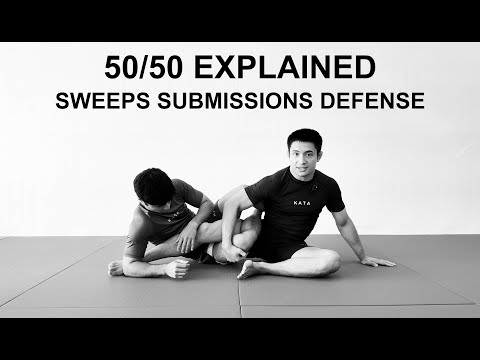
The 50/50 guard has become a major trend in modern Brazilian Jiu Jitsu (BJJ), both in the gi and no-gi. Popularized by t…
Translation: Guard
The guard is a ground grappling position where the bottom fighter uses their legs to control, defend, and attack the top player — widely considered Brazilian Jiu-Jitsu's most revolutionary contribution to martial arts. [1] Unlike traditional wrestling and judo where being on bottom is purely disadvantageous, the guard transforms the bottom position into an offensive platform capable of sweeps, submissions, and transitions to dominant positions. [1],[2] The guard family has expanded enormously since the 1990s, growing from basic closed guard into dozens of specialised variations — open guard, half guard, butterfly guard, De La Riva, spider guard, X-guard, worm guard, and many more — each with its own sweep, submission, and retention systems. [2],[3] Modern competition BJJ is largely defined by the interplay between guard players and guard passers, with entire competitive careers built around mastery of a single guard variation. [3]
While fighting from the back existed in earlier martial arts — catch wrestling's 'scissors' position and judo's ne waza included bottom fighting — the guard was revolutionised by the Gracie family in Brazilian Jiu-Jitsu. [1] Hélio Gracie, smaller and weaker than his opponents, developed the closed guard as a defensive platform from which a smaller fighter could neutralise a larger opponent's strength advantage. [1],[2] Royce Gracie's victories from guard at UFC 1–4 (1993–1994) demonstrated bottom-position attacks to a global audience and changed martial arts forever. [2] Since the 2000s, guard innovation has accelerated exponentially — Roberto 'Gordo' Correa's half guard revolution, Ricardo De La Riva's hook guard, Marcelo Garcia's butterfly and X-guard, the Mendes brothers' berimbolo, and Keenan Cornelius's lapel guard have each added new dimensions. [2],[3]
The guard is the single most important positional concept in BJJ and has proven effective across all levels of grappling competition. [1] In the UFC, fighters with strong guard games (such as Demian Maia, Nate Diaz, and Charles Oliveira) have demonstrated that the bottom position can be offensively dangerous even against elite wrestlers. [2] In IBJJF competition, guard-based techniques (sweeps and submissions from bottom) account for a significant percentage of match-deciding actions, with some champions winning entire tournaments without ever playing top position. [3]
The guard traces from Hélio Gracie's adaptation of judo ne waza through the Gracie BJJ lineage to modern sport jiu-jitsu. [1] Key innovators include Roberto Gordo (half guard), Ricardo De La Riva (DLR guard), Marcelo Garcia (butterfly/X-guard), and Eddie Bravo (Rubber Guard). [1],[2] The guard concept has been adopted from BJJ into MMA, judo competition strategy, and submission grappling worldwide. [2]
Guard play is central to BJJ competition at all levels. [1] In IBJJF Worlds, multiple champions have won exclusively from guard — notably Marcelo Garcia (butterfly guard sweeps), Cobrinha (open guard), and Roger Gracie (closed guard submissions). [1],[2] In ADCC, the penalty for guard pulling without attacking reflects the meta-importance of guard play and has shifted competitive strategy toward more wrestling-based openings. [2]
No images yet for this technique.
Sign in to suggest an image.
The 50/50 guard has become a major trend in modern Brazilian Jiu Jitsu (BJJ), both in the gi and no-gi. Popularized by t…
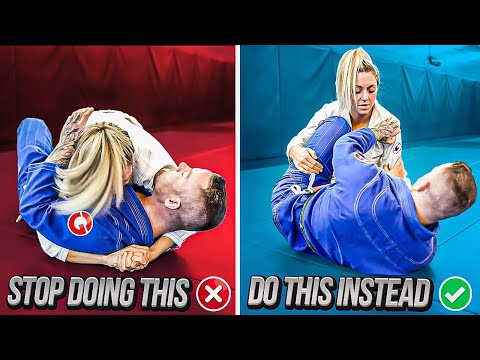
👊Thanks to LMNT for sponsoring this video! Head to http://DrinkLMNT.com/JORDANTEACHES to get your free sample pack with…
No instructional courses yet for this technique.
Sign in to suggest a course.
Risk of injury to the person this technique is applied to
The guard position itself carries minimal injury risk; the primary dangers are submission attempts from within the guard (armbar, triangle, kimura) and the risk of being stacked or slammed if playing high-elevation guards in MMA or no-gi
Skill level needed to execute this technique reliably
Whether this technique is allowed under major competition rule sets
Jiu-Jitsu University (Saulo Ribeiro, 2008)
Description sources — [1] Jiu-Jitsu University (Ribeiro, 2008) on guard as foundation of BJJ [2] Mastering Jujitsu (Gracie & Danaher, 2003) on positional hierarchy [3] The Guard (Beneville & Moreira, 2003) on guard variation taxonomy
History sources — [1] The Gracie Way (Kid Peligro, 2003) [2] Mastering Jujitsu (Gracie & Danaher, 2003) on Gracie guard development [3] various competition records and instructional lineages
Effectiveness sources — [1] Jiu-Jitsu University (Ribeiro, 2008) [2] UFC fight statistics (ufcstats.com) [3] IBJJF competition results
Description sources — [1] Jiu-Jitsu University (Ribeiro, 2008) on guard as foundation of BJJ [2] Mastering Jujitsu (Gracie & Danaher, 2003) on positional hierarchy [3] The Guard (Beneville & Moreira, 2003) on guard variation taxonomy
History sources — [1] The Gracie Way (Kid Peligro, 2003) [2] Mastering Jujitsu (Gracie & Danaher, 2003) on Gracie guard development [3] various competition records and instructional lineages
Effectiveness sources — [1] Jiu-Jitsu University (Ribeiro, 2008) [2] UFC fight statistics (ufcstats.com) [3] IBJJF competition results
hip mobility (the engine of guard play), grip strength (controlling the opponent), leg dexterity (hooking, framing, retaining)
flexible hips, long legs (more control surface and leverage), strong grip endurance
hip flexors (guard retention), adductors (squeezing in closed guard), core (hip escapes and inversions), forearms (grip fighting), hamstrings (pulling with hooks)
Every move, in any martial art, shares a few universal traits. Mix and match below to pinpoint the right tool — or compare equivalents across styles.
The 10th Planet Guard family covers guard positions developed within Eddie Bravo's 10th Planet Jiu-Jitsu system, designed exclusively for no-gi grappling and characterised by flexibility-based leg controls that replace traditional gi grips. [1] The signature position is the Rubber Guard — from closed guard, the bottom player uses their flexibility to bring their shin across the opponent's neck and shoulders, controlling posture with the legs alone rather than collar grips. [1,2] The system uses a unique nomenclature (Mission Control, Chill Dog, New York, Meathook, Zombie, Crackhead Control) and creates pathways to submissions that are inaccessible from traditional closed guard. [2,3] While requiring above-average hip flexibility, 10th Planet guards have proven effective in both submission grappling (EBI) and MMA competition. [3]
Closed guard is the most fundamental guard position in Brazilian Jiu-Jitsu, where the bottom player wraps their legs around the opponent's torso and locks their ankles behind the opponent's back, creating a controlling clamp that prevents the top player from disengaging or advancing. [1] It was the guard that launched BJJ into global prominence — Royce Gracie fought almost exclusively from closed guard at UFC 1–4, submitting opponents with armbars, triangles, and guillotines from this position. [1,2] The closed guard offers the strongest positional control of any guard variation because the locked ankles prevent the top player from standing or backing away, while the guard player's hips can generate powerful off-balancing forces for sweeps and create tight angles for submissions. [2,3] Despite the proliferation of open guard systems in modern competition, closed guard remains the highest-percentage submission guard and the first guard taught to every BJJ beginner. [3]
The Guard Sweep family covers all sweeping techniques executed from guard positions to reverse the top and bottom positions — the primary offensive tool for the bottom player in BJJ. [1] Guard sweeps use combinations of grips, hooks, hip movement, and momentum to off-balance the top player and topple them, with the sweeper following through to achieve a dominant top position. [1,2] Sweeps are scored 2 points in IBJJF and ADCC competition and are one of the most important scoring mechanisms — many matches at all belt levels are decided by a single sweep. [2,3] This family covers sweeps from all guard variations: scissor sweep and hip bump from closed guard, hook sweep from butterfly guard, balloon sweep from De La Riva, and many more. [3]
The Guard Top family within the Guard Group covers the techniques and strategies for the top player when trapped inside an opponent's guard — maintaining posture, controlling grips, and working to break the guard open for passing. [1] This family addresses the fundamental challenge of being inside closed guard: the guard player has broken your posture, controls your collar and sleeves, and threatens with armbars, triangles, and sweeps. [1,2] The top player's survival and advancement depend on maintaining an upright posture, fighting grips, and systematically working to open the guard through standing or kneeling guard breaks. [2,3]
Half guard is a ground position where the bottom player controls ONE of the top player's legs between their own legs, creating a position that is half-way between full guard and being fully passed — once considered a last-ditch recovery position, it has been transformed into one of BJJ's most versatile and offensive guard systems. [1] Roberto 'Gordo' Correa revolutionised half guard in the 1990s after a knee injury forced him to rely on the position, developing an entire sweeping and attacking system that proved the position was far more than just a guard recovery step. [1,2] Modern half guard encompasses multiple sub-systems — the underhook half guard (Gordo/Lucas Leite), deep half guard (Jeff Glover/Ryan Hall), Z-guard/knee shield (Bernardo Faria), Lockdown (10th Planet), and half butterfly — each with its own sweep, submission, and back-take pathways. [2,3] Half guard is particularly valuable because it is reached naturally when guard recovery fails, making it the most commonly played guard in both gi and no-gi competition. [3]
Open guard encompasses all guard positions where the bottom player's legs are NOT locked around the opponent, instead using feet on hips, hooks on legs, grips on sleeves/collars, and dynamic hip movement to control distance and create offensive opportunities. [1] Open guard sacrifices the tight control of closed guard for greater mobility, a wider attack repertoire, and the ability to play at longer range — making it both more versatile and more technically demanding. [1,2] The open guard revolution began in the 1990s with Ricardo De La Riva's outside hook guard and exploded through the 2000s–2010s with innovations like spider guard, lasso guard, X-guard, worm guard, and berimbolo, creating a vast and ever-expanding universe of specialised positions. [2,3] Modern competition BJJ at the highest levels is dominated by open guard exchanges, with competitors building entire careers around mastery of a single open guard variation. [3]
The guard — any bottom position where the legs are used to control the opponent — is the foundation of BJJ. Guard appears in thousands of passages across our corpus. The Gracie family developed the guard system to allow smaller fighters to fight effectively from bottom position. (200+ books; Ribeiro, Jiu-Jitsu University; Gracie & Danaher, Mastering Jujitsu)
Where the head goes, the body must follow. Control of the head provides control of the shoulders, which makes it easier for your opponent to pin you. Jordan Teaches Jiujitsu emphasizes that never letting someone grab your head is essential to guard defense.
You need to first get good at not letting people move. When they can't move but you can, that's when the majority of offense happens. Jordan Teaches Jiujitsu notes that focusing only on specific sweeps or submissions can blind you to this more fundamental priority.
Your feet are even more crucial than your hands in guard because they're the extremity on your body that can create and maintain the most distance between you and your opponent. Different guards are essentially different ways of positioning your feet to control mobility and distance.
Instead of rotating into your opponent or moving forward, build height by standing up. Turn away from your opponent, punch your foot deeper, and turn your foot out to build up, then look to underhook the legs. Kata Jiu Jitsu emphasizes that building height is safer, especially for beginners.
The guard is a ground grappling position where the bottom fighter uses their legs to control, defend, and attack the top player — widely considered Brazilian Jiu-Jitsu's most revolutionary contribution to martial arts. Unlike traditional wrestling and judo where being on bottom is purely disadvantageous, the guard transforms the bottom position into an offensive platform capable of sweeps, submissions, and transitions to dominant positions.
While fighting from the back existed in earlier martial arts — catch wrestling's 'scissors' position and judo's ne waza included bottom fighting — the guard was revolutionised by the Gracie family in Brazilian Jiu-Jitsu. Hélio Gracie, smaller and weaker than his opponents, developed the closed guard as a defensive platform from which a smaller fighter could neutralise a larger opponent's strength advantage.
IBJJF: legal — Legal — guard is fundamental to BJJ, sweeps from guard score 2 points; IJF: restricted — Guard pulling penalized as non-combativity — groundwork from guard permitted …; ADCC: legal — Legal, guard pull penalized -1 point in points portion; Unified MMA: legal — Legal — no penalty for playing guard; FIAS Sport Sambo: legal — Legal
Danger rating 2/10. Low — the guard position itself carries minimal injury risk; the primary dangers are submission attempts from within the guard (armbar, triangle, kimura) and the risk of being stacked or slammed if playing high-elevation guards in MMA or no-gi
The standard setup chain: Establish Guard → Control Distance → Break Posture → Attack → Chain Attacks → Retain Guard.
Standard counters include: Guard Pass — the primary counter to guard; using pressure, speed, or traction to navigate past the legs / Posture and Base — maintaining upright posture and solid base inside guard prevents the guard player from attacking / Stack and Smash — driving the guard player's legs over their head to flatten them and remove hip movement / Standing Up in Guard — rising to both feet inside closed guard breaks the guard lock and initiates standing passing.
Common variants: Closed guard (legs locked around the opponent's torso; the most control…); Open guard (legs not locked, feet on hips/biceps/legs; more mobile bu…); Half guard (controlling one of the opponent's legs; evolved from a re…); Butterfly guard (seated with both feet hooked inside the opponent's thighs…); De La Riva guard (outside leg hook on the opponent's lead leg; excellent fo…); Spider guard (gi-dependent; feet on biceps with sleeve grips creating a…); X-guard (underneath the opponent with legs forming an X around one…); Rubber guard (10th Planet system using flexibility to control posture f…).
Guard play is central to BJJ competition at all levels. In IBJJF Worlds, multiple champions have won exclusively from guard — notably Marcelo Garcia (butterfly guard sweeps), Cobrinha (open guard), and Roger Gracie (closed guard submissions).
Top errors to watch for: Playing guard flat on the back — effective guard requires being on one hip with dynamic hip movement; flat on back = … / Reaching with arms instead of using legs — arms are weaker than legs and reaching exposes the arms to submission atta… / Holding closed guard without attacking — a static closed guard gets posture broken and opened; attack constantly or t… / Neglecting guard retention — spending all training time on sweeps and submissions while having no answer when the opp….
The Guard is also known as Gādo, Guard Position, Guard, Bottom Guard.