Parry of Prime Foundation
The Parry of Prime is the fundamental defensive movement in sabre fencing, protecting the upper right quadrant of the body. This parry forms the basis for all prime-line defenses and is essential for developing proper blade control. Mastering this technique requires understanding both hand positioning and blade angle relative to the opponent's attack.
Guard Position Setup
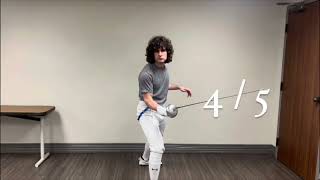
The fencer begins in en garde with the sabre held at approximately 45 degrees, blade pointing toward the opponent's shoulder. The sword hand remains relaxed at hip height with the elbow bent at roughly 90 degrees. This neutral position allows for rapid movement in any defensive direction without telegraphing intention.
Blade Movement and Arc
To execute the parry, rotate the forearm inward while maintaining blade contact with the incoming attack. The blade travels in a small circular arc, deflecting the opponent's sabre away from the body. The motion should be economical, requiring only wrist and forearm engagement rather than full arm movement.
Hand and Arm Mechanics
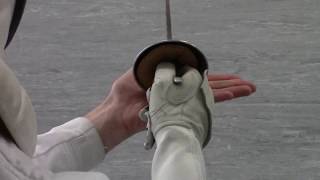
Keep the sword hand level with the hip throughout the parry motion, avoiding upward or downward drifting. The elbow remains close to the body as the forearm rotates internally to position the blade correctly. This compact mechanics maximizes speed and control while minimizing exposure to counterattacks.
Blade Engagement Technique
Contact the opponent's blade at the middle or lower third of your sabre for maximum leverage and control. Maintain firm pressure throughout the parry to ensure the attacking blade is fully deflected beyond your body line. Proper engagement prevents the opponent from sliding their blade past your defense.
Recovery and Riposte Readiness
Upon completing the parry, the blade naturally returns to a position ready for immediate counterattack. The fencer remains balanced and centered, prepared to execute a riposte with minimal transition time. This seamless recovery is critical for maintaining offensive advantage after a successful defense.
Sabre prime parry movement
Key Takeaways
- •Parry of Prime Foundation
- •Guard Position Setup
- •Blade Movement and Arc
- •Hand and Arm Mechanics
FIE coaching course 2017
Frequently Asked Questions
What does this video teach about parry of prime?
This video covers parry of prime foundation, guard position setup, blade movement and arc. It provides detailed instruction from Beth Speedy.
How long does it take to learn parry of prime?
The basic mechanics can be understood in a single session, but developing reliable execution requires consistent drilling over weeks of practice. This 6-part breakdown helps structure your training by isolating each phase of the technique.
What are the key details for finishing parry of prime?
Contact the opponent's blade at the middle or lower third of your sabre for maximum leverage and control. Maintain firm pressure throughout the parry to ensure the attacking blade is fully deflected beyond your body line. Proper engagement prevents the opponent from sliding their blade past your defense.