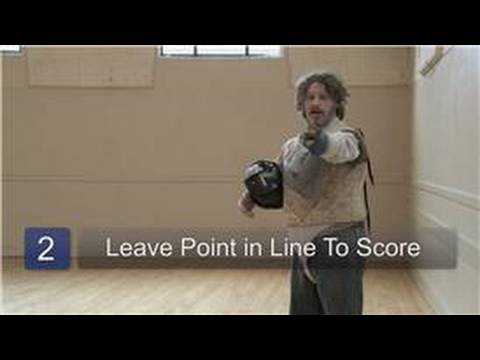
Fencing Tips : How to Teach a Parry in Fencing
0
Parry of Septime·eHowSports
To teach a parry in fencing, teach students to both block the offending sword and put themselves in a position to score.…
Translation: Seventh parry
The Parry of Septime deflects low-line attacks to the inside by dropping the blade downward with the hand in supination. [1] Septime protects the lower abdomen and thigh on the inside line. [1] It is essential against low-line attacks in épée fencing. [1]
The Parry of Septime remains a core technique in modern competitive fencing and historical swordsmanship. [1]
Used in FIE international fencing competition
No images yet for this technique.
Sign in to suggest an image.
To teach a parry in fencing, teach students to both block the offending sword and put themselves in a position to score.…
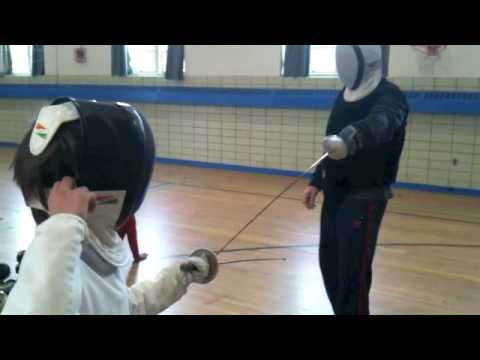
ISB Fencing Club lesson.
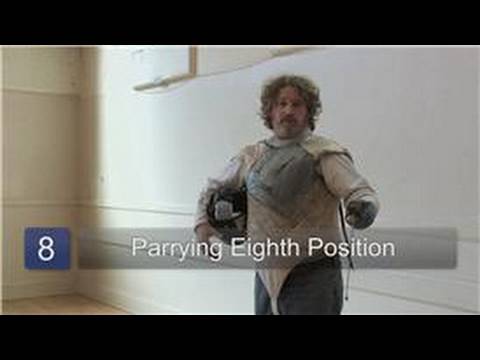
Parrying techniques for fencing improve your defensive actions in fencing matches. Defend yourself while fencing with he…
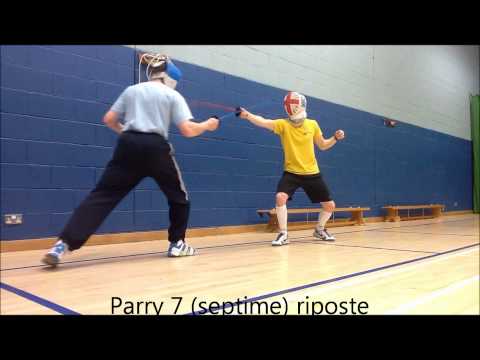
Fencing - how to do parry 7 (aka septime)
Hi All, This is a classic drill to develop the following skills: 1) Efficient Technique 2) Tactical Decision Making Ru…
The parry of septime (also called parry 7) is one of eight fundamental parry positions in foil fencing, used to defend the lower inside line of the body. According to eHowSports instructor Stuart Philip Kaufman, the eight parry positions protect different quadrants and areas: positions 1–4 cover the upper and lower lines on the inside, while positions 6–8 cover the outside and lower areas. Septime specifically occupies the low inside sector. Thierry1964's instructional sequence demonstrates septime's practical application in combination with other parries, emphasizing that practitioners must maintain proper palm orientation (palm up on the preceding sixth position parry) and execute smooth transitions between parries to avoid awkward positions like tierce. The instructor stresses that foilists should begin with a solid parry position, execute a controlled transport of the blade, and finish in a secure defensive posture before launching a riposte. Kaufman's broader pedagogical framework notes that all parries function as blocking actions that simultaneously position the fencer to score on the answer, making septime part of a systematic defensive vocabulary taught before offensive techniques. The technique requires coordinated footwork and blade control to maintain protection while transitioning to counterattack.
Synthesized from 4 instructors
No instructional courses yet for this technique.
Sign in to suggest a course.
Risk of injury to the person this technique is applied to
Defensive parrying technique
Skill level needed to execute this technique reliably
Whether this technique is allowed under major competition rule sets
Fencing (Pollock, Grove & Prevost, 1902)
description, historyOrigin: sourced from Pollock, W
description, historyOrigin: sourced from Pollock, W
Requires good arm extension
Quick reflexes
Balance and footwork
The parry of septime protects the inside low line — similar to prime but with the hand in supination (palm up). Used against low-line attacks to the flank and thigh. (Fencing technique manuals)
You need to do both: position your sword to block the incoming blade while keeping your point in line so you can score quickly on the riposte. Stuart Kaufman emphasizes that this dual purpose—defense and offensive readiness—is what makes an effective parry.
Keeping your palm up in the sixth position (which forms the basis of septime) prevents the parry from becoming awkward and difficult to execute cleanly. If your hand rotates, the mechanics break down and you lose control.
The Parry of Septime deflects low-line attacks to the inside by dropping the blade downward with the hand in supination. Septime protects the lower abdomen and thigh on the inside line.
The Parry of Septime was codified in European fencing treatises from the 16th century onward. Italian and French schools developed the technique into its modern form through centuries of refinement.
Unified MMA: legal — Legal defensive technique; WBC/Boxing: legal — Legal — blocking and evasion are core boxing skills; WKF: legal — Legal — blocking is a fundamental karate skill; Kyokushin: legal — Legal; WT: legal — Legal; WAKO: legal — Legal; K: legal — 1/GLORY — Legal; IFMA: legal — Legal
Danger rating 1/10. Defensive parrying technique
The standard setup chain: En garde → Preparation → Parry of Septime → Recovery.
Standard counters include: Counter-parry / Distance management / Stop-hit.
Common variants: Direct parry of septime; Indirect parry of septime; Compound parry of septime.
Used in FIE international fencing competition
Top errors to watch for: Over-extending / Telegraphing the action / Poor recovery.
The Parry of Septime is also known as Seputimu, Septime, Parry 7, Seventh Parry, Parade de Septime.
![Seated Parry Riposte Game | Fencing Tutorial [Home Edition] Foil, Epee, Saber](https://img.youtube.com/vi/B_sHGhLolC4/hqdefault.jpg)