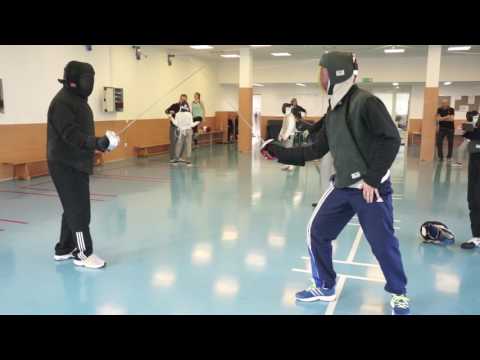
Sabre prime parry movement
0
Parry of Prime·Beth Speedy
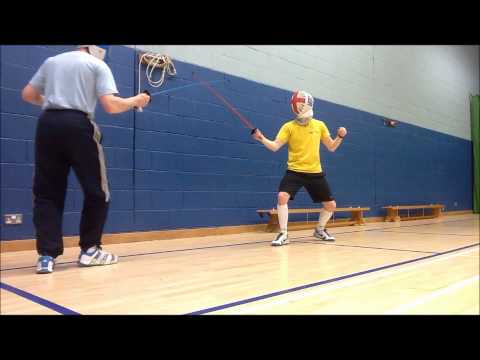
FIE coaching course 2017
Translation: First parry
The Parry of Prime is the oldest and most instinctive defensive movement, sweeping the blade downward and across the body to deflect attacks to the inside low line. [1] It is rarely used in modern competition but remains important in classical and historical fencing. [1],[2] Prime was the first parry documented in early fencing treatises. [1]
The Parry of Prime remains a core technique in modern competitive fencing and historical swordsmanship. [1]
Used in FIE international fencing competition
No images yet for this technique.
Sign in to suggest an image.
FIE coaching course 2017
The music for this video is available for purchase and free streaming at achilleus.bandcamp.com/track/pineapple-pizza
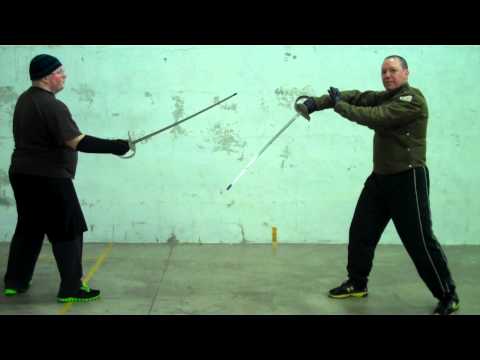
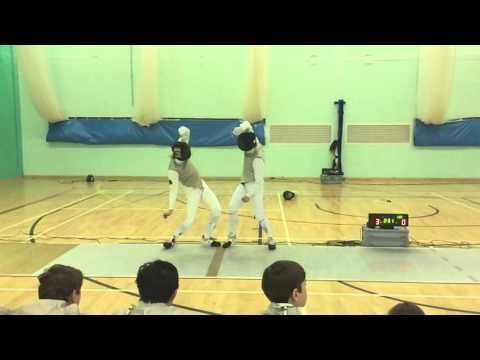
Team PDFA training day 17/02/2016
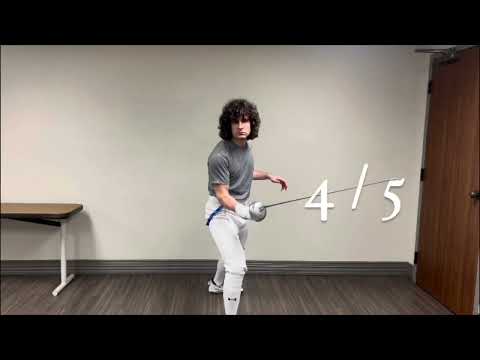
An overview of the 4 primary parries and 8 basic parries of sport fencing. The demonstration is done with a foil, in the…
This video is approved by the United States Fencing Coaches Association. (USFCA) for training purposes. Parry Prime or 1…
Rylie Philpot demonstrates basic parries for foil fights
The parry of prime (parry one) is an esoteric defensive position in fencing, characterized by a low hand position with the point directed downward. According to Coach Cass of Cyrano's Place, the parry of prime is statistically used at least once per day in competition, though it remains a secondary tool compared to the fourth and sixth parries. The fundamental mechanics involve a pendulum motion generated from the forearm, with the hand positioned high enough to maintain visual awareness beneath it. The execution sequence begins with stepping to the side to establish proper distance, followed by dropping the point and catching the incoming blade with a controlled pendulum swing that naturally transitions into a riposte. Coach Cass emphasizes the importance of developing tactile sensitivity to the blade contact before increasing speed, and stresses that practitioners should master the pendulum feel before attempting full competition application. The technique requires deliberate practice and breakdown into component parts—stance, point control, pendulum timing, and blade contact—rather than rushing toward full-speed execution. Upstart Crows of Santa Fe contextualizes prime as position one within the numbered parry sequence, establishing its place in the broader defensive repertoire.
Synthesized from 2 instructors
No instructional courses yet for this technique.
Sign in to suggest a course.
Risk of injury to the person this technique is applied to
Defensive parrying technique
Skill level needed to execute this technique reliably
Whether this technique is allowed under major competition rule sets
Fencing (Pollock, Grove & Prevost, 1902)
description, historyOrigin: sourced from Pollock, W
description, historyOrigin: sourced from Pollock, W
Requires good arm extension
Quick reflexes
Balance and footwork
The parry of prime is the most protective parry — the blade sweeps down and across to cover the inside low line. Named 'first' because it was historically the first defensive position taught. (Fencing technique manuals)
The parry of prime involves dropping your point down, stepping to the side to get into wrist position with your hand down, then using a pendulum motion from your forearm to catch and deflect the incoming blade before riposting.
Your hand needs to be high enough so you can see under it and maintain sight of your target, with your point down to facilitate the pendulum catching motion.
The parry of prime is a supplementary tool; you should rely mostly on your four and six parries as your primary defensive options.
You need to develop a strong feel for the pendulum motion and practice breaking down the technique slowly, otherwise your timing and execution will fall apart.
The Parry of Prime is the oldest and most instinctive defensive movement, sweeping the blade downward and across the body to deflect attacks to the inside low line. It is rarely used in modern competition but remains important in classical and historical fencing.
The Parry of Prime was codified in European fencing treatises from the 16th century onward. Italian and French schools developed the technique into its modern form through centuries of refinement.
Unified MMA: legal — Legal defensive technique; WBC/Boxing: legal — Legal — blocking and evasion are core boxing skills; WKF: legal — Legal — blocking is a fundamental karate skill; Kyokushin: legal — Legal; WT: legal — Legal; WAKO: legal — Legal; K: legal — 1/GLORY — Legal; IFMA: legal — Legal
Danger rating 1/10. Defensive parrying technique
The standard setup chain: En garde → Preparation → Parry of Prime → Recovery.
Standard counters include: Counter-parry / Distance management / Stop-hit.
Common variants: Direct parry of prime; Indirect parry of prime; Compound parry of prime.
Used in FIE international fencing competition
Top errors to watch for: Over-extending / Telegraphing the action / Poor recovery.
The Parry of Prime is also known as Purimu, Prime, Parry 1, First Parry, Parade de Prime.