Foundation Position
The practitioner begins in the en garde position, establishing the basic stance for foil work. This foundational posture provides stability and control necessary for executing effective parries.
Prime Position Establishment
The fencer moves through positions one through five, developing the muscle memory required for the parry of prime. Each position builds sequentially, creating a progressive understanding of hand placement and blade angle.
Extension and Attachment
The weapon extends fully while maintaining contact with the opponent's blade. This attachment phase is critical for controlling the opposing foil throughout the parry execution.
Recovery Sequence
The fencer returns through positions two through nine in reverse order, demonstrating the complete cycle of the parry motion. Position nine, as the counterpart to position five, represents the rotational completion of the defensive action.
Tactical Application
The parry of prime functions as a high-line defense, protecting the upper target area effectively. Consistent repetition of this sequence develops the reflexive responses necessary for competitive fencing.
Basic foil parry 1
Key Takeaways
- •Foundation Position
- •Prime Position Establishment
- •Extension and Attachment
- •Recovery Sequence
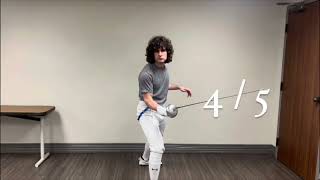
Rylie Philpot demonstrates basic parries for foil fights
Frequently Asked Questions
What does this video teach about parry of prime?
This video covers foundation position, prime position establishment, extension and attachment. It provides detailed instruction from Upstart Crows of Santa Fe.
How long does it take to learn parry of prime?
The basic mechanics can be understood in a single session, but developing reliable execution requires consistent drilling over weeks of practice. This 5-part breakdown helps structure your training by isolating each phase of the technique.
What are the key details for finishing parry of prime?
The fencer returns through positions two through nine in reverse order, demonstrating the complete cycle of the parry motion. Position nine, as the counterpart to position five, represents the rotational completion of the defensive action.