6 Sabre Parry Setups | Tactical Breakdown
0
Parry of Seconde·Slicer Sabre
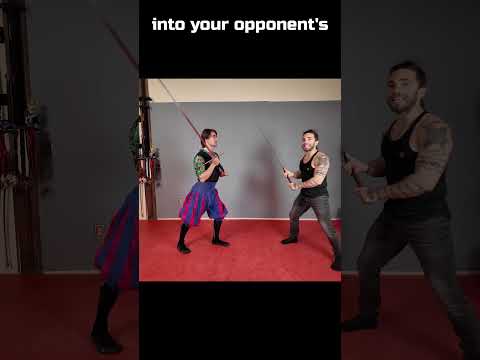
Here are 6 ways fencers can set up their parries to maximise their chance of success. 0:00 Intro 0:31 Ibragimov Backlin…
Translation: Second parry
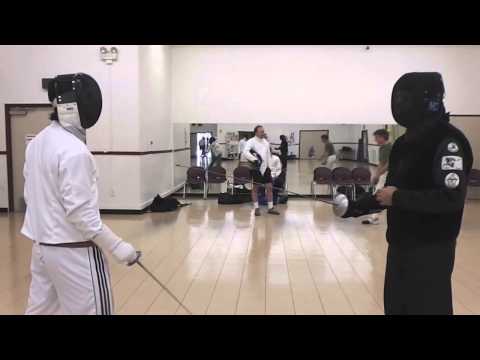
The Parry of Seconde deflects low-line attacks by dropping the blade down and to the outside with the hand in pronation. [1] It is a powerful parry used against attacks to the lower body and is particularly effective in sabre fencing. [1] Seconde combines well with a riposte to the upper body. [1]
The Parry of Seconde remains a core technique in modern competitive fencing and historical swordsmanship. [1]
Used in FIE international fencing competition
No images yet for this technique.
Sign in to suggest an image.
Here are 6 ways fencers can set up their parries to maximise their chance of success. 0:00 Intro 0:31 Ibragimov Backlin…
Start Learning Swordsmanship! https://www.truesteeltraining.com/ Help support us on Patreon! https://www.patreon.com/s…
The parry of seconde is a defensive sword technique that protects against incoming attacks by intercepting the opponent's blade. According to Sellsword Arts, parrying encompasses multiple mechanical approaches: static parries that position the defender favorably for immediate ripostes, beat parries that actively knock the opponent's sword aside, attacking parries that displace the blade while simultaneously striking the opponent, and evasive movements that void contact entirely. The technique's effectiveness depends on the chosen method and timing relative to the incoming attack. While Sellsword Arts provides clear categorical distinctions between parry types and their tactical applications—particularly the advantage of static parries for generating riposte opportunities—the available instructional material offers limited specificity regarding the seconde position itself, its hand and blade placement, or contextual positioning relative to other numbered parries in the classical fencing system. The transcripts from Slicer Sabre and Alex Freeman contain insufficient intelligible content to extract additional technical details about execution or variation.
Synthesized from 3 instructors
No instructional courses yet for this technique.
Sign in to suggest a course.
Risk of injury to the person this technique is applied to
Defensive parrying technique
Skill level needed to execute this technique reliably
Whether this technique is allowed under major competition rule sets
Fencing (Pollock, Grove & Prevost, 1902)
description, historyOrigin: sourced from Pollock, W
description, historyOrigin: sourced from Pollock, W
Requires good arm extension
Quick reflexes
Balance and footwork
The parry of seconde protects the outside low line — the blade drops down and to the outside. Used primarily in épée where the entire body is a valid target. (Fencing technique manuals)
The Parry of Seconde deflects low-line attacks by dropping the blade down and to the outside with the hand in pronation. It is a powerful parry used against attacks to the lower body and is particularly effective in sabre fencing.
The Parry of Seconde was codified in European fencing treatises from the 16th century onward. Italian and French schools developed the technique into its modern form through centuries of refinement.
Unified MMA: legal — Legal defensive technique; WBC/Boxing: legal — Legal — blocking and evasion are core boxing skills; WKF: legal — Legal — blocking is a fundamental karate skill; Kyokushin: legal — Legal; WT: legal — Legal; WAKO: legal — Legal; K: legal — 1/GLORY — Legal; IFMA: legal — Legal
Danger rating 1/10. Defensive parrying technique
The standard setup chain: En garde → Preparation → Parry of Seconde → Recovery.
Standard counters include: Counter-parry / Distance management / Stop-hit.
Common variants: Direct parry of seconde; Indirect parry of seconde; Compound parry of seconde.
Used in FIE international fencing competition
Top errors to watch for: Over-extending / Telegraphing the action / Poor recovery.
The Parry of Seconde is also known as Sugondo, Seconde, Parry 2, Second Parry, Parade de Seconde.