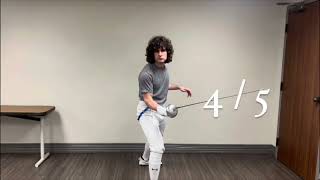
Introduction to Prime Parry
The Prime parry (or Parry of One) is an advanced defensive technique that, while not frequently utilized, remains an essential tool in a fencer's arsenal. Statistically, a competitive fencer may employ this parry at least once per competition day. Rather than relying heavily on Prime, fencers should prioritize more fundamental parries such as Four and Six while developing Prime as a supplementary defense.
Basic Prime Parry Movement
The Prime parry consists of three fundamental actions: dropping the blade, executing a pendulum deflection, and delivering a riposte. The defensive motion begins with the hand positioned low and the point directed downward, utilizing forearm rotation to create the characteristic pendulum sweeping action that deflects an incoming attack.
Hand Position and Visual Awareness
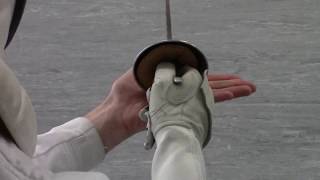
The critical element of Prime execution is maintaining sufficient hand height to maintain visual awareness of the incoming blade trajectory. The practitioner must position the hand high enough to see beneath it while executing the pendulum parry, allowing for precise blade contact and control.
Adding Reach and Engagement
Once the basic pendulum motion is mastered, the fencer adds reach to the parry by extending slightly through the movement. The blade engages the opponent's attack by first deflecting upward with the pendulum motion, then rotating inward to complete the parry and prepare for the riposte.
Full Sequence with Footwork
The complete Prime parry incorporates preparatory footwork: stepping back slightly, dropping the point in line with the opponent's attack, catching the incoming blade, and executing the inward pendulum rotation. This integrated sequence allows the fencer to defend efficiently while maintaining proper distance and balance.
Tempo Acceleration
Once the foundational mechanics are secure, the fencer can increase the speed of the Prime parry while maintaining technical precision. The stepping, dropping, and pendulum rotation remain consistent in execution regardless of tempo, ensuring reliable defense at competitive speed.
Development and Mastery
Successful Prime parry development requires deliberate practice with emphasis on developing consistent tactile feedback from the blade engagement. Practitioners should focus on achieving reliable pendulum feel and control before attempting full-speed application in competitive situations.
Parry Prime or 1
Key Takeaways
- •Introduction to Prime Parry
- •Basic Prime Parry Movement
- •Hand Position and Visual Awareness
- •Adding Reach and Engagement
This video is approved by the United States Fencing Coaches Association. (USFCA) for training purposes. Parry Prime or 1 is a esoteric parry that has it's place in the fencing arsenal. I was never 'taught' this parry from a coach. But, was shown it. And drilled it on target to make it part of my own repertoire. This video is dedicated to my asst. Coach James. I don't recommend fencing like James, but I do recommend fencing with his creativity. Be part of Cyrano's Place by becoming a Patron thru Patreon. For as little as $2 a month, you can support these educational fencing videos: https://www.patreon.com/user?u=32131403 Please Subscribe, Like and Share! Here is a link to our 'How to make a target' video https://www.youtube.com/watch?v=yBcXN40l0yQ&t=4s
Frequently Asked Questions
What does this video teach about parry of prime?
This video covers introduction to prime parry, basic prime parry movement, hand position and visual awareness. It provides detailed instruction from Cyrano's Place.
How long does it take to learn parry of prime?
The basic mechanics can be understood in a single session, but developing reliable execution requires consistent drilling over weeks of practice. This 7-part breakdown helps structure your training by isolating each phase of the technique.
What are the key details for finishing parry of prime?
Once the foundational mechanics are secure, the fencer can increase the speed of the Prime parry while maintaining technical precision. The stepping, dropping, and pendulum rotation remain consistent in execution regardless of tempo, ensuring reliable defense at competitive speed.