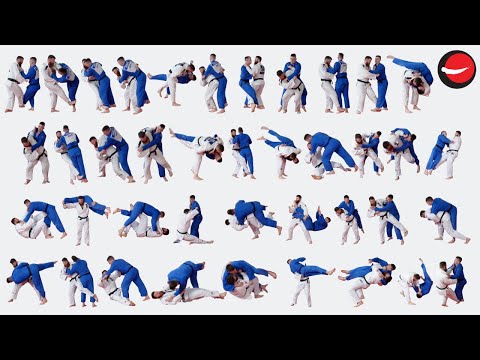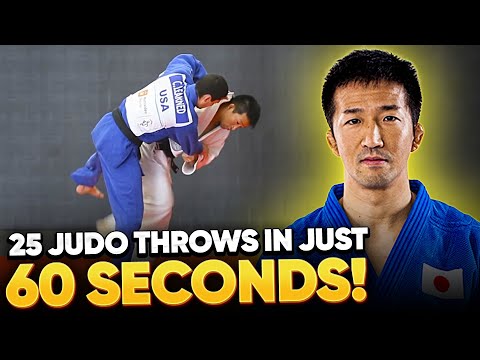
100 JU-JUTSU, JUDO THROWING TECHNIQUES
0
Throw·James Moclair
100 JU-JUTSU, JUDO THROWING TECHNIQUES. SOME OF THE THROWING TECHNIQUES ARE UNIQUE, OTHERS HAVE SMALL SUTTLE DIFFERENCES…
Translation: throwing technique
Throwing techniques are among the oldest documented combat methods, depicted in Egyptian tomb paintings at Beni Hasan (c. 2000 BCE) and described in ancient Greek wrestling (pale) and the pankration. [1],[2] Systematic throwing was codified in Japanese jujutsu schools from the Sengoku period onward, and Jigoro Kano's Kodokan judo (founded 1882) organised throwing techniques (nage-waza) into a comprehensive taxonomy of hand throws (te-waza), hip throws (koshi-waza), foot/leg throws (ashi-waza), and sacrifice throws (sutemi-waza). [3],[4] Wrestling traditions worldwide — including Mongolian bökh, Turkish yağlı güreş, Georgian chidaoba, and Indian kushti — independently developed rich throwing repertoires. [1],[5] Modern competitive judo, freestyle wrestling, and sambo continue to refine throwing technique through international competition. [3],[6]
Throws are among the most decisive techniques in combat sports, using leverage and momentum to lift or unbalance the opponent and bring them forcefully to the ground. [1],[2] A successful throw scores ippon (full point) in judo and can end a match instantly. [1] In MMA, throws generate significant impact damage and establish dominant ground position. [3]
Throwing techniques are documented in virtually every grappling tradition, from ancient Greek wrestling to Japanese jujutsu. [1] Jigoro Kano codified throwing techniques (nage-waza) as the centrepiece of Kodokan judo in 1882. [2] Wrestling systems worldwide developed parallel throwing methodologies. [3]
No images yet for this technique.
Sign in to suggest an image.
100 JU-JUTSU, JUDO THROWING TECHNIQUES. SOME OF THE THROWING TECHNIQUES ARE UNIQUE, OTHERS HAVE SMALL SUTTLE DIFFERENCES…
*UPDATED VERSION CONTAINING EVERY THROWS NAME SPOKEN IN JAPANESE* https://youtu.be/uJ-4pOtwFMg The Gokyo-no-Waza betwe…
Judo Throws/Takedowns: Tai otoshi to ude hishigi juji gatame, Kouchi gari, Ken ken ouchi gari to Taiotoshi, Uchimata Suk…
No instructional courses yet for this technique.
Sign in to suggest a course.
Risk of injury to the person this technique is applied to
Throws generate significant impact force; head and neck injury risk on landing (Koshida et al. 2017)
Skill level needed to execute this technique reliably
Whether this technique is allowed under major competition rule sets
Kodokan Judo (Jigoro Kano, 1986)
Alias sources — [1] Kodokan Judo (Kano, 1986) [2] Judo Formal Techniques (Otaki & Draeger, 1983) [3] FIAS Official Sambo Terminology [4] Shuai Jiao: The Ancient Chinese Fighting Art (Liang, 1997)
History sources — [1] Comprehensive Asian Fighting Arts (Draeger & Smith, 1969) [2] Combat Sports in the Ancient World (Poliakoff, 1987) [3] Kodokan Judo (Kano, 1986) [4] Judo Formal Techniques (Otaki & Draeger, 1983) [5] Wrestling Physical Conditioning Encyclopedia (Petrov, 1977) [6] Sambo: Russian Wrestling (Harries, 2005)
Official Kodokan ground technique classification system
Standard Japanese martial arts terminology (kanji/hiragana)
Established Japanese martial arts naming convention — native Japanese term (和語/漢語)
Alias sources — [1] Kodokan Judo (Kano, 1986) [2] Judo Formal Techniques (Otaki & Draeger, 1983) [3] FIAS Official Sambo Terminology [4] Shuai Jiao: The Ancient Chinese Fighting Art (Liang, 1997)
History sources — [1] Comprehensive Asian Fighting Arts (Draeger & Smith, 1969) [2] Combat Sports in the Ancient World (Poliakoff, 1987) [3] Kodokan Judo (Kano, 1986) [4] Judo Formal Techniques (Otaki & Draeger, 1983) [5] Wrestling Physical Conditioning Encyclopedia (Petrov, 1977) [6] Sambo: Russian Wrestling (Harries, 2005)
coordination, grip strength, hip and core power, balance
athletic build with strong hips and good proprioception
core, hips, legs, grip/forearms
Every move, in any martial art, shares a few universal traits. Mix and match below to pinpoint the right tool — or compare equivalents across styles.
The Aikido Throw group covers the throwing techniques of aikido — the modern Japanese martial art founded by Morihei Ueshiba (1883-1969) that emphasises blending with and redirecting an opponent's energy rather than meeting force with force. [1,2] Aikido throws are characterised by circular and spiral motion, off-balancing through subtle entries (irimi) or pivots (tenkan), and a fundamental principle of joining the opponent's centre rather than opposing it. [1,3] The throws here include the canonical aikido throws — kokyu-nage (breath throw), kaiten-nage (rotary throw), koshi-nage (aikido hip throw), tenchi-nage (heaven and earth throw), tenbin-nage (balance throw), and juji-nage (cross throw) — each of which expresses a different application of aiki principles. [2,4] Unlike judo's koshi-waza, where the hip serves as a fulcrum loaded by muscular effort, aikido throws typically use the entire body as a unified force vector, with the thrower's centre of mass moving in concert with the uke's motion to project them with minimal apparent effort. [1,2,5] Aikido throws are practiced in countless schools worldwide and have direct lineage to Daito-ryu aiki-jujutsu (Sokaku Takeda), the parent art Ueshiba trained in before founding aikido. [3,4]
The Throw group covers all standing throwing techniques where the thrower uses leverage, momentum, and body mechanics to project the opponent through the air onto the ground — the most spectacular and technically demanding techniques in martial arts. [1] Throws are classified in judo as nage waza and divided by primary mechanism: te waza (hand throws), koshi waza (hip throws), and ashi waza (foot/leg techniques). [1,2] Unlike takedowns which drive the opponent to the mat, throws typically involve the thrower remaining standing while the opponent is airborne — in judo, a perfectly executed throw scores ippon (instant victory). [2,3] Throws appear across virtually every martial art, and the physics of throwing (kuzushi, tsukuri, kake) represent some of the most elegant applications of biomechanics in combat. [3]
The Foot-Leg Technique Throw group, known in Japanese as ashi-waza, comprises all throwing techniques in which the primary mechanism of force generation is the action of the thrower's foot or leg against the opponent's lower body. [1] Ashi-waza is the largest and most diverse category in the Kodokan throwing classification, encompassing sweeps, reaps, trips, hooks, and blocks executed with the foot, ankle, shin, or thigh. [1,2] These techniques exploit the fundamental vulnerability of bipedal stance: because a standing fighter must maintain balance over two points of support, removing or destabilising one of those points creates immediate opportunity for a throw. [2,3] Ashi-waza techniques are generally characterised by precision timing rather than brute strength, requiring the thrower to catch the opponent at the exact moment when their weight is committed to the targeted leg. [3,4] In judo competition, ashi-waza techniques — particularly uchi-mata, o-soto-gari, and o-uchi-gari — consistently rank among the highest-scoring throws at all levels from club to Olympic competition. [4,5]
The Foot Sweep group covers throwing techniques where the thrower uses their foot or leg to sweep, reap, hook, or trip the opponent's supporting leg, causing them to lose balance and fall — the most timing-dependent and technically refined techniques in all of martial arts. [1] Known as ashi waza in judo, foot sweeps are often called the 'gentleman's throw' because a perfectly timed sweep requires no strength at all — only precise timing that catches the opponent mid-step when their weight transfers to one foot. [1,2] Judo master Kyuzo Mifune demonstrated that foot sweeps can be used by a smaller fighter to throw a much larger opponent, as the technique relies on timing and kuzushi rather than power. [2,3] This group includes de ashi barai (advancing foot sweep — often considered the single most fundamental throw in judo), o soto gari (major outer reap), ko soto gari (minor outer reap), o uchi gari (major inner reap), ko uchi gari (minor inner reap), and sasae tsurikomi ashi (propping drawing ankle throw). [3]
The Hand Technique Throw group, known in Japanese as te-waza, comprises all throwing techniques in which the primary mechanism of the throw is the action of the hands and arms rather than the hips or legs. [1] Te-waza techniques generate throwing force through pulling, lifting, dropping, and wheeling actions executed with the gripping hands, using leverage and directional control to unbalance and project the opponent. [1,2] This group includes shoulder throws (seoi-nage family), body drops (tai-otoshi), arm throws (sukui-nage, sumi-otoshi, uki-otoshi), and sacrifice arm throws (yama-arashi), each employing distinct hand-arm mechanics to achieve the throw. [2,3] Te-waza techniques are among the most popular in judo competition, with seoi-nage consistently ranking as one of the most frequently scored throws at all levels of international competition. [3,4] The group is characterised by the thrower's reliance on pulling power, grip strength, and rotational speed rather than on hip contact or leg sweeping to generate the throwing force. [4,5]
The Hip Technique Throw group, known in Japanese as koshi-waza, comprises all throwing techniques in which the thrower's hip serves as the primary fulcrum or lifting mechanism, rotating or wheeling the opponent over the hip to project them to the mat. [1] Koshi-waza techniques are among the most intuitive and powerful throws in grappling, using the hip as a lever point placed beneath the opponent's centre of gravity to generate mechanical advantage. [1,2] The group includes major hip throws (o-goshi, uki-goshi, koshi-guruma), sweeping hip throws (harai-goshi, hane-goshi), spring hip throws (tsuri-goshi), and hip wheel techniques (ushiro-goshi), each employing the hip fulcrum in different ways. [2,3] Hip throws are often the first techniques taught to judo beginners because they clearly demonstrate the fundamental principle of getting underneath the opponent's centre of gravity and using the body as a lever. [3,4] In competition, koshi-waza techniques — particularly harai-goshi — rank among the highest-scoring throws and are effective across all weight categories. [4,5]
Sacrifice throws (sutemi waza) are techniques where the thrower deliberately falls to the ground while executing the throw, using their own bodyweight, falling momentum, and the element of surprise to complete the technique. [1] Judo classifies sacrifice throws into two categories: ma sutemi waza (rear sacrifice throws where the thrower falls on their back) and yoko sutemi waza (side sacrifice throws where the thrower falls to their side). [1,2] Sacrifice throws are high-risk, high-reward techniques — the thrower gives up their standing position to attempt the throw, meaning a failed sacrifice throw leaves them in bottom position; however, successful sacrifice throws often produce spectacular ippon-scoring projections that catch opponents completely off-guard. [2,3] The most famous sacrifice throws — tomoe nage (circle throw), sumi gaeshi (corner reversal), and ura nage (rear throw) — are among the most visually stunning techniques in all martial arts. [3]
Sacrifice Throw, known in Japanese as Sutemi Waza, is the group of throwing techniques in which the thrower deliberately abandons their own standing base to complete the throw. [1] Unlike standing throws where tori maintains upright balance throughout, sacrifice throws require the attacker to fall to the ground — either onto their back (rear sacrifice) or onto their side (side sacrifice) — using their own body weight and momentum as the primary throwing mechanism. [1,2] The Kodokan classifies sutemi waza as one of the three major divisions of nage waza, alongside tachi waza (standing techniques), recognising that controlled self-sacrifice can generate enormous throwing force even against larger, stronger opponents. [1,3] Sacrifice throws are further subdivided into ma sutemi waza (rear sacrifice), yoko sutemi waza (side sacrifice), and rolling sacrifice (makikomi) variants, each exploiting different vectors of force application. [2,3] In competition judo, sacrifice throws account for a significant proportion of successful ippon scores because they are difficult to defend once initiated and can be launched as counter-attacks when an opponent over-commits to their own technique. [3,4] These techniques are also widely adopted in sambo, Brazilian jiu-jitsu, and mixed martial arts, where the willingness to go to the ground carries less tactical penalty. [4,5] Mastery of sacrifice throws demands precise timing, commitment, and the ability to transition immediately to ground work if the throw does not achieve a clean finish. [2,5]
The Sweep group encompasses all ground-based reversal techniques where the bottom player uses leverage, momentum, and leg work to reverse the top and bottom positions — the primary offensive tool for guard players in Brazilian Jiu-Jitsu. [1] Sweeps are mechanically distinct from standing throws: they are executed from the ground (typically from guard positions) and use hooks, grips, and hip movement to off-balance and topple the top player, putting the sweeper into a dominant top position. [1,2] In BJJ competition, a successful sweep scores 2 points (IBJJF/ADCC), reflecting its strategic importance as the path from bottom to top. [2,3] The sweep game has expanded enormously since the 1990s, with each guard variation (closed guard, half guard, butterfly, De La Riva, X-guard, spider guard) contributing its own sweep systems. [3]
The Traditional-Other Throw group encompasses throwing techniques from martial arts traditions outside the primary Japanese judo framework, including throws from sambo, sanda (Chinese kickboxing), and shuai jiao (Chinese wrestling). [1,2] While the other throw groups in this taxonomy derive predominantly from judo's Kodokan classification, this group recognises that many combat systems independently developed sophisticated throwing methods rooted in their own cultural and competitive contexts. [2,3] Sambo throws blend judo, Greco-Roman wrestling, and folk wrestling traditions of the former Soviet Union, often emphasising leg grabs and unorthodox grip positions. [3,4] Sanda throws are uniquely adapted for striking-and-throwing rulesets, where the ability to throw from clinch positions or after catching kicks is central to scoring. [4,5] Shuai jiao, one of the world's oldest martial arts, features throws executed from jacket grips with an emphasis on speed, footwork, and off-balancing through precise angles. [5,6] Together, these traditions represent the global diversity of human throwing arts beyond the Japanese canon. [6]
The Wrestling Throw group encompasses the high-amplitude throwing techniques characteristic of Greco-Roman wrestling, freestyle wrestling, and their derivatives as applied in combat sports. [1,2] Unlike judo throws, which are typically executed from jacket grips and emphasise kuzushi (off-balancing) through the uniform, wrestling throws rely on body locks, underhooks, overhooks, and direct body contact to generate throwing force. [2,3] This group includes the suplex family (vertical lifts with backward arching), the fireman's carry (shoulder-wheel throws from underhook positions), headlock throws, and the lateral drop. [3,4] Wrestling throws are generally characterised by explosive power, commitment to body contact, and the ability to generate enormous amplitude — a scoring criterion in both Greco-Roman and freestyle competition. [4,5] Many wrestling throws have been adopted into mixed martial arts, where their ability to slam an opponent to the mat from the clinch makes them among the highest-impact techniques in the sport. [5,6] The biomechanics of wrestling throws emphasise hip drive, back arch, and leg extension, often requiring exceptional athletic strength and timing. [6]
The throw group covers general throwing principles common across systems. Throw appears in thousands of passages across our corpus. The common thread: use the opponent's momentum and your leverage to launch them to the ground. Every throwing system — judo, wrestling, sambo, shuai jiao — shares these core mechanics. (200+ books; Kano, Kodokan Judo; wrestling texts)
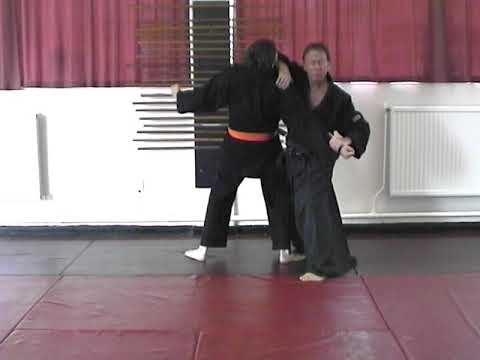
James Moclair emphasizes drawing your opponent forward while controlling their movement with your arms—keep them moving toward you as you execute the throw, rather than trying to throw a static opponent.
Step back away from your opponent while turning your palm to face you, raise your leg, and sweep their leg away to take them down to the floor, as James Moclair demonstrates.
According to James Moclair, when an attacker throws a front kick, you can pop your hand on their shoulder and move straight into them, then use a kick-based throw to take them down.
James Moclair advises keeping your opponent upright, extending their arms upward, wrapping your hand around their waist, tucking your hips in close, and executing the floating throw before striking to finish.
Techniques that off-balance and project an opponent from a standing position to the ground, using leverage, momentum, and body mechanics as the primary force multipliers.
Throwing techniques are among the oldest documented combat methods, depicted in Egyptian tomb paintings at Beni Hasan (c. 2000 BCE) and described in ancient Greek wrestling (pale) and the pankration.
IJF: legal — Legal throwing technique; IBJJF: legal — Legal at all belt levels; UWW: legal — Legal in both freestyle and Greco-Roman; Unified MMA: legal — Legal throwing technique; ADCC: legal — Legal; FIAS Sport Sambo: legal — Legal; FIAS Combat Sambo: legal — Legal
Danger rating 5/10. High — throws generate significant impact force; head and neck injury risk on landing (Koshida et al. 2017)
The standard setup chain: Grip Setup (Kumi-kata) → Off-Balance (Kuzushi) → Entry (Tsukuri) → Execution (Kake).
Standard counters include: Lower Centre of Gravity — bend knees and drop hips to make the throw harder to execute / Grip Break — deny the thrower their preferred gripping configuration / Stiff-Arm — maintain distance with straight arms to prevent the entry.
Common variants: Standard technique (primary execution from standard grip and positioning); No-gi adaptation (modified without gi grips for submission grappling or MMA); Combination entry (entering from a failed attack or chain of techniques); Counter throw (applied as a direct counter to the opponent's throw or at…).
In Olympic judo, throws account for the majority of ippon victories. In Greco-Roman wrestling, throws and lifts score the highest points (5 points for grand amplitude).
Top errors to watch for: Attempting throws without first breaking the opponent's balance — muscling a throw against a stable base wastes energ… / Bending at the waist instead of dropping the hips during entry — your centre of gravity must go below theirs / Stopping after a failed throw instead of transitioning to the next attack — failed throws create openings for chains / Neglecting grip fighting and allowing the opponent to establish dominant grips.
The Throw is also known as Nage-waza, Throwing Techniques, Brosky (броски), Shuāi Fǎ (摔法).