Hip Throw Counters (Koshi Waza Gaeshi)
0
Hip Technique Throw — Koshi Waza·Seiryoku Zenyo
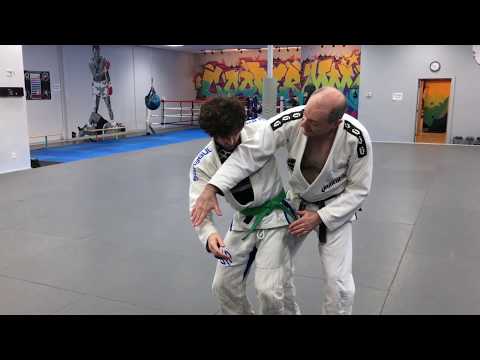
Mark Gilston, 4th degree judo black belt, demonstrates the five classic counter throws when your opponent tries to throw…
Translation: hip technique
The Hip Technique Throw group, known in Japanese as koshi-waza, comprises all throwing techniques in which the thrower's hip serves as the primary fulcrum or lifting mechanism, rotating or wheeling the opponent over the hip to project them to the mat. [1] Koshi-waza techniques are among the most intuitive and powerful throws in grappling, using the hip as a lever point placed beneath the opponent's centre of gravity to generate mechanical advantage. [1],[2] The group includes major hip throws (o-goshi, uki-goshi, koshi-guruma), sweeping hip throws (harai-goshi, hane-goshi), spring hip throws (tsuri-goshi), and hip wheel techniques (ushiro-goshi), each employing the hip fulcrum in different ways. [2],[3] Hip throws are often the first techniques taught to judo beginners because they clearly demonstrate the fundamental principle of getting underneath the opponent's centre of gravity and using the body as a lever. [3],[4] In competition, koshi-waza techniques — particularly harai-goshi — rank among the highest-scoring throws and are effective across all weight categories. [4],[5]
Hip throwing techniques are among the oldest documented grappling methods, with hip throws depicted in ancient wrestling art from Egypt, Greece, and throughout Asia. [1] In judo, koshi-waza was one of the original three groups in Jigoro Kano's nage-waza classification, and several hip throws were included in the first gokyo no waza of 1895. [1],[2] O-goshi and uki-goshi were among the foundational techniques of early Kodokan judo, with Kano reportedly developing uki-goshi as one of his personal favourite throws during the formative years of judo. [2],[3] The hip throw family has remained central to judo pedagogy for over 140 years, and hip throwing principles are shared across wrestling, sambo, aikido, and virtually every grappling tradition worldwide. [3],[4]
Hip throws, particularly harai goshi, are among the highest-scoring techniques in IJF competition. [1]
No images yet for this technique.
Sign in to suggest an image.
Mark Gilston, 4th degree judo black belt, demonstrates the five classic counter throws when your opponent tries to throw…
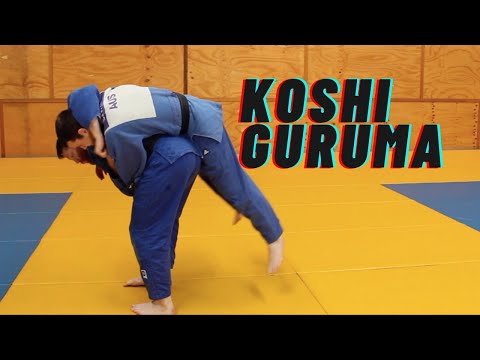
In Judo, there are certain throws that are just BIG throws...Koshi-Guruma is one of them. David (Tori) is the Head Coac…
No instructional courses yet for this technique.
Sign in to suggest a course.
Risk of injury to the person this technique is applied to
Hip throws generate high impact force; head strike risk if uke cannot breakfall
Skill level needed to execute this technique reliably
Whether this technique is allowed under major competition rule sets
Kodokan Judo — Official Nage-waza Classification
Traditional Judo throwing technique terminology (Kodokan Institute)
Official Kodokan ground technique classification system
Standard Japanese martial arts terminology (kanji/hiragana)
Established Japanese martial arts naming convention — native Japanese term (和語/漢語)
Traditional Judo throwing technique terminology (Kodokan Institute)
hip rotation speed, core strength, lower back stability
strong hips and core, good flexibility for turning entry
hip rotators, core, quadriceps, latissimus dorsi
Every move, in any martial art, shares a few universal traits. Mix and match below to pinpoint the right tool — or compare equivalents across styles.
The Hip Wheel family covers koshi-waza techniques in which the thrower uses the hip as a pivot point to wheel the opponent over in a reverse direction, countering the opponent's forward attack by redirecting them over the thrower's hip from behind. [1] Hip wheel techniques differ from standard hip throws in that they often involve the thrower intercepting the opponent mid-throw and redirecting the momentum over the hip in a counter-throwing action. [1,2] Ushiro-goshi, the primary technique in this family, is a powerful counter-throw that lifts the opponent from behind and wheels them over the hip. [2,3]
The Major Hip Throw family covers the foundational koshi-waza techniques in which the thrower turns in, places the hip beneath the opponent's centre of gravity, and wheels the opponent over the hip using arm action and hip rotation. [1] This family includes judo's most fundamental hip throws: o-goshi (major hip throw), uki-goshi (floating hip throw), and koshi-guruma (hip wheel), each representing a different variation of the core hip-loading-and-wheeling principle. [1,2] These techniques are typically the first koshi-waza taught to beginners because they demonstrate the essential mechanics of hip throwing — turning, loading, and projecting — in their clearest form. [2,3]
The Spring Hip Throw family covers koshi-waza techniques in which the thrower uses a lifting or springing hip action to elevate the opponent off the ground before throwing them, rather than simply wheeling them over the hip. [1] Spring hip throws are characterised by an upward lifting component generated by the hip and legs, which elevates the opponent's centre of gravity before the rotational throwing action. [1,2] Tsuri-goshi, the principal technique in this family, uses a belt or back grip to lift the opponent onto the hip before projecting them forward. [2,3]
The Sweeping Hip Throw family covers koshi-waza techniques that combine the hip fulcrum with an active sweeping action of the leg, creating throws that merge hip-throwing and leg-sweeping mechanics into a single powerful action. [1] Sweeping hip throws use the hip as a fulcrum while the attacking leg sweeps, springs, or drives against the opponent's leg, adding rotational or lifting force that amplifies the throwing action beyond what the hip alone would produce. [1,2] The two principal sweeping hip throws — harai-goshi (sweeping hip) and hane-goshi (spring hip) — are among the most powerful and frequently scored throws in judo competition. [2,3]
Koshi waza (hip techniques) use the hip as a fulcrum to throw the opponent — o-goshi, harai-goshi, uchi-mata. Jigoro Kano's personal favorites were hip throws. Uchi-mata is statistically the highest-scoring throw in Olympic judo history. (Kano, Kodokan Judo; IJF competition data; Watson, Judo Memoirs of Jigoro Kano)
According to The Judo Way of Life, you punch through with your grip as you come around, then pull down with your other hand to create a reaction, and catch your opponent's head as they come up to complete the throw.
The Judo Way of Life emphasizes that the hip throw works effectively either when your opponent reacts to your initial pull and comes up, or after you've created tension—timing your step through as they move is very important.
Seiryoku Zenyo notes that if you're already in the air during a hip throw, Yoko Garuma (the side wheel) is the throw of last resort—you want to lift your hip off the ground at the end while maintaining your grip with one hand pulling in and the other lifting up.
Seiryoku Zenyo teaches that as your opponent comes in, move your hips out to the side, drop your level, pull them in, and get them up on your hip, then turn and lift to bring them in front of you—this counter is called Utsuri Goshi (shifting hip throw).
The Hip Technique Throw group, known in Japanese as koshi-waza, comprises all throwing techniques in which the thrower's hip serves as the primary fulcrum or lifting mechanism, rotating or wheeling the opponent over the hip to project them to the mat. Koshi-waza techniques are among the most intuitive and powerful throws in grappling, using the hip as a lever point placed beneath the opponent's centre of gravity to generate mechanical advantage.
Hip throwing techniques are among the oldest documented grappling methods, with hip throws depicted in ancient wrestling art from Egypt, Greece, and throughout Asia. In judo, koshi-waza was one of the original three groups in Jigoro Kano's nage-waza classification, and several hip throws were included in the first gokyo no waza of 1895.
IJF: legal — Legal throwing technique; IBJJF: legal — Legal at all belt levels; UWW: legal — Legal in both freestyle and Greco-Roman; Unified MMA: legal — Legal throwing technique; ADCC: legal — Legal; FIAS Sport Sambo: legal — Legal; FIAS Combat Sambo: legal — Legal
Danger rating 5/10. High — hip throws generate high impact force; head strike risk if uke cannot breakfall
The standard setup chain: Grip Setup (Kumi-kata) → Off-Balance (Kuzushi) → Entry (Tsukuri) → Execution (Kake).
Standard counters include: Lower Centre of Gravity — bend knees and drop hips to make the throw harder to execute / Block the Hip — post hand on the thrower's hip to prevent loading / Step Around — circle away from the throw direction to avoid being loaded / Grip Break — deny the thrower their preferred gripping configuration.
Common variants: Standard hip throw (full turn-in with hip below the opponent's centre of gravity); No-gi hip throw (adapted without gi grips, using overhook and collar tie); Drop hip throw (dropping to one knee to lower the fulcrum point); Combination hip throw (chaining from a failed foot technique or hand technique).
Hip throws, particularly harai goshi, are among the highest-scoring techniques in IJF competition.
Top errors to watch for: Not getting the hip low enough — if your hip is at the same height or higher than theirs, you cannot load them over it / Failing to turn completely into the opponent — partial turns leave you exposed to counters / Bending forward at the waist instead of sitting the hips down and back — you pull yourself down rather than throwing … / Not maintaining chest-to-chest contact during the loading phase — any gap lets the opponent posture up and resist.
The Hip Technique Throw — Koshi Waza is also known as Koshi-waza, Hip throws, Waist throws, Koshi waza.