Basic Aikido techniques
0
Aikido Throw·Paul Araki-Metcalfe
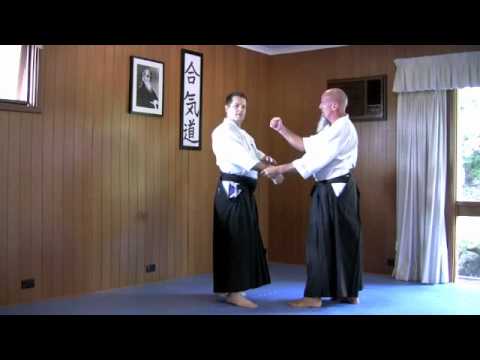
Aikido techniques from Aikido Alliance Australia. Explanation as to correct form during practice, and what not to pract…
Translation: harmony way throwing technique
The Aikido Throw group covers the throwing techniques of aikido — the modern Japanese martial art founded by Morihei Ueshiba (1883-1969) that emphasises blending with and redirecting an opponent's energy rather than meeting force with force. [1],[2] Aikido throws are characterised by circular and spiral motion, off-balancing through subtle entries (irimi) or pivots (tenkan), and a fundamental principle of joining the opponent's centre rather than opposing it. [1],[3] The throws here include the canonical aikido throws — kokyu-nage (breath throw), kaiten-nage (rotary throw), koshi-nage (aikido hip throw), tenchi-nage (heaven and earth throw), tenbin-nage (balance throw), and juji-nage (cross throw) — each of which expresses a different application of aiki principles. [2],[4] Unlike judo's koshi-waza, where the hip serves as a fulcrum loaded by muscular effort, aikido throws typically use the entire body as a unified force vector, with the thrower's centre of mass moving in concert with the uke's motion to project them with minimal apparent effort. [1],[2],[5] Aikido throws are practiced in countless schools worldwide and have direct lineage to Daito-ryu aiki-jujutsu (Sokaku Takeda), the parent art Ueshiba trained in before founding aikido. [3],[4]
Aikido was founded by Morihei Ueshiba (1883-1969), who synthesised Daito-ryu aiki-jujutsu (learned from Sokaku Takeda) with elements of older koryu jujutsu and his own spiritual training under the Omoto-kyo religion. [1],[2] Ueshiba developed his throwing system over decades, with the modern form of aikido emerging in the 1940s-50s. [1],[3] After Ueshiba's death, aikido split into multiple major lineages — Aikikai (his son Kisshomaru), Yoshinkan (Gozo Shioda), Iwama-ryu (Morihiro Saito, who codified the rural style Ueshiba taught in his later years), Tomiki/Shodokan (Kenji Tomiki, who introduced sport competition), and Ki Society (Koichi Tohei). [2],[4] The Aikido Throw group as we know it today was largely codified during this post-war period. [3],[4]
Aikido throws are highly effective when applied with correct timing against a committed attacker, and famously much harder to apply against a non-committed or grappling-trained opponent. [1] In MMA and competitive grappling contexts, aikido throws are rarely seen in pure form, but aiki principles (blending, off-balancing, redirecting) are visible in modern judo, BJJ, and wrestling at the highest levels. [2] Notable practitioners with cross-style success include Kenji Tomiki (judo + aikido), Steven Seagal (Yoshinkan demonstrator), and various Daito-ryu cross-trainers. [1],[3] As a movement vocabulary, aikido remains influential well beyond its competitive footprint. [2]
Largely non-competitive by design (Ueshiba opposed competition). [1] Tomiki / Shodokan aikido developed competition format from the 1960s; throws scored in randori-format matches. [2] Aikido techniques visible in Olympic judo and modern MMA where aiki principles overlap with grappling fundamentals. [3]
No images yet for this technique.
Sign in to suggest an image.
Aikido techniques from Aikido Alliance Australia. Explanation as to correct form during practice, and what not to pract…
Click here to see Easy Koshi Nage ►► http://bit.ly/1sjyzEc Click here to subscribe ►► http://bit.ly/1KPZpv0 We release …
No instructional courses yet for this technique.
Sign in to suggest a course.
Risk of injury to the person this technique is applied to
Aikido throws are typically practiced as cooperative paired work; risk arises from improper ukemi (breakfall) more than from the throw itself. Joint engagements during throws can damage wrists/elbows/shoulders if uke does not follow the technique safely
Skill level needed to execute this technique reliably
Whether this technique is allowed under major competition rule sets
Budo: Teachings of the Founder of Aikido (Ueshiba, posthumous 1991 compilation of Ueshiba's writings 1933-1938)
Description sources — [1] Budo: Teachings of the Founder (Ueshiba); [2] The Spirit of Aikido (K. Ueshiba); [3] Total Aikido (Shioda); [4] Traditional Aikido (Saito); [5] Aikido and the New Warrior (Heckler)
Lineage sources — [1] Daito-ryu Aikijujutsu Conversations (Pranin); [2] The Spirit of Aikido (K. Ueshiba); [3] Abundant Peace (Stevens); [4] Total Aikido (Shioda)
Effectiveness sources — [1] Tomiki cross-style essays; [2] biomechanics analyses (Pranin Aikido Journal archive); [3] modern aikido critique literature
Aikido technique naming conventions
Standard Japanese martial arts terminology (kanji/hiragana)
Established Japanese martial arts naming convention — native Japanese term (和語/漢語)
Description sources — [1] Budo: Teachings of the Founder (Ueshiba); [2] The Spirit of Aikido (K. Ueshiba); [3] Total Aikido (Shioda); [4] Traditional Aikido (Saito); [5] Aikido and the New Warrior (Heckler)
Lineage sources — [1] Daito-ryu Aikijujutsu Conversations (Pranin); [2] The Spirit of Aikido (K. Ueshiba); [3] Abundant Peace (Stevens); [4] Total Aikido (Shioda)
Effectiveness sources — [1] Tomiki cross-style essays; [2] biomechanics analyses (Pranin Aikido Journal archive); [3] modern aikido critique literature
hip mobility, balance, breakfall (ukemi) skill, lateral footwork
hip rotators, glutes, core (rotation control), forearm flexors (grip release work)
Every move, in any martial art, shares a few universal traits. Mix and match below to pinpoint the right tool — or compare equivalents across styles.
Aikido throws constitute the throwing component of Morihei Ueshiba's aikido system. The throws here all share the core aiki principle: redirecting and blending with the opponent's force rather than opposing it. The Group exists as the parent for the canonical aikido throws (kokyu-nage, kaiten-nage, koshi-nage, tenchi-nage, tenbin-nage, juji-nage). Aikido is largely non-competitive by design — the throws are practiced through kata and cooperative randori in most schools.
According to Paul Araki-Metcalfe, pushing directly doesn't work because you're offering your opponent a good target to defend against. Instead of pushing, you should guide your opponent by offering them space and controlling the direction of their fall through proper body mechanics.
Rokas Leo notes that beginners often walk around the opponent instead of using proper hip rotation. The correct approach is to 'give back' the technique—using your whole body and hips to execute the throw rather than circling around.
Rokas Leo emphasizes that lifting the elbow is a critical point because without it, the technique won't work as well. Proper elbow positioning is essential to generating the leverage needed for an effective throw.
The Aikido Throw group covers the throwing techniques of aikido — the modern Japanese martial art founded by Morihei Ueshiba (1883-1969) that emphasises blending with and redirecting an opponent's energy rather than meeting force with force. Aikido throws are characterised by circular and spiral motion, off-balancing through subtle entries (irimi) or pivots (tenkan), and a fundamental principle of joining the opponent's centre rather than opposing it.
Aikido was founded by Morihei Ueshiba (1883-1969), who synthesised Daito-ryu aiki-jujutsu (learned from Sokaku Takeda) with elements of older koryu jujutsu and his own spiritual training under the Omoto-kyo religion. Ueshiba developed his throwing system over decades, with the modern form of aikido emerging in the 1940s-50s.
IBJJF: legal — Legal at all belt levels (no-gi); ADCC: legal — Legal; Unified MMA: legal — Legal as throws/takedowns under unified rules
Danger rating 4/10. Moderate — aikido throws are typically practiced as cooperative paired work; risk arises from improper ukemi (breakfall) more than from the throw itself. Joint engagements during throws can damage wrists/elbows/shoulders if uke does not follow the technique safely
The standard setup chain: Detect Opponent's Attack or Grab → Step Off the Line (Irimi or Tenkan) → Connect to Opponent's Centre via Wrist or Lapel → Initiate Spiral or Circular Motion → Off-balance Opponent (Kuzushi) → Project Through the Throw → Maintain Posture for Follow-up.
Standard counters include: Stable grappling base — collapse the centre of gravity and refuse the kuzushi / Disengaging on the entry — step out of the line of the spiral before it forms / Grip-fighting before commitment — preventing the wrist or sleeve grip that aikido throws require / Maintain forward pressure without committing weight — the throw needs the opponent's momentum, deny it.
Common variants: Soft style (Aikikai, Iwama-ryu) (emphasises blending and minimal effort, large circular mo…); Hard style (Yoshinkan, Yoshokai) (more linear, compact, militarily structured (Gozo Shioda …); Sport aikido (Tomiki / Shodokan) (competitive randori format with scoring rules); Aikijujutsu (Daito-ryu) (the parent art; closely related throwing principles with …); Hapkido (Korean derivative incorporating aikido throws plus kicks …).
Largely non-competitive by design (Ueshiba opposed competition). Tomiki / Shodokan aikido developed competition format from the 1960s; throws scored in randori-format matches.
Top errors to watch for: Trying to muscle the throw — aikido is leverage and timing, not strength; if it requires force, the entry was wrong / Pulling instead of leading — aikido extends the opponent's motion, it does not yank them off balance / Wrist-only focus — connecting only at the wrist gives uke leverage; the connection must extend to their centre / Rushing the entry — aikido entries require a full step before the throw begins; cutting the entry short produces fail….
The Aikido Throw is also known as Aikido Nage-waza, Aiki Throw, Aikido Throwing Technique, Nage-waza (Aikido), Aiki-nage.
![[Aikido Techniques] Simple Aikido Techniques](https://img.youtube.com/vi/BynZ9MYcc8Q/hqdefault.jpg)