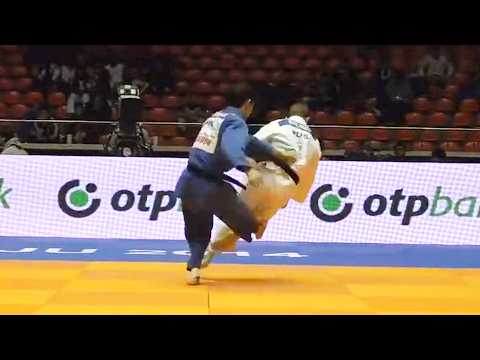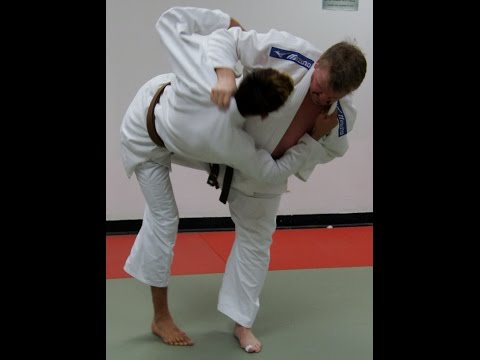
Ashi-waza (leg techniques) full set
0
Foot-Leg Technique Throw — Ashi Waza·Odawa Judo
Ashi-waza (21 techniques) 1. Deashi-harai 2. Hiza-guruma 3. Sasae-tsurikomi-ashi 4. Osoto-gari 5. Ouchi-gari 6. Kosoto-…
Translation: foot/leg technique
The Foot-Leg Technique Throw group, known in Japanese as ashi-waza, comprises all throwing techniques in which the primary mechanism of force generation is the action of the thrower's foot or leg against the opponent's lower body. [1] Ashi-waza is the largest and most diverse category in the Kodokan throwing classification, encompassing sweeps, reaps, trips, hooks, and blocks executed with the foot, ankle, shin, or thigh. [1],[2] These techniques exploit the fundamental vulnerability of bipedal stance: because a standing fighter must maintain balance over two points of support, removing or destabilising one of those points creates immediate opportunity for a throw. [2],[3] Ashi-waza techniques are generally characterised by precision timing rather than brute strength, requiring the thrower to catch the opponent at the exact moment when their weight is committed to the targeted leg. [3],[4] In judo competition, ashi-waza techniques — particularly uchi-mata, o-soto-gari, and o-uchi-gari — consistently rank among the highest-scoring throws at all levels from club to Olympic competition. [4],[5]
Foot and leg techniques have been part of grappling arts since antiquity, with tripping and reaping actions depicted in ancient wrestling traditions worldwide. [1] The systematic classification of ashi-waza began with Jigoro Kano's Kodokan judo, which included several foot techniques in the original 1895 gokyo no waza curriculum. [1],[2] The 1920 revision of the gokyo expanded the ashi-waza section significantly, reflecting the growing importance of foot techniques in randori (free practice) and shiai (competition). [2],[3] Key figures in the development of ashi-waza include Kyuzo Mifune, whose legendary foot sweeps earned him the nickname 'God of Judo,' and Isao Okano, whose innovative ashi-waza combinations dominated the 1964 Tokyo Olympics. [3],[4] Modern judo competition has seen ashi-waza become increasingly dominant, with statistical analyses showing foot and leg techniques accounting for the largest share of ippon scores at World Championships and Olympic Games. [4]
Ashi-waza techniques account for the highest number of attempted throws in IJF competition, though hip and hand techniques tend to score ippon at a higher percentage per attempt. [1]
No images yet for this technique.
Sign in to suggest an image.
Ashi-waza (21 techniques) 1. Deashi-harai 2. Hiza-guruma 3. Sasae-tsurikomi-ashi 4. Osoto-gari 5. Ouchi-gari 6. Kosoto-…
Ashi Waza (foot/leg techniques) belongs to the throwing techniques (Nage Waza) group of Judo. It mainly consists of swee…
No instructional courses yet for this technique.
Sign in to suggest a course.
Risk of injury to the person this technique is applied to
Foot/leg throws generate significant rotational force; head/neck impact risk on failed breakfall
Skill level needed to execute this technique reliably
Whether this technique is allowed under major competition rule sets
Kodokan Judo — Official Nage-waza Classification
Traditional Judo throwing technique terminology (Kodokan Institute)
Official Kodokan ground technique classification system
Standard Japanese martial arts terminology (kanji/hiragana)
Established Japanese martial arts naming convention — native Japanese term (和語/漢語)
Traditional Judo throwing technique terminology (Kodokan Institute)
precise timing, ankle coordination, upper body kuzushi ability
excellent balance and quick reflexes
tibialis anterior, calves, hip rotators, forearms (grip)
Every move, in any martial art, shares a few universal traits. Mix and match below to pinpoint the right tool — or compare equivalents across styles.
The Foot Sweep Throw family encompasses all ashi-waza techniques in which the thrower uses a sweeping motion of the sole or side of the foot to displace the opponent's supporting foot, removing the base and causing the opponent to fall. [1] Foot sweeps are distinguished from reaps by the direction and nature of the leg action: sweeps travel along the mat surface in an arc, brushing the opponent's foot away, while reaps drive through the leg with a more linear force. [1,2] The four principal foot sweeps in judo — de-ashi-barai, okuri-ashi-barai, harai-tsurikomi-ashi, and sasae-tsurikomi-ashi — represent progressively more complex applications of sweeping mechanics combined with hand control (tsurikomi). [2,3] Foot sweeps require exceptional timing, as the sweep must arrive at the precise instant the opponent's weight is transferring onto the targeted foot. [3,4]
The Hooking Throw family encompasses ashi-waza techniques in which the thrower uses the foot or leg to hook behind or around the opponent's leg, trapping it and preventing retreat while the upper body is driven in the opposite direction. [1] Hooking throws differ from sweeps and reaps in the nature of the leg contact: the hooking action wraps around the opponent's leg, creating a fixed attachment point rather than a brushing or driving action. [1,2] The two principal hooking throws in judo — ko-soto-gake and o-soto-gake — apply the hooking principle to the outside of the opponent's leg at different ranges, with ko-soto targeting the ankle and o-soto targeting higher on the leg. [2,3]
The Inner Thigh Throw family centres on uchi-mata, one of the most celebrated and effective throws in all of judo, in which the thrower drives the back of the thigh or leg upward between the opponent's legs to lift and rotate them over. [1] Uchi-mata techniques combine elements of hip throws and leg techniques, with the sweeping inner thigh action acting as the primary lifting mechanism while the upper body rotation completes the throw. [1,2] The family includes the classical uchi-mata and its variants — ashi (leg-style), ken-ken (hopping), and counter applications — each adapting the core inner-thigh sweeping principle to different tactical situations and body types. [2,3] Uchi-mata has been statistically the single most scored throw in international judo competition across multiple decades, reflecting its effectiveness and versatility. [3,4]
The Major Inner Reap family covers ashi-waza techniques in which the thrower reaps the opponent's leg from the inside, driving the attacking leg between the opponent's legs to sweep away the supporting foot or leg. [1] Inner reaping techniques (uchi-gari) attack the opponent's base from the inside line, which is often less well defended than the outside, creating powerful close-range throws that are difficult to counter. [1,2] The two primary techniques — o-uchi-gari (major inner reap) and ko-uchi-gari (minor inner reap) — attack different legs and at different ranges, forming one of the most important attacking combinations in judo. [2,3]
The Major Outer Reap family covers ashi-waza techniques in which the thrower reaps the opponent's leg from the outside, driving the attacking leg against the back of the opponent's supporting leg to sweep it away while forcing the upper body backward. [1] Outer reaping techniques (soto-gari and soto-otoshi) are among the most powerful throws in judo, generating tremendous force through the combination of a sweeping leg action and strong rearward upper-body drive. [1,2] The family includes o-soto-gari (major outer reap), one of judo's most iconic and frequently taught throws, along with o-soto-otoshi (major outer drop), which uses a blocking rather than sweeping leg action. [2,3]
Ashi waza (foot/leg techniques) are the most technically demanding judo throws — they use the feet and legs to sweep, reap, or block the opponent's legs. Foot sweep appears in 172 passages across 46 books. Masahiko Kimura reportedly practiced de-ashi-barai 10,000 times daily. (46+ books; Kano, Kodokan Judo; Kimura biography)
The Foot-Leg Technique Throw group, known in Japanese as ashi-waza, comprises all throwing techniques in which the primary mechanism of force generation is the action of the thrower's foot or leg against the opponent's lower body. Ashi-waza is the largest and most diverse category in the Kodokan throwing classification, encompassing sweeps, reaps, trips, hooks, and blocks executed with the foot, ankle, shin, or thigh.
Foot and leg techniques have been part of grappling arts since antiquity, with tripping and reaping actions depicted in ancient wrestling traditions worldwide. The systematic classification of ashi-waza began with Jigoro Kano's Kodokan judo, which included several foot techniques in the original 1895 gokyo no waza curriculum.
IJF: legal — Legal throwing technique; IBJJF: legal — Legal at all belt levels; UWW: restricted — Legal in freestyle, banned in Greco-Roman (no leg attacks below waist); Unified MMA: legal — Legal throwing technique; ADCC: legal — Legal; FIAS Sport Sambo: legal — Legal; FIAS Combat Sambo: legal — Legal
Danger rating 5/10. High — foot/leg throws generate significant rotational force; head/neck impact risk on failed breakfall
The standard setup chain: Grip Setup (Kumi-kata) → Off-Balance (Kuzushi) → Entry (Tsukuri) → Execution (Kake).
Standard counters include: Lower Centre of Gravity — bend knees and drop hips to make the throw harder to execute / Lift the Targeted Leg — raise the foot being attacked above the sweeping action / Counter-Throw — exploit the attacker's committed weight to throw them instead / Grip Break — deny the thrower their preferred gripping configuration.
Common variants: Forward sweep (sweeping the foot in the direction the opponent is stepping); Rear sweep (sweeping the foot backward as the opponent retreats); Combination sweep (chaining sweeps to both feet); Counter sweep (timing the sweep as the opponent initiates their own attack).
Ashi-waza techniques account for the highest number of attempted throws in IJF competition, though hip and hand techniques tend to score ippon at a higher percentage per attempt.
Top errors to watch for: Sweeping or reaping too early before the opponent's weight is on the target leg — the leg is light and moves easily / Kicking at the leg instead of sweeping through it — ashi waza use a sweeping or scooping action, not a strike / Not loading the opponent's weight onto the target leg with the upper body before attacking / Using too much force on the leg action and not enough kuzushi from the hands — the pull is what makes the sweep work.
The Foot-Leg Technique Throw — Ashi Waza is also known as Ashi-waza, Leg throws, Foot sweeps, Reaping throws, Ashi waza.