Pro Wrestling in mma
0
Wrestling Throw·Gentleman's Combatives
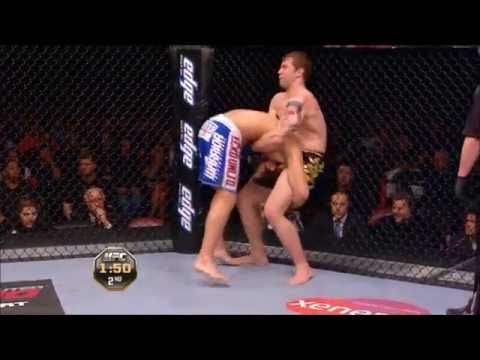
Many complaints were made about cm punk coming to the ufc Little do they know little bits of prowrestling have been comi…
Translation: wrestling throws
The Wrestling Throw group encompasses the high-amplitude throwing techniques characteristic of Greco-Roman wrestling, freestyle wrestling, and their derivatives as applied in combat sports. [1],[2] Unlike judo throws, which are typically executed from jacket grips and emphasise kuzushi (off-balancing) through the uniform, wrestling throws rely on body locks, underhooks, overhooks, and direct body contact to generate throwing force. [2],[3] This group includes the suplex family (vertical lifts with backward arching), the fireman's carry (shoulder-wheel throws from underhook positions), headlock throws, and the lateral drop. [3],[4] Wrestling throws are generally characterised by explosive power, commitment to body contact, and the ability to generate enormous amplitude — a scoring criterion in both Greco-Roman and freestyle competition. [4],[5] Many wrestling throws have been adopted into mixed martial arts, where their ability to slam an opponent to the mat from the clinch makes them among the highest-impact techniques in the sport. [5],[6] The biomechanics of wrestling throws emphasise hip drive, back arch, and leg extension, often requiring exceptional athletic strength and timing. [6]
Wrestling throws have ancient origins, with depictions of suplex-like techniques found in Egyptian tomb paintings dating to approximately 2000 BCE and in ancient Greek wrestling illustrations. [1],[2] Greco-Roman wrestling, codified in 19th-century Europe, formalised upper-body throwing as its primary technical domain. [2],[3] Freestyle wrestling added leg attacks to the throwing arsenal. [3] The suplex became the signature technique of Soviet and Eastern Bloc wrestlers during the Cold War era, with athletes such as Alexander Karelin elevating the reverse body lift to legendary status. [3],[4] Wrestling throws entered mainstream combat sports through MMA in the 1990s and 2000s. [4],[5]
No images yet for this technique.
Sign in to suggest an image.
Many complaints were made about cm punk coming to the ufc Little do they know little bits of prowrestling have been comi…
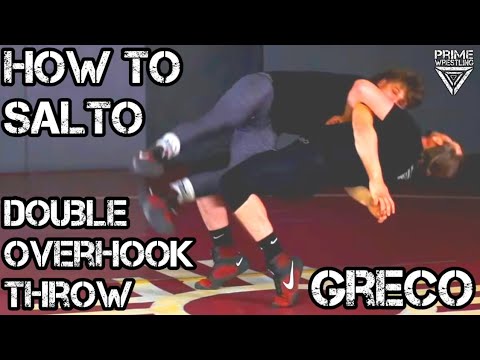
Coach Nathanimal demonstrates two ways to throw with double overhooks. This move is commonly known as a SALTO in Greco-R…
No instructional courses yet for this technique.
Sign in to suggest a course.
Risk of injury to the person this technique is applied to
Wrestling throws emphasize power and amplitude; high impact force on landing
Skill level needed to execute this technique reliably
Whether this technique is allowed under major competition rule sets
Japanese amateur wrestling terminology
Japanese amateur wrestling terminology
Mixed Japanese-Western terminology — combines traditional Japanese terms with katakana loanwords
Standard katakana transliteration used in Japanese wrestling (レスリング)
hip rotation speed, core strength, lower back stability
strong hips and core, good flexibility for turning entry
hip rotators, core, quadriceps, latissimus dorsi
Every move, in any martial art, shares a few universal traits. Mix and match below to pinpoint the right tool — or compare equivalents across styles.
Fireman's Carry, known in wrestling as the fireman's carry throw or kata guruma in judo, is a family of throws in which the attacker ducks under the opponent, loads them across their shoulders, and wheels them over to the mat. [1,2] The throw begins with the attacker securing an arm tie or collar tie, dropping to one or both knees beneath the opponent, threading one arm between the opponent's legs while the other controls the arm, and then standing or rolling to lift the opponent across the shoulders before dumping them to the ground. [2,3] The fireman's carry is one of the most commonly taught wrestling throws at all levels, valued for its effectiveness against opponents of equal or greater size and its relatively low-risk entry from a tied-up position. [3,4] In judo, the technique is classified as kata guruma (shoulder wheel) and is a hand technique (te waza). [4]
Headlock Throw is the family of wrestling throws executed from a headlock position, in which the attacker wraps one arm around the opponent's head or neck and uses hip rotation, lateral dropping, or rolling action to bring the opponent to the mat. [1,2] Headlock throws are among the most instinctive throwing techniques in wrestling and are commonly seen at all competitive levels, from youth wrestling to Olympic competition. [2,3] The family includes the standard headlock throw (sometimes called a head-and-arm throw) and the pancake, a flattening technique used from the headlock position. [3,4] While powerful, headlock throws carry an inherent risk — if the attacker fails to complete the throw, they may expose their own back to the mat, resulting in points for the opponent. [4]
Lateral Drop is a family of wrestling throws in which the attacker secures an upper-body clinch — typically a body lock or over-under position — and falls laterally to one side while arching to lift and rotate the opponent, slamming them to the mat in a high-amplitude sideways arc. [1,2] The lateral drop is one of the most spectacular throws in Greco-Roman wrestling, requiring explosive hip extension, back strength, and precise timing to execute correctly. [2,3] The throw is particularly effective from the over-under clinch (one overhook, one underhook) and is a high-scoring technique due to the back-exposure it creates on the opponent during the fall. [3,4] In MMA, the lateral drop has been adopted as a devastating clinch throw that can end fights through the impact of the slam. [4]
The Suplex is the family of wrestling throws in which the attacker secures a body lock or waist grip, lifts the opponent off the ground using hip and back extension, and arches backward to slam the opponent onto the mat behind the attacker. [1,2] Suplexes are the quintessential high-amplitude wrestling throws, characterised by the dramatic backward arc that sends the opponent overhead or to the side with tremendous force. [2,3] The suplex family includes the standard suplex (front body lock with backward arch), the German suplex (rear waist lock with backward bridge), the gut-wrench suplex (belly-down lift and turn), and the salto suplex (an airborne, high-rotation variant). [3,4] Suplexes are the highest-scoring throws in Greco-Roman wrestling, where upper-body techniques dominate, and have become iconic in mixed martial arts and professional wrestling alike. [4,5] The biomechanics of suplex execution require extraordinary back strength, hip mobility, and the ability to generate explosive force while bearing the full weight of the opponent. [5]
Wrestling throws — suplexes, fireman's carries, headlock throws, lateral drops — use power and athleticism. Suplex appears in 151 passages across 29 books. Wrestling throws tend to be higher-amplitude and more explosive than judo throws, with less emphasis on kuzushi (off-balancing) and more on physical dominance. (29+ books; Gable, Coaching Wrestling Successfully; wrestling texts)
According to Prime Wrestling System, the most common mistake is 'hinging'—bending at your knees instead of maintaining a proper back arch. This creates space between you and your opponent, which prevents an effective throw.
Prime Wrestling System emphasizes keeping your hips and belt buckle high with a strong back arch as you step in, and positioning your head on the side you're throwing to. Your corner angle is correct when your body is angled so that an imaginary zipper on your jeans points to the corner where your opponent will land.
According to Prime Wrestling System, your head must be on the same side as your throw direction. If you force the throw with your head on the wrong side, your opponent can face-plant dangerously, so correct head positioning is critical for safety.
The Wrestling Throw group encompasses the high-amplitude throwing techniques characteristic of Greco-Roman wrestling, freestyle wrestling, and their derivatives as applied in combat sports. Unlike judo throws, which are typically executed from jacket grips and emphasise kuzushi (off-balancing) through the uniform, wrestling throws rely on body locks, underhooks, overhooks, and direct body contact to generate throwing force.
Wrestling throws have ancient origins, with depictions of suplex-like techniques found in Egyptian tomb paintings dating to approximately 2000 BCE and in ancient Greek wrestling illustrations. Greco-Roman wrestling, codified in 19th-century Europe, formalised upper-body throwing as its primary technical domain.
IJF: legal — Legal throwing technique; IBJJF: legal — Legal at all belt levels; UWW: legal — Legal in both freestyle and Greco-Roman; Unified MMA: legal — Legal throwing technique; ADCC: legal — Legal; FIAS Sport Sambo: legal — Legal; FIAS Combat Sambo: legal — Legal
Danger rating 6/10. High — wrestling throws emphasize power and amplitude; high impact force on landing
The standard setup chain: Grip Setup (Kumi-kata) → Off-Balance (Kuzushi) → Entry (Tsukuri) → Execution (Kake).
Standard counters include: Lower Centre of Gravity — bend knees and drop hips to make the throw harder to execute / Block the Hip — post hand on the thrower's hip to prevent loading / Step Around — circle away from the throw direction to avoid being loaded / Grip Break — deny the thrower their preferred gripping configuration.
Common variants: Standard hip throw (full turn-in with hip below the opponent's centre of gravity); No-gi hip throw (adapted without gi grips, using overhook and collar tie); Drop hip throw (dropping to one knee to lower the fulcrum point); Combination hip throw (chaining from a failed foot technique or hand technique).
Wrestling throws are the primary scoring actions in Olympic Greco-Roman and freestyle wrestling. Grand amplitude throws score 5 points under UWW rules.
Top errors to watch for: Attempting to lift without first dropping the hips below the opponent's centre — you end up straining the back / Not securing adequate clinch control before the throw — loose grips fail under resistance / Arching the back without hip involvement during suplexes — the power must come from the hip bridge and leg drive / Standing upright in the clinch instead of driving the head into the opponent's chest for pressure.
The Wrestling Throw is also known as Resuringu Nage-waza, Wrestling throws, Greco-Roman throws, Freestyle throws, No-gi throws.