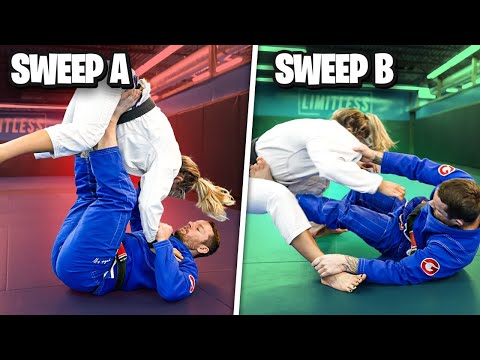
Easy A/B SWEEP Systems | BJJ Fundamentals
0
Sweep·Jordan Teaches Jiujitsu
Going to therapy is a sign of strength, not weakness. BetterHelp makes therapy simple, with 10% off your first month to …
Translation: Sweep
The Sweep group encompasses all ground-based reversal techniques where the bottom player uses leverage, momentum, and leg work to reverse the top and bottom positions — the primary offensive tool for guard players in Brazilian Jiu-Jitsu. [1] Sweeps are mechanically distinct from standing throws: they are executed from the ground (typically from guard positions) and use hooks, grips, and hip movement to off-balance and topple the top player, putting the sweeper into a dominant top position. [1],[2] In BJJ competition, a successful sweep scores 2 points (IBJJF/ADCC), reflecting its strategic importance as the path from bottom to top. [2],[3] The sweep game has expanded enormously since the 1990s, with each guard variation (closed guard, half guard, butterfly, De La Riva, X-guard, spider guard) contributing its own sweep systems. [3]
While ground reversals existed in wrestling and judo ne waza, the sweep as a systematic offensive tool from guard was developed primarily in Brazilian Jiu-Jitsu. [1] The Gracie family established fundamental sweeps (scissor sweep, flower sweep, hip bump) as core techniques in their self-defence curriculum. [1],[2] The sweep game expanded dramatically in the 1990s–2000s through the innovations of Marcelo Garcia (butterfly guard sweeps), Roberto Gordo (half guard sweeps), and Ricardo De La Riva (DLR guard sweeps), transforming the bottom position from defensive to offensive. [2],[3]
Sweeps are the most important offensive technique for guard players — they reverse the positional hierarchy and score points in competition. [1] In IBJJF competition, sweeps account for a significant percentage of points scored, with many matches decided by a single sweep. [2] Marcelo Garcia's butterfly sweep game was so effective that he won 5 IBJJF World Championships and 4 ADCC titles primarily through sweep-to-back-take sequences from the bottom position. [3]
No images yet for this technique.
Sign in to suggest an image.
Going to therapy is a sign of strength, not weakness. BetterHelp makes therapy simple, with 10% off your first month to …
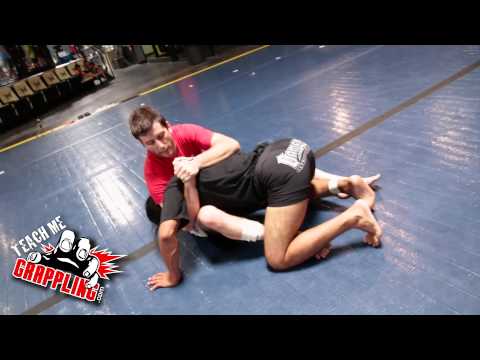
http://teachmegrappling.com This video unveils the NEW "200% Sweep". Its the 100% sweep with a better grip to it that ma…
No instructional courses yet for this technique.
Sign in to suggest a course.
Risk of injury to the person this technique is applied to
Sweeps are among the safest grappling techniques; the movements are ground-based with minimal impact; primary risk is the opponent landing on you during a failed sweep or the opponent countering with a submission during the sweep attempt
Skill level needed to execute this technique reliably
Whether this technique is allowed under major competition rule sets
Jiu-Jitsu University (Saulo Ribeiro, 2008)
Description sources — [1] Jiu-Jitsu University (Ribeiro, 2008) on sweep fundamentals [2] The Guard (Beneville & Moreira, 2003) on guard offensive systems [3] X-Guard (Garcia, 2008)
History sources — [1] The Gracie Way (Kid Peligro, 2003) [2] BJJ competition evolution [3] Marcelo Garcia, Roberto Gordo, Ricardo De La Riva career records
Description sources — [1] Jiu-Jitsu University (Ribeiro, 2008) on sweep fundamentals [2] The Guard (Beneville & Moreira, 2003) on guard offensive systems [3] X-Guard (Garcia, 2008)
History sources — [1] The Gracie Way (Kid Peligro, 2003) [2] BJJ competition evolution [3] Marcelo Garcia, Roberto Gordo, Ricardo De La Riva career records
hip mobility and power (the engine of sweeping), grip strength (controlling the opponent's posting), core strength (bridging and rotation)
strong hips, flexible guard, good timing sensitivity
hip flexors (elevation), core (rotation and bridging), forearms (grip), hamstrings (hooking and pulling)
Every move, in any martial art, shares a few universal traits. Mix and match below to pinpoint the right tool — or compare equivalents across styles.
The 10th Planet Sweep family covers sweeping techniques developed within Eddie Bravo's 10th Planet Jiu-Jitsu system — sweeps executed from the system's proprietary guard positions (Lockdown half guard, Rubber Guard, Truck) that are unavailable in traditional BJJ. [1] The most notable 10th Planet sweeps include the Electric Chair sweep (from Lockdown — using the figure-four leg control to stretch and sweep), the Old School from Lockdown, and various Rubber Guard-based sweeps that use flexibility to control posture before sweeping. [1,2] These sweeps are designed exclusively for no-gi grappling, replacing gi-dependent sweeping grips with body entanglements (Lockdown, butterfly hooks combined with overhooks) that provide sweeping leverage without cloth grips. [2,3]
The Guard Sweep family within the Throw class covers sweeping techniques from guard that reverse the top and bottom positions — classified under Throw because sweeps achieve the same outcome as throws (reversing who is on top) but from the ground rather than standing. [1] This family overlaps significantly with the Guard Sweep family under the Position class but is categorised here because sweeps are mechanically related to throws — both use leverage, off-balancing, and momentum to reverse the opponent's position. [1,2] Guard sweeps are the primary offensive tool for bottom players in BJJ and score 2 points in competition (IBJJF/ADCC), making them among the most strategically important techniques in grappling. [2,3]
Sweeps from guard — butterfly sweep, scissor sweep, hip bump, flower sweep — reverse bottom position to top. Sweep appears in 2,629 passages across our corpus. In IBJJF, sweeps score 2 points. Marcelo Garcia's butterfly sweep game is considered the benchmark. (200+ books; Garcia, Advanced BJJ Techniques; IBJJF Rules v6.0)
The inside knee does most of the work by creating a tipping motion that knocks your opponent over. According to Jordan Teaches Jiujitsu, you should shoot your hips underneath your opponent's hips while controlling their posture to prevent them from posting out.
Jordan Teaches Jiujitsu explains that if your opponent commits their grip to you, you can keep that grip in place and use it to your advantage—such as in the half guard flower sweep—by turning both your knees to execute the technique.
People naturally resist being pulled forward by pulling back and away from you, which works against them. By pulling your opponent forward toward you and getting their hips above your hips, you can then straighten your legs to complete the sweep.
Coach Brian teaches that when someone counters the 100% by spinning through, you can upgrade to the 200% grip by locking palm-to-palm with a rear naked choke grip, which allows you to both push and pull to prevent their rotation and maintain control.
The Sweep group encompasses all ground-based reversal techniques where the bottom player uses leverage, momentum, and leg work to reverse the top and bottom positions — the primary offensive tool for guard players in Brazilian Jiu-Jitsu. Sweeps are mechanically distinct from standing throws: they are executed from the ground (typically from guard positions) and use hooks, grips, and hip movement to off-balance and topple the top player, putting the sweeper into a dominant top position.
While ground reversals existed in wrestling and judo ne waza, the sweep as a systematic offensive tool from guard was developed primarily in Brazilian Jiu-Jitsu. The Gracie family established fundamental sweeps (scissor sweep, flower sweep, hip bump) as core techniques in their self-defence curriculum.
IJF: legal — Legal throwing technique; IBJJF: legal — Legal at all belt levels; UWW: restricted — Legal in freestyle, banned in Greco-Roman (no leg attacks below waist); Unified MMA: legal — Legal throwing technique; ADCC: legal — Legal; FIAS Sport Sambo: legal — Legal; FIAS Combat Sambo: legal — Legal
Danger rating 2/10. Low — sweeps are among the safest grappling techniques; the movements are ground-based with minimal impact; primary risk is the opponent landing on you during a failed sweep or the opponent countering with a submission during the sweep attempt
The standard setup chain: Establish Guard → Break Posture → Control Posting → Off-Balance → Execute Sweep → Come on Top.
Standard counters include: Base and Posture — maintaining wide base and low centre of gravity makes sweeping difficult / Post — placing the hand or foot on the sweeping side to prevent being tipped / Stand Up — standing up in guard removes the sweep angle / Grip Strip — removing the guard player's grips eliminates their sweep control.
Common variants: Scissor sweep (from closed guard, using one shin as a frame across the o…); Hip bump sweep (explosive hip thrust from closed guard to knock the oppon…); Butterfly hook sweep (from seated butterfly guard, elevating with one hook whil…); Flower sweep (pendulum sweep) (from closed guard, swinging the leg like a pendulum to ge…); Half guard sweep (using the underhook and leg control from half guard to co…); De La Riva sweep (using the outside leg hook to off-balance and sweep from …); X-guard sweep (from underneath in X-guard, standing up while controlling…).
Sweeps score 2 points in both IBJJF and ADCC, making them a primary scoring mechanism. Multiple IBJJF and ADCC champions have built careers primarily on sweeping ability — Marcelo Garcia's butterfly sweep game is the most famous example.
Top errors to watch for: Sweeping without removing the post — the opponent's hand or foot on the sweeping side must be controlled; sweeping wh… / Attempting to sweep a postured-up opponent — break the opponent's posture first (pull them forward), then sweep; swee… / Using arms instead of hips — effective sweeps use the hips and legs as the primary power source; arm-only sweeps lack… / Not following through — a sweep that tips the opponent but doesn't end with the sweeper on top is wasted effort; imme….
The Sweep is also known as Suīpu, Ground Sweep, Grappling Sweep, Guard Sweep, Reversal.