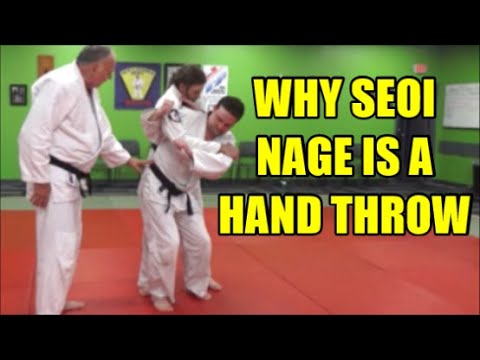
WHY SEOI NAGE IS A HAND THROW
0
Hand Technique Throw — Te Waza·welcomematstevescott
This video analyzes why Seoi Nage is categorized as a Te Waza or Hand Technique in Kodokan Judo. #seoinage #kodokan #kod…
Translation: hand technique
The Hand Technique Throw group, known in Japanese as te-waza, comprises all throwing techniques in which the primary mechanism of the throw is the action of the hands and arms rather than the hips or legs. [1] Te-waza techniques generate throwing force through pulling, lifting, dropping, and wheeling actions executed with the gripping hands, using leverage and directional control to unbalance and project the opponent. [1],[2] This group includes shoulder throws (seoi-nage family), body drops (tai-otoshi), arm throws (sukui-nage, sumi-otoshi, uki-otoshi), and sacrifice arm throws (yama-arashi), each employing distinct hand-arm mechanics to achieve the throw. [2],[3] Te-waza techniques are among the most popular in judo competition, with seoi-nage consistently ranking as one of the most frequently scored throws at all levels of international competition. [3],[4] The group is characterised by the thrower's reliance on pulling power, grip strength, and rotational speed rather than on hip contact or leg sweeping to generate the throwing force. [4],[5]
Hand techniques have been central to judo since Jigoro Kano's founding of the Kodokan in 1882, with several te-waza included in the original gokyo no waza of 1895. [1] Seoi-nage in particular was one of the most practised techniques in early Kodokan judo, favoured by smaller practitioners who could use turning speed and arm power to overcome larger opponents. [2],[3] The te-waza group has expanded over the decades as the Kodokan recognised additional techniques, and hand throws have become increasingly dominant in modern competition, with seoi-nage variants and tai-otoshi among the most commonly scored techniques at World Championships and Olympic Games. [3],[4]
Jigoro Kano classified te-waza as one of the five categories of nage-waza in the Kodokan judo syllabus. [1]
Seoi nage (a te-waza technique) is consistently among the highest-scoring throws in IJF competition. [1]
No images yet for this technique.
Sign in to suggest an image.
This video analyzes why Seoi Nage is categorized as a Te Waza or Hand Technique in Kodokan Judo. #seoinage #kodokan #kod…
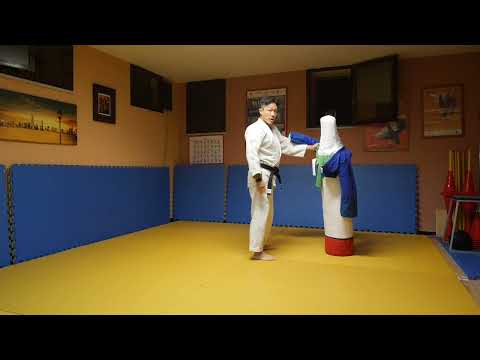
How to drill with a dummy for the following techniques in tewaza: seio nage, ippon seio nage, seio otoshi, tai otoshi an…
No instructional courses yet for this technique.
Sign in to suggest a course.
Risk of injury to the person this technique is applied to
Hand techniques involve lifting and rotation; shoulder/elbow injury risk
Skill level needed to execute this technique reliably
Whether this technique is allowed under major competition rule sets
Kodokan Judo — Official Nage-waza Classification
Traditional Judo throwing technique terminology (Kodokan Institute)
Official Kodokan ground technique classification system
Standard Japanese martial arts terminology (kanji/hiragana)
Established Japanese martial arts naming convention — native Japanese term (和語/漢語)
Traditional Judo throwing technique terminology (Kodokan Institute)
hip rotation speed, core strength, lower back stability
strong hips and core, good flexibility for turning entry
hip rotators, core, quadriceps, latissimus dorsi
Every move, in any martial art, shares a few universal traits. Mix and match below to pinpoint the right tool — or compare equivalents across styles.
The Arm Throw family encompasses te-waza techniques in which the thrower uses the arms to scoop, lift, or pull the opponent into a throw without turning the back or using hip contact as the primary fulcrum. [1] Arm throws are characterised by the direct application of hand and arm force to destabilise and project the opponent, often through scooping under the body, pulling on a corner, or creating a void into which the opponent falls. [1,2] The three classical arm throws — sukui-nage (scoop throw), sumi-otoshi (corner drop), and uki-otoshi (floating drop) — represent different applications of arm-driven throwing mechanics. [2,3]
The Body Drop family centres on tai-otoshi, a fundamental te-waza technique in which the thrower turns in and extends the leg across the opponent's path as a trip while pulling the opponent forward and over the outstretched leg. [1] Body drop techniques are classified as hand techniques despite the use of the extended leg because the leg does not actively sweep or reap — it serves as a passive block or trip while the throwing force comes from the pulling and rotating action of the hands. [1,2] Tai-otoshi is one of judo's most versatile and frequently scored throws, effective at all weight categories and adaptable to many grip configurations. [2,3]
The Sacrifice Arm Throw family covers te-waza techniques in which the thrower sacrifices their own standing position, falling or dropping to the mat while using the arms to drive the opponent into a throw. [1] These techniques combine the arm-driven mechanics of te-waza with the body-sacrifice principle of sutemi-waza, creating throws where the thrower's falling body weight amplifies the arm action. [1,2] Yama-arashi (mountain storm) is the primary technique in this family, a devastating throw that uses a powerful lapel grip and body drop to project the opponent. [2,3]
The Shoulder Throw family encompasses the seoi-nage (back-carrying throw) techniques and kata-guruma (shoulder wheel), which are among the most popular and effective throws in judo and grappling. [1] Shoulder throws are characterised by the thrower turning their back to the opponent and loading them onto the shoulders or upper back, then throwing them forward by pulling with the arms and bending or dropping the body. [1,2] The seoi-nage variants — ippon seoi-nage, morote seoi-nage, eri seoi-nage, and seoi-otoshi — differ in grip configuration and body mechanics but share the fundamental principle of loading the opponent onto the back and projecting them forward. [2,3] Kata-guruma, the shoulder wheel or fireman's carry, uses a different loading mechanism, placing the opponent across the shoulders, but shares the family's defining characteristic of using the shoulder as the primary fulcrum. [3,4]
The Wheel Throw (Guruma, 車) family covers judo hand technique throws that use a wheeling motion to rotate the opponent around the thrower's body — named for the wheel-like circular arc the opponent travels during the throw. [1] The most famous guruma technique is kata guruma (shoulder wheel, also known as the fireman's carry) where the thrower loads the opponent across the shoulders and wheels them over, plus other variations like ushiro guruma (rear wheel). [1,2] Kata guruma was historically one of judo's most popular and spectacular throws, but its usage in judo competition has changed dramatically since the IJF banned grabbing below the waist in standing (2013), forcing judoka to modify the technique for the modern ruleset. [2,3]
Te waza (hand techniques) use the arms and upper body as the primary throwing mechanism — seoi-nage, tai-otoshi, kata-guruma. Shoulder throw appears in 254 passages across 60 books. Seoi-nage is the most commonly attempted throw in international judo. (60 books; Kano, Kodokan Judo; IJF competition data)
In Seoi Nage, you pop your opponent up, lock in, turn, and then rotate to throw them over your back. In Seo Otoshi, you do not pop back up—instead, you drop and let your opponent fall over you without the upward pop and rotation sequence.
After popping your opponent up and locking in, turn naturally with your knees pointing to one side, buttocks to the other, and your back straight. Keep your back straight while loading them across your back, then execute the throw like a chopping motion pulling downward.
Curl your arm and jam it under your opponent's armpit. This arm placement, combined with a high line of pull after breaking their balance, is crucial to lifting them over your back rather than onto your shoulders.
The Hand Technique Throw group, known in Japanese as te-waza, comprises all throwing techniques in which the primary mechanism of the throw is the action of the hands and arms rather than the hips or legs. Te-waza techniques generate throwing force through pulling, lifting, dropping, and wheeling actions executed with the gripping hands, using leverage and directional control to unbalance and project the opponent.
Hand techniques have been central to judo since Jigoro Kano's founding of the Kodokan in 1882, with several te-waza included in the original gokyo no waza of 1895. Seoi-nage in particular was one of the most practised techniques in early Kodokan judo, favoured by smaller practitioners who could use turning speed and arm power to overcome larger opponents.
IJF: legal — Legal throwing technique; IBJJF: legal — Legal at all belt levels; UWW: legal — Legal in both freestyle and Greco-Roman; Unified MMA: legal — Legal throwing technique; ADCC: legal — Legal; FIAS Sport Sambo: legal — Legal; FIAS Combat Sambo: legal — Legal
Danger rating 5/10. High — hand techniques involve lifting and rotation; shoulder/elbow injury risk
The standard setup chain: Grip Setup (Kumi-kata) → Off-Balance (Kuzushi) → Entry (Tsukuri) → Execution (Kake) → Fall (Sutemi).
Standard counters include: Lower Centre of Gravity — bend knees and drop hips to make the throw harder to execute / Block the Hip — post hand on the thrower's hip to prevent loading / Step Around — circle away from the throw direction to avoid being loaded / Grip Break — deny the thrower their preferred gripping configuration.
Common variants: Standard hip throw (full turn-in with hip below the opponent's centre of gravity); No-gi hip throw (adapted without gi grips, using overhook and collar tie); Drop hip throw (dropping to one knee to lower the fulcrum point); Combination hip throw (chaining from a failed foot technique or hand technique).
Seoi nage (a te-waza technique) is consistently among the highest-scoring throws in IJF competition.
Top errors to watch for: Not turning far enough into the throw — for seoi nage and tai otoshi, your back must fully face the opponent / Pulling the opponent onto your back without dropping your hips below theirs — your centre must be lower / Bending at the waist instead of the knees during the entry — this raises your centre and makes the throw impossible / Leaving space between your body and the opponent during the entry — chest-to-chest contact is essential.
The Hand Technique Throw — Te Waza is also known as Te-waza, Arm throws, Hand techniques, Upper body throws.