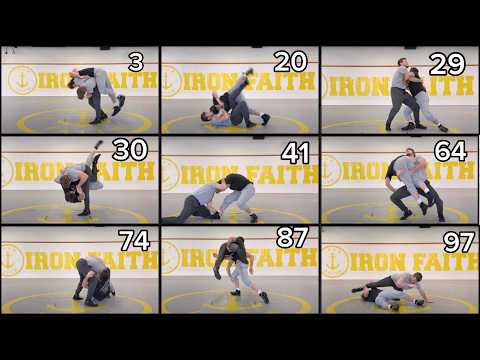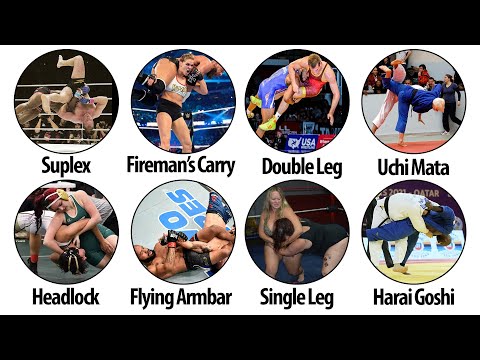
Every Jiu Jitsu Takedown Explained In 7 Minutes
0
Takedown·Tyler Spangler
Check out Xmartial with Promo TYLER10 #transparentlabs ►Xmartial: https://www.xmartial.com/?ref=TYLERSPANGLER ►Trans…
Translation: takedown (katakana loanword)
The Takedown class encompasses all techniques designed to bring a standing opponent to the ground while the attacker remains in a dominant or neutral position. [1] Takedowns are distinguished from throws by their emphasis on changing level, penetrating the opponent's base, and driving or pulling them to the mat rather than projecting them through the air with rotational force. [1],[2] This class forms one of the fundamental pillars of combat sports, bridging the gap between standing engagement and ground fighting across wrestling, Brazilian Jiu-Jitsu, mixed martial arts, judo, and sambo. [2] Takedowns are broadly categorised by the primary target of attack — legs, upper body, or clinch position — and by the mechanical principle employed, such as level change with penetration step, body lock compression, trip mechanics, or drag-and-redirect forces. [2],[3] Successful takedown execution requires precise timing, explosive penetration, and the ability to chain attacks when initial entries are defended. [3] In modern MMA competition, takedown accuracy and defence are among the most statistically significant predictors of fight outcomes, underscoring the class's tactical importance across all combat disciplines. [3],[4]
Takedown techniques have been practised since the earliest recorded wrestling traditions, with depictions appearing in ancient Egyptian tomb paintings at Beni Hasan (circa 2000 BCE) and in Greek Olympic wrestling from 708 BCE. [1] The modern systematisation of takedowns emerged through the parallel development of freestyle and Greco-Roman wrestling in Europe and America during the 19th century, folkstyle wrestling in American collegiate competition, and judo's standing techniques (tachi-waza) codified by Jigoro Kano in 1882. [2],[3] The advent of mixed martial arts in the 1990s — particularly the UFC and PRIDE organisations — forced a synthesis of wrestling, judo, and sambo takedown systems, creating the eclectic takedown methodology used in modern combat sports. [3],[4] Today, takedown training is considered essential across virtually all competitive fighting disciplines. [4]
Takedowns are among the most decisive actions in combat sports, allowing a fighter to bring the opponent to the ground and establish top control. [1],[2] In MMA, successful takedowns correlate strongly with fight outcomes; UFC statistics show that fighters who land more takedowns win significantly more often. [3] Takedowns score points in wrestling, judo, and sambo, and in MMA they generate ground-and-pound opportunities. [1],[2]
Takedown techniques appear in virtually every grappling tradition worldwide. Greek wrestling (pale) and pankration featured takedowns in ancient Olympic competition. [1] Modern takedown methodology draws from freestyle and Greco-Roman wrestling, judo (nage-waza), sambo, and traditional folk wrestling styles. [2],[3]
In Olympic wrestling, takedowns are the primary scoring action in both freestyle and Greco-Roman. [1] In UFC competition, takedown accuracy is a tracked statistic, with elite wrestlers like Khabib Nurmagomedov (21-0 takedown accuracy in multiple fights) and Georges St-Pierre demonstrating takedown dominance as a path to championship victories. [2],[3]
No images yet for this technique.
Sign in to suggest an image.
Check out Xmartial with Promo TYLER10 #transparentlabs ►Xmartial: https://www.xmartial.com/?ref=TYLERSPANGLER ►Trans…
Iron Faith Merch ➡️ https://amptstudio.chipply.com/ifwc/ Join the #1 Online Wrestling Academy in the world ➡️ https://w…
No instructional courses yet for this technique.
Sign in to suggest a course.
Risk of injury to the person this technique is applied to
Takedowns bring the fight to the ground; injury risk depends on technique and control
Skill level needed to execute this technique reliably
Whether this technique is allowed under major competition rule sets
Freestyle Wrestling: A Complete Guide for Coaches and Wrestlers (Petrov, 1977)
Alias sources — [1] Wrestling Physical Conditioning Encyclopedia (Welker et al., 2010) [2] NCAA Wrestling Rules and Interpretations [3] Kodokan Judo (Kano, 1986) [4] Kodokan Judo (Kano, 1986)
Effectiveness sources — [1] Wrestling Physical Conditioning Encyclopedia (Petrov, 1977) [2] Mastering Jujitsu (Gracie & Danaher, 2003) [3] UFC Stats (ufcstats.com, accessed 2024)
Standard katakana transliteration of Western martial arts terminology (外来語) — used in Japanese MMA, boxing, and BJJ communities
Alias sources — [1] Wrestling Physical Conditioning Encyclopedia (Welker et al., 2010) [2] NCAA Wrestling Rules and Interpretations [3] Kodokan Judo (Kano, 1986) [4] Kodokan Judo (Kano, 1986)
Effectiveness sources — [1] Wrestling Physical Conditioning Encyclopedia (Petrov, 1977) [2] Mastering Jujitsu (Gracie & Danaher, 2003) [3] UFC Stats (ufcstats.com, accessed 2024)
upper body squeeze strength, lifting power, hip drive
thick chest and arms for tight lock, strong lower back for lifts
pectorals, biceps, erector spinae, glutes
Every move, in any martial art, shares a few universal traits. Mix and match below to pinpoint the right tool — or compare equivalents across styles.
The Body Lock Takedown group comprises all takedowns initiated from a locked body clinch where the attacker's arms encircle the opponent's torso. [1] The body lock provides a powerful platform for takedowns because the locked grip eliminates the space between fighters and allows the attacker to directly manipulate the opponent's centre of gravity. [1,2] Techniques in this group are classified by the attacker's position relative to the opponent — front, rear, or side — each offering distinct mechanical advantages and entry opportunities. [2] Body lock takedowns are fundamental in Greco-Roman wrestling where leg attacks are prohibited, making upper-body clinch work the primary offensive pathway. [2,3] In MMA, body lock takedowns have become increasingly prominent as wrestlers adapted their skills to cage fighting, where the fence provides a wall to press opponents against while securing the lock. [3]
The Clinch Takedown group encompasses takedowns that are initiated from and dependent on an established clinch position, where the primary mechanism is neither a pure leg attack nor a body lock lift. [1] These takedowns leverage the unique dynamics of clinch fighting — including collar ties, underhooks, overhooks, and head position — to create off-balancing opportunities that lead to takedowns. [1,2] The group includes dirty boxing takedowns from Muay Thai and MMA clinch exchanges, as well as wall/cage-specific takedowns that exploit the unique environmental constraint of a cage or wall. [2] Clinch takedowns are particularly important in MMA, where the ability to take an opponent down from the clinch without shooting for legs is a critical skill. [2,3] Many fighters prefer clinch takedowns because they avoid the risk of guillotine chokes and sprawl counters associated with level-change leg attacks. [3]
The Leg Attack Takedown group encompasses all takedowns that primarily target the opponent's legs as the point of attack, including single legs, double legs, and ankle picks. [1] Leg attacks are the most common takedown category in freestyle wrestling and MMA because they allow the attacker to change level and penetrate from outside the clinch, attacking the opponent's base directly. [1,2] The fundamental mechanical principle is level change — the attacker drops their hips below the opponent's hips and drives forward to attack the legs, removing the opponent's base of support. [2] Leg attacks require a penetration step (shooting), where the attacker closes distance explosively while lowering the centre of gravity. [2,3] This group is prohibited in Greco-Roman wrestling but forms the backbone of freestyle, folkstyle, and MMA takedown systems. [3]
Rolling Entry takedowns are techniques where the attacker uses a forward or lateral roll to rapidly close distance and enter into leg entanglements, takedowns, or submission positions — sacrificing standing position for immediate ground engagement. [1] The most famous rolling entry is the Imanari Roll, named after Japanese MMA fighter Masakazu Imanari, which transitions directly from standing into ashi garami (leg entanglement) positions for heel hook and knee bar attacks. [1,2] Rolling entries gained prominence through the modern leg lock renaissance, where the Danaher Death Squad (Gordon Ryan, Garry Tonon, Eddie Cummings) demonstrated that entering leg entanglements from standing via rolling entries could bypass traditional takedown and guard-pulling dynamics. [2,3] Rolling entries are high-risk, high-reward techniques — a successful roll immediately establishes a leg lock position, while a failed roll can leave the attacker in a disadvantaged bottom position. [3]
The Takedown group covers all fundamental techniques for bringing an opponent from a standing position to the ground while the attacker remains in a dominant or neutral position — the essential bridge between standing combat and ground fighting. [1] Takedowns are distinct from throws in that they typically involve driving or pulling the opponent to the mat through level changes, penetration steps, and leg attacks, rather than the lifting or rotational projection characteristic of throws. [1,2] The core takedown techniques — single leg, double leg, high crotch, body lock, and snap-down — form the foundation of competitive wrestling and have been adopted universally into MMA, BJJ, sambo, and self-defence systems. [2,3] In every scoring combat sport, takedowns earn points (2 in freestyle wrestling, 2 in BJJ, and implicit judging credit in MMA), making them among the most strategically valuable techniques across all martial arts. [3]
The Trip Takedown group encompasses all takedowns that primarily use the attacker's legs or feet to disrupt the opponent's base by tripping, sweeping, or reaping their feet or legs. [1] Unlike leg-attack takedowns that grab the opponent's legs with the arms, trip takedowns use the attacker's own lower body as the primary mechanical tool — blocking, hooking, or sweeping the opponent's feet out from under them while upper body control provides the directing force. [1,2] This group includes foot sweeps, inside trips, outside trips, and scissor takedowns, drawing techniques from judo (ashi-waza), wrestling, sambo, and various traditional martial arts. [2] Trip takedowns are energy-efficient because they exploit the opponent's momentum and weight distribution rather than requiring the attacker to lift or carry the opponent's mass. [2,3] Many trip takedowns function best as timing-based counter-attacks, catching opponents in motion. [3]
The Upper Body Takedown group encompasses takedowns initiated through upper body control — arm drags, collar ties, wrist control, and head manipulation — that redirect the opponent's balance and create takedown opportunities without directly attacking the legs or using a body lock. [1] Upper body takedowns work by disrupting the opponent's posture, balance, and structural alignment through pulling, pushing, and redirecting forces applied above the waist. [1,2] This group includes arm drags, snap-downs, duck-unders, and drag takedowns, all of which use the opponent's own upper body structure as the handle for off-balancing. [2] Upper body takedowns are valuable in all combat contexts but are particularly important in Greco-Roman wrestling where leg attacks are prohibited. [2,3]
The takedown group covers general takedown techniques that span multiple combat systems. Single leg (175/42 books) and double leg (166/39 books) are the two most documented takedowns. In MMA, takedown accuracy and defense percentages are among the most tracked fighter statistics. (200+ books; UFC Stats; wrestling manuals)
Load your opponent's weight onto your hips, rotate your core, and use your back and shoulder as a lever to throw them over the top. Tyler Spangler emphasizes that dropping lower than their center of gravity is essential.
Keep your hips in tight to avoid being countered. This is especially important when executing techniques like the single leg takedown.
Fall to your shoulder rather than your butt so your opponent doesn't end up on top of you. This is crucial for maintaining control during sacrifice throws.
Change your level, drive forward, grab one leg, and execute one of several finishing options. Keep your hips in to prevent counter-attacks.
The Takedown class encompasses all techniques designed to bring a standing opponent to the ground while the attacker remains in a dominant or neutral position. Takedowns are distinguished from throws by their emphasis on changing level, penetrating the opponent's base, and driving or pulling them to the mat rather than projecting them through the air with rotational force.
Takedown techniques have been practised since the earliest recorded wrestling traditions, with depictions appearing in ancient Egyptian tomb paintings at Beni Hasan (circa 2000 BCE) and in Greek Olympic wrestling from 708 BCE. The modern systematisation of takedowns emerged through the parallel development of freestyle and Greco-Roman wrestling in Europe and America during the 19th century, folkstyle wrestling in American collegiate competition, and judo's standing techniques (tachi-waza) codified by Jigoro Kano in 1882.
IJF: legal — Legal takedown technique; IBJJF: legal — Legal at all belt levels, scored as takedown (2 points); UWW: legal — Legal in freestyle, may be restricted in Greco-Roman depending on technique; Unified MMA: legal — Legal takedown technique; ADCC: legal — Legal, scored 2-4 points in second half of match; FIAS Sport Sambo: legal — Legal — all takedowns permitted; FIAS Combat Sambo: legal — Legal; NCAA Folkstyle: legal — Legal, scored as takedown (2 points)
Danger rating 4/10. Moderate — takedowns bring the fight to the ground; injury risk depends on technique and control
The standard setup chain: Establish Contact → Create Off-Balance → Execute the Takedown → Follow to Ground.
Standard counters include: Sprawl — drop hips back and drive weight down to stuff the takedown attempt / Underhook — establish inside position to control distance and prevent the takedown entry / Post and Circle — post on the attacker's head and circle away to break their angle / Level Change Defence — recognize the shot early and react with appropriate hip defence.
Common variants: Front body lock (securing the lock face-to-face and driving laterally or b…); Rear body lock (securing from behind for mat returns or lifts); Side body lock (angled body lock for trips and throws); Body lock to trip (combining the lock with a foot trip for the finish).
In Olympic wrestling, takedowns are the primary scoring action in both freestyle and Greco-Roman. In UFC competition, takedown accuracy is a tracked statistic, with elite wrestlers like Khabib Nurmagomedov (21-0 takedown accuracy in multiple fights) and Georges St-Pierre demonstrating takedown dominance as a path to championship victories.
Top errors to watch for: Bending at the waist instead of dropping the hips — exposes the neck and kills power / Reaching for legs without a proper level change, telegraphing the shot / Stopping after a failed attempt instead of chaining into the next attack / Head on the outside during leg attacks, giving up the guillotine.
The Takedown is also known as Teikudaun, Takedown Technique, Shooting, Level Change Attack, Tachi-waza (Standing Technique).