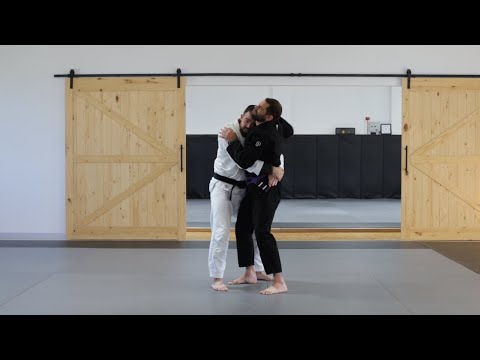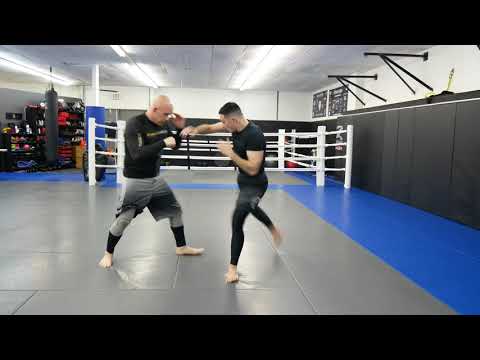
4 GREAT ways to Clinch in MMA Part 2: How to get the TAKEDOWN from 50/50
0
Clinch Takedown·UltimateMMA Plus
Join Ultimate MMA Plus Online University Now! https://ultimate-mma-and-jiu-jitsu-training-center.sparkuniversity.co/ C…
Translation: clinch takedown (katakana)
The Clinch Takedown group encompasses takedowns that are initiated from and dependent on an established clinch position, where the primary mechanism is neither a pure leg attack nor a body lock lift. [1] These takedowns leverage the unique dynamics of clinch fighting — including collar ties, underhooks, overhooks, and head position — to create off-balancing opportunities that lead to takedowns. [1],[2] The group includes dirty boxing takedowns from Muay Thai and MMA clinch exchanges, as well as wall/cage-specific takedowns that exploit the unique environmental constraint of a cage or wall. [2] Clinch takedowns are particularly important in MMA, where the ability to take an opponent down from the clinch without shooting for legs is a critical skill. [2],[3] Many fighters prefer clinch takedowns because they avoid the risk of guillotine chokes and sprawl counters associated with level-change leg attacks. [3]
Clinch takedowns have roots in Greco-Roman wrestling, Muay Thai, and judo, where standing clinch positions are primary battlegrounds. [1] The MMA cage environment created an entirely new category of clinch takedowns — cage/wall takedowns — that did not exist in any prior combat sport. [2] Fighters like Randy Couture, Daniel Cormier, and Khabib Nurmagomedov popularised clinch takedown systems that became defining elements of modern MMA strategy. [2],[3]
Clinch takedowns account for a significant portion of all takedowns in UFC competition, particularly among Greco-Roman wrestling specialists and Muay Thai clinch fighters. [1]
No images yet for this technique.
Sign in to suggest an image.
Join Ultimate MMA Plus Online University Now! https://ultimate-mma-and-jiu-jitsu-training-center.sparkuniversity.co/ C…
No instructional courses yet for this technique.
Sign in to suggest a course.
Risk of injury to the person this technique is applied to
Clinch takedowns involve close-range wrestling; wall impact risk in cage
Skill level needed to execute this technique reliably
Whether this technique is allowed under major competition rule sets
Japanese MMA standard terminology
Japanese MMA standard terminology
Standard katakana transliteration of Western martial arts terminology (外来語) — used in Japanese MMA, boxing, and BJJ communities
Katakana transliteration used in Japanese MMA/Shooto
upper body squeeze strength, lifting power, hip drive
thick chest and arms for tight lock, strong lower back for lifts
pectorals, biceps, erector spinae, glutes
Every move, in any martial art, shares a few universal traits. Mix and match below to pinpoint the right tool — or compare equivalents across styles.
The Dirty Boxing Takedown family covers takedowns initiated from the dirty boxing clinch — a close-quarters position borrowed from boxing and Muay Thai where the fighters are in punching range with collar ties, wrist control, or head position. [1] The 'dirty boxing' label refers to the infighting clinch work where short punches, elbows, and positional manipulation occur simultaneously with takedown attempts. [1,2] Takedowns from this position typically involve off-balancing the opponent with a push-pull action on the head or arms, then capitalising on the resulting posture break to execute a trip, drag, or snap-down. [2] This family bridges striking and grappling in a way unique to MMA. [2,3]
The Wall Takedown family encompasses all takedowns executed against the cage wall or a wall surface, where the vertical barrier provides an additional structural element that fundamentally alters takedown mechanics. [1] The wall prevents the opponent from retreating to absorb force, creates friction that can be used to control position, and provides a surface to pin opponents against while setting up takedowns. [1,2] Wall takedowns include body lock lifts off the wall, double and single leg attacks from the cage clinch, and trips executed while the opponent is pressed against the fence. [2] This family is unique to MMA and cage-based combat sports, as no traditional martial art developed techniques specifically for wall-assisted takedowns. [2,3]
Clinch takedowns — dirty boxing, wall takedowns, and clinch-to-throw transitions — use the clinch as the launching platform. In MMA, clinch takedowns along the cage wall are the most common takedown path. (MMA training manuals; The Ultimate MMA Training Guide)
According to UltimateMMA Plus, you want palm down around the back and palm up in front of the arm, with your forearm on top of the shoulder. This creates a much stronger pinch than placing your forearm underneath.
UltimateMMA Plus emphasizes that you cannot wait to establish the clinch first; you must go for the takedown right away before your opponent regains balance. Waiting allows them to settle and makes the takedown much harder to execute.
Academy Jiu Jitsu teaches that you should keep your hands down low and your head up high to leverage your opponent's spine at both the lowest and highest points, while keeping your opponent centered between your two feet to maintain your own balance.
According to Academy Jiu Jitsu, when your opponent begins to pull away and your grip starts to break, move your hands to their shoulders and keep their head down to prevent them from breaking free.
The Clinch Takedown group encompasses takedowns that are initiated from and dependent on an established clinch position, where the primary mechanism is neither a pure leg attack nor a body lock lift. These takedowns leverage the unique dynamics of clinch fighting — including collar ties, underhooks, overhooks, and head position — to create off-balancing opportunities that lead to takedowns.
Clinch takedowns have roots in Greco-Roman wrestling, Muay Thai, and judo, where standing clinch positions are primary battlegrounds. The MMA cage environment created an entirely new category of clinch takedowns — cage/wall takedowns — that did not exist in any prior combat sport.
IJF: legal — Legal takedown technique; IBJJF: legal — Legal at all belt levels, scored as takedown (2 points); UWW: legal — Legal in freestyle, may be restricted in Greco-Roman depending on technique; Unified MMA: legal — Legal takedown technique; ADCC: legal — Legal, scored 2-4 points in second half of match; FIAS Sport Sambo: legal — Legal — all takedowns permitted; FIAS Combat Sambo: legal — Legal; NCAA Folkstyle: legal — Legal, scored as takedown (2 points)
Danger rating 5/10. High — clinch takedowns involve close-range wrestling; wall impact risk in cage
The standard setup chain: Establish Contact → Create Off-Balance → Execute the Takedown → Follow to Ground.
Standard counters include: Sprawl — drop hips back and drive weight down to stuff the takedown attempt / Underhook Pummeling — fight for inside position to neutralize the lock / Hip Switch — rotate hips to break the grip angle and create separation / Knee Tap — redirect opponent's momentum with a quick leg attack.
Common variants: Front body lock (securing the lock face-to-face and driving laterally or b…); Rear body lock (securing from behind for mat returns or lifts); Side body lock (angled body lock for trips and throws); Body lock to trip (combining the lock with a foot trip for the finish).
Clinch takedowns account for a significant portion of all takedowns in UFC competition, particularly among Greco-Roman wrestling specialists and Muay Thai clinch fighters.
Top errors to watch for: Reaching for the takedown without first establishing clinch control — leads to sprawls and counters / Static clinch fighting without off-balancing — the opponent just braces and waits / Head too low in the clinch, eating uppercuts and knees / Clinching without a plan — burning energy in a 50/50 position with no attacks.
The Clinch Takedown is also known as Kurinchi Teikudaun, Cage Takedown, Wall Takedown, Dirty Boxing Takedown.