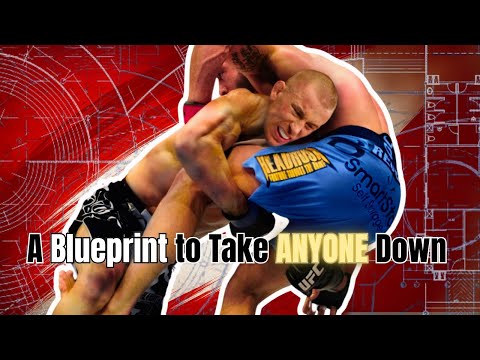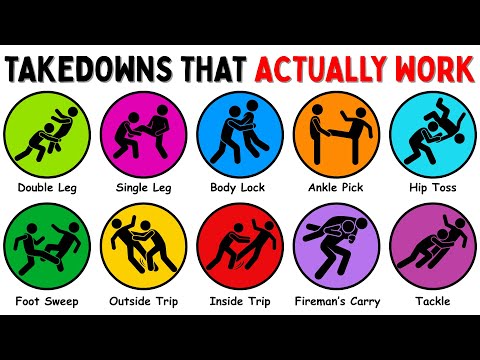
Every Takedown That ACTUALLY Works In The Street
0
Sport-Specific Takedown·MMA Unpacked
Every Takedown That ACTUALLY Works In The Street, explained. If you enjoyed, please like, subscribe and comment what yo…
Translation: Takedown
The Takedown group covers all fundamental techniques for bringing an opponent from a standing position to the ground while the attacker remains in a dominant or neutral position — the essential bridge between standing combat and ground fighting. [1] Takedowns are distinct from throws in that they typically involve driving or pulling the opponent to the mat through level changes, penetration steps, and leg attacks, rather than the lifting or rotational projection characteristic of throws. [1],[2] The core takedown techniques — single leg, double leg, high crotch, body lock, and snap-down — form the foundation of competitive wrestling and have been adopted universally into MMA, BJJ, sambo, and self-defence systems. [2],[3] In every scoring combat sport, takedowns earn points (2 in freestyle wrestling, 2 in BJJ, and implicit judging credit in MMA), making them among the most strategically valuable techniques across all martial arts. [3]
Takedown techniques are among the oldest documented combat skills in human history — tomb paintings at Beni Hasan in Egypt (c. 2000 BCE) depict wrestling takedowns recognisable as modern single legs and body locks. [1] Ancient Greek wrestling (pale) and pankration featured takedowns as scoring techniques. [1],[2] Modern takedown systems were formalised through the development of Olympic freestyle wrestling (1904 Olympics onwards), American folkstyle wrestling (NCAA, established 1928), and their integration into sambo (developed in the Soviet Union in the 1920s–30s). [2],[3] The adoption of wrestling takedowns into MMA in the 1990s–2000s, led by wrestlers like Dan Henderson, Mark Coleman, and Randy Couture, established the takedown as the single most important skill for controlling where a fight takes place. [3]
Takedowns are among the most strategically decisive techniques in all combat sports — the ability to take the fight to the ground (or prevent it from going there) often determines who wins. [1] In MMA, fighters with superior takedown skills consistently rank among the most successful champions — wrestlers Khabib Nurmagomedov (29-0), GSP (26-2), and Daniel Cormier (22-3) dominated through takedown pressure. [2] In wrestling competition, the takedown is the primary scoring action, with the entire sport structured around the attack-defend dynamic of shot-based wrestling. [3]
Modern takedown techniques descend from multiple wrestling traditions — American folkstyle (developed in the US college system), Olympic freestyle (international competition standard), and Greco-Roman (upper-body only). [1] Soviet sambo contributed its own takedown innovations, particularly from the clinch. [1],[2] In the 1990s–2000s, these traditions merged in MMA as wrestlers adapted their takedowns for the cage, creating distinct MMA takedown systems pioneered by Mark Coleman, Randy Couture, GSP, and later Khabib Nurmagomedov. [2]
Takedowns are the primary scoring action in wrestling (2–5 points depending on ruleset and amplitude) and a major scoring action in BJJ (2 points IBJJF, 2 points ADCC). [1] In NCAA wrestling, the double leg takedown is the most commonly scored technique. [1],[2] In MMA, takedown accuracy and defence are among the most tracked performance metrics, with control time (often initiated by takedowns) being a decisive judging factor. [2]
No images yet for this technique.
Sign in to suggest an image.
Every Takedown That ACTUALLY Works In The Street, explained. If you enjoyed, please like, subscribe and comment what yo…
In this video I break down the complete takedown system that made Georges St-Pierre the most dominant welterweight in MM…
No instructional courses yet for this technique.
Sign in to suggest a course.
Risk of injury to the person this technique is applied to
Takedowns carry injury risk from impact with the mat (head, shoulder, and knee injuries), failed shot attempts exposing the neck to guillotines and front headlock chokes, and the risk of slamming in competition; proper breakfalling technique mitigates landing injuries
Skill level needed to execute this technique reliably
Whether this technique is allowed under major competition rule sets
Takedown (Ben Askren, 2019)
Description sources — [1] Wrestling Physical Conditioning Encyclopedia (Jesse, 1974) [2] Takedown (Askren, 2019) on takedown fundamentals [3] IBJJF/ADCC/UWW scoring rules
History sources — [1] Combat Sports in the Ancient World (Poliakoff, 1987) on Beni Hasan and Greek wrestling [2] Olympic wrestling history [3] UFC competition evolution
Effectiveness sources — [1] Takedown (Askren, 2019) [2] UFC fight statistics (ufcstats.com) [3] UWW competition records
Description sources — [1] Wrestling Physical Conditioning Encyclopedia (Jesse, 1974) [2] Takedown (Askren, 2019) on takedown fundamentals [3] IBJJF/ADCC/UWW scoring rules
History sources — [1] Combat Sports in the Ancient World (Poliakoff, 1987) on Beni Hasan and Greek wrestling [2] Olympic wrestling history [3] UFC competition evolution
Effectiveness sources — [1] Takedown (Askren, 2019) [2] UFC fight statistics (ufcstats.com) [3] UWW competition records
explosive hip power (penetration step), cardio endurance (repeated shot attempts are exhausting), strong neck (head position during shots), leg strength (level changes and driving)
low centre of gravity (easier to change levels), explosive speed (fast shots are harder to defend), long arms (easier to reach the legs)
quadriceps (level change and driving), glutes (hip explosion), hamstrings (pulling and finishing), core (maintaining posture during the shot), neck (resisting snap-downs and maintaining head position)
Every move, in any martial art, shares a few universal traits. Mix and match below to pinpoint the right tool — or compare equivalents across styles.
The MMA Takedown family covers takedowns specifically adapted for mixed martial arts competition, where striking threats, the cage wall, and small gloves fundamentally alter takedown mechanics compared to pure wrestling. [1] MMA takedowns must account for punches, kicks, knees, and elbows during the entry — a level change that works in wrestling can result in a devastating knee in MMA — and the cage wall provides unique leverage for wall takedowns not available in any other combat sport. [1,2] The jab-to-double-leg, the cage-wall single leg, and the body-lock drive against the fence are the three most common MMA takedown entries, each integrating striking with grappling in ways unique to MMA. [2,3] Khabib Nurmagomedov's pressure takedown system and Georges St-Pierre's level-change timing represent two of the most successful MMA takedown approaches ever developed. [3]
The TKD Takedown family covers takedown techniques found within Taekwondo and related Korean martial arts — techniques that are less emphasised than kicks but exist within the complete curriculum for competition and self-defence application. [1] TKD takedowns include sweeps that exploit the opponent's kicking stance and momentum (hooking the support leg during a kick), reaps and trips that work from the clinch when fighters close distance in sparring, and sacrifice-style throws adapted from Korean wrestling (ssireum) influences. [1,2] In modern World Taekwondo (WT/WTF) Olympic competition, certain takedowns are permitted and can score or create advantageous positions — pushing an opponent down with a legal technique is part of the competitive toolkit. [2,3] While TKD takedowns are not as sophisticated as wrestling or judo takedowns, they serve an important role in the complete Korean martial arts curriculum. [3]
The Wrestling Takedown family covers takedown techniques originating from competitive wrestling — freestyle, Greco-Roman, and folkstyle — the most battle-tested and highest-percentage takedown system in combat sports. [1] These include the single-leg takedown (attacking one leg with head position inside or outside), double-leg takedown (driving through both legs), high crotch (attacking the inner thigh crease), fireman's carry (ducking under and loading the opponent), ankle pick, and duck-under — each with multiple entries and finishes refined through over a century of Olympic and collegiate competition. [1,2] Wrestling takedowns are defined by the penetration step (an explosive forward lunge that closes distance) and the level change (dropping the hips below the opponent's hips) — two movements that make wrestling takedowns the most efficient standing-to-ground transitions in martial arts. [2,3] Every elite MMA wrestler (Khabib, GSP, Cormier, Cejudo) relies on this family as their primary method of controlling where fights take place. [3]
Sport-specific takedowns are adapted for particular rulesets — MMA takedowns use cage walls and dirty boxing setups, TKD takedowns use kick-catch entries, wrestling takedowns follow mat-specific rules. Each sport's ruleset shapes its takedown techniques. (Sport-specific training manuals)
Time your shot reactively to when your opponent steps forward to counter or retaliate—shoot just as they're setting their weight on the stepping foot, as that's when they're most vulnerable.
George St-Pierre primarily used the cage as an entry weapon to set up takedowns rather than as a finishing weapon itself; if the cage isn't one of your strengths, moving the opponent away from the fence into open space can actually open up your jiu-jitsu game.
From the over-under clinch position, you can create a dilemma for your opponent by alternating between the knee pick and haraigoshi (judo throw), forcing them to defend multiple attacks.
The ankle pick is a quick, reactive takedown built on timing rather than strength, making it particularly effective in wrestling because it requires precise timing rather than raw power.
The Takedown group covers all fundamental techniques for bringing an opponent from a standing position to the ground while the attacker remains in a dominant or neutral position — the essential bridge between standing combat and ground fighting. Takedowns are distinct from throws in that they typically involve driving or pulling the opponent to the mat through level changes, penetration steps, and leg attacks, rather than the lifting or rotational projection characteristic of throws.
Takedown techniques are among the oldest documented combat skills in human history — tomb paintings at Beni Hasan in Egypt (c. 2000 BCE) depict wrestling takedowns recognisable as modern single legs and body locks.
IJF: legal — Legal takedown technique; IBJJF: legal — Legal at all belt levels, scored as takedown (2 points); UWW: legal — Legal in freestyle, may be restricted in Greco-Roman depending on technique; Unified MMA: legal — Legal takedown technique; ADCC: legal — Legal, scored 2-4 points in second half of match; FIAS Sport Sambo: legal — Legal — all takedowns permitted; FIAS Combat Sambo: legal — Legal; NCAA Folkstyle: legal — Legal, scored as takedown (2 points)
Danger rating 5/10. Moderate — takedowns carry injury risk from impact with the mat (head, shoulder, and knee injuries), failed shot attempts exposing the neck to guillotines and front headlock chokes, and the risk of slamming in competition; proper breakfalling technique mitigates landing injuries
The standard setup chain: Create a Reaction → Level Change → Penetration Step → Secure Contact → Finish the Takedown → Establish Top Position.
Standard counters include: Sprawl — driving the hips back and down to push the attacker's head to the mat; the most fundamental takedown defence / Whizzer (Overhook) — when the attacker secures a single leg, counter with an overhook on the attacking arm and hip pr… / Crossface — driving the forearm across the attacker's face to redirect their shot and create an angle / Underhook — securing an underhook as the attacker levels changes to prevent them from getting to the legs.
Common variants: Double leg takedown (shooting in to grab both of the opponent's legs and drivi…); Single leg takedown (attacking one leg with head position on the inside or out…); High crotch (attacking the opponent's inner thigh/hip crease; a hybrid…); Body lock takedown (securing a body lock from the clinch and using trips, dri…); Snap-down (pulling the opponent's head and neck downward to break th…); Ankle pick (reaching for the opponent's ankle while controlling the h…); Fireman's carry (ducking under the opponent's arm, loading them across the…).
Takedowns are the primary scoring action in wrestling (2–5 points depending on ruleset and amplitude) and a major scoring action in BJJ (2 points IBJJF, 2 points ADCC). In NCAA wrestling, the double leg takedown is the most commonly scored technique.
Top errors to watch for: Shooting without a setup — a raw takedown attempt without a preceding fake, strike, or grip break is easily sprawled … / Head down during the shot — dropping the forehead to the mat during the penetration step loses driving power and expo… / Reaching for the legs with arms only — effective takedowns require the whole body (level change, penetration, hip dri… / Over-committing to a failed shot — when a takedown is fully defended, continuing to drive forward burns energy and cr….
The Sport-Specific Takedown is also known as Teikudaun, General Takedown, Standing Takedown, Takedown Technique.