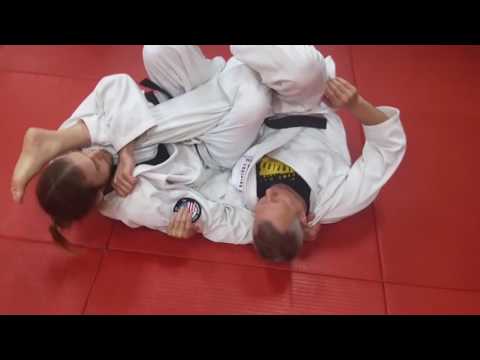
HONEY STICK - Leg Lock Entry Concepts
0
Rolling Entry·James Clingerman
Here are some more entries for the Honey Stick position—including De La Riva X, Shin-On-Shin, Full Mount, and a Knee On …
Translation: Rolling entry
Rolling Entry takedowns are techniques where the attacker uses a forward or lateral roll to rapidly close distance and enter into leg entanglements, takedowns, or submission positions — sacrificing standing position for immediate ground engagement. [1] The most famous rolling entry is the Imanari Roll, named after Japanese MMA fighter Masakazu Imanari, which transitions directly from standing into ashi garami (leg entanglement) positions for heel hook and knee bar attacks. [1],[2] Rolling entries gained prominence through the modern leg lock renaissance, where the Danaher Death Squad (Gordon Ryan, Garry Tonon, Eddie Cummings) demonstrated that entering leg entanglements from standing via rolling entries could bypass traditional takedown and guard-pulling dynamics. [2],[3] Rolling entries are high-risk, high-reward techniques — a successful roll immediately establishes a leg lock position, while a failed roll can leave the attacker in a disadvantaged bottom position. [3]
Rolling entries gained prominence through Masakazu Imanari, a Japanese MMA fighter who used his signature rolling entry to heel hook opponents in PRIDE, DREAM, and other Japanese MMA promotions starting in the early 2000s. [1] The technique gained broader adoption after the Danaher Death Squad (particularly Eddie Cummings and Garry Tonon) demonstrated rolling entries in Eddie Bravo Invitational (EBI) and ADCC competition from 2014 onward. [1],[2] Ryan Hall's UFC career further popularised the Imanari roll, with his rolling heel hook entries becoming some of the most analysed techniques in modern MMA. [2],[3]
Rolling entries are highly effective as surprise techniques, particularly in competition formats that allow heel hooks. [1] Ryan Hall has demonstrated the Imanari roll's effectiveness in the UFC, finishing multiple opponents with heel hooks entered via rolling entries. [2] In ADCC and EBI competition, rolling entries to leg entanglements have produced numerous submission victories at the highest level of no-gi grappling. [3]
No images yet for this technique.
Sign in to suggest an image.
Here are some more entries for the Honey Stick position—including De La Riva X, Shin-On-Shin, Full Mount, and a Knee On …
The Rolling Knee Lock is an effective and popular move and this tucked leg variation really helps in quickly applying th…
No instructional courses yet for this technique.
Sign in to suggest a course.
Risk of injury to the person this technique is applied to
High — rolling entries carry risk from the impact of the roll itself (shoulder and head), from landing in a disadvantaged position if the roll misses, and from the opponent sprawling or jumping over the rolling attacker; in MMA, a missed rolling entry can result in the attacker flat on their back with the opponent standing above them
Skill level needed to execute this technique reliably
Whether this technique is allowed under major competition rule sets
Leg Lock Anthology (John Danaher, BJJ Fanatics instructional)
Description sources — [1] Masakazu Imanari fight record and technique analysis [2] Danaher Death Squad competition records (EBI, ADCC 2015-2019) [3] Ryan Hall UFC fight record
History sources — [1] Imanari's PRIDE/DREAM career [2] Eddie Cummings/Garry Tonon EBI competition [3] Ryan Hall UFC fights
Description sources — [1] Masakazu Imanari fight record and technique analysis [2] Danaher Death Squad competition records (EBI, ADCC 2015-2019) [3] Ryan Hall UFC fight record
History sources — [1] Imanari's PRIDE/DREAM career [2] Eddie Cummings/Garry Tonon EBI competition [3] Ryan Hall UFC fights
comfort with rolling/inversions, precise distance judgment, quick leg dexterity (threading hooks immediately after the roll), cardiovascular fitness (rolling entries in live situations are exhausting)
flexible athletes, good spatial awareness, leg lock knowledge (the roll is pointless without the submission finish)
shoulders (absorbing roll impact), core (directing roll angle and controlling body position), hip flexors (threading hooks), grip (controlling the opponent's leg after entry)
Every move, in any martial art, shares a few universal traits. Mix and match below to pinpoint the right tool — or compare equivalents across styles.
Rolling entries use forward rolls or inversion to enter leg lock positions — the Imanari Roll is the most famous. A modern development popularized by Masakazu Imanari and the Danaher Death Squad. High-risk entries that sacrifice position for immediate submission attacks. (Danaher, Enter the System; MMA/grappling competition records)
According to James Clingerman, crossing your opponent's foot is a strong setup for the honey stick, as it makes it very difficult for them to escape and creates a favorable position to attack with heel hooks.
James Clingerman teaches that you bump to create space, feed your leg through, and push the opponent's foot through while collecting their leg, which sets up the honey stick entry.
James Clingerman describes it as a reliable defensive tool that's hard for opponents to escape from or defend against, making it a valuable move to have in your arsenal even as a last-resort option.
Rolling Entry takedowns are techniques where the attacker uses a forward or lateral roll to rapidly close distance and enter into leg entanglements, takedowns, or submission positions — sacrificing standing position for immediate ground engagement. The most famous rolling entry is the Imanari Roll, named after Japanese MMA fighter Masakazu Imanari, which transitions directly from standing into ashi garami (leg entanglement) positions for heel hook and knee bar attacks.
Rolling entries gained prominence through Masakazu Imanari, a Japanese MMA fighter who used his signature rolling entry to heel hook opponents in PRIDE, DREAM, and other Japanese MMA promotions starting in the early 2000s. The technique gained broader adoption after the Danaher Death Squad (particularly Eddie Cummings and Garry Tonon) demonstrated rolling entries in Eddie Bravo Invitational (EBI) and ADCC competition from 2014 onward.
IJF: legal — Legal takedown technique; IBJJF: legal — Legal at all belt levels, scored as takedown (2 points); UWW: legal — Legal in freestyle, may be restricted in Greco-Roman depending on technique; Unified MMA: legal — Legal takedown technique; ADCC: legal — Legal, scored 2-4 points in second half of match; FIAS Sport Sambo: legal — Legal — all takedowns permitted; FIAS Combat Sambo: legal — Legal; NCAA Folkstyle: legal — Legal, scored as takedown (2 points)
Danger rating 6/10. Moderate-high — rolling entries carry risk from the impact of the roll itself (shoulder and head), from landing in a disadvantaged position if the roll misses, and from the opponent sprawling or jumping over the rolling attacker; in MMA, a missed rolling entry can result in the attacker flat on their back with the opponent standing above them
The standard setup chain: Misdirect → Identify Target Leg → Execute Roll → Thread Hooks → Secure Control → Attack Submission.
Standard counters include: Step Over — simply stepping over the rolling attacker as they roll underneath / Sprawl — dropping the hips to prevent the attacker from reaching the legs / Backstep — stepping backward out of the rolling range / Knee Strike — in MMA, timing a knee against the rolling attacker.
Common variants: Imanari roll (the signature rolling entry named after Masakazu Imanari;…); Rolling kneebar (side roll to kneebar position on the opponent's near leg); Rolling ankle lock (forward roll to inside ashi garami for straight ankle lock); Donkey guard entry (inverted roll from standing to donkey guard (hands on mat…); Rolling back take (using a rolling entry to go behind the opponent rather th…); Flying scissor (kani basami) (rolling/jumping to scissor the opponent's legs; related t…).
Rolling entries have produced numerous high-level finishes: Ryan Hall's UFC heel hook victories, Eddie Cummings' EBI performances, and Garry Tonon's submission grappling career all featured rolling entries as primary techniques.
Top errors to watch for: Rolling without a setup — a telegraphed rolling entry is easily defended by stepping over, sprawling, or simply movin… / Landing in the wrong position — the roll must end in a specific ashi garami position; arriving randomly on the ground… / Rolling at the wrong distance — too far away and you can't reach the opponent's legs; too close and you can't complet… / Head-first rolling — the roll should be on the shoulder, not the head; a head-first roll risks neck injury.
The Rolling Entry is also known as Rōringu Entorī, Rolling Takedown, Imanari Roll, Rolling Entry Takedown.