Introduction and Teaching Philosophy
Instructor Brian Peterson emphasizes that the double leg takedown must be taught systematically to beginners rather than at advanced speed. He argues that most martial arts instruction skips foundational work, comparing it to jumping from kindergarten to third grade. The fundamental approach requires breaking the technique into digestible steps before attempting full-speed execution.
Stance and Initial Positioning
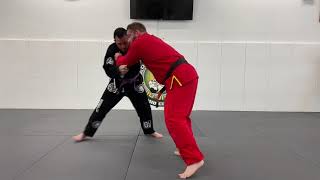
The defender adopts a square stance with slight knee bend—comfortable but not excessively low. The attacker establishes a right leg lead (for most right-handed practitioners) and measures distance by placing both hands on the opponent's shoulders. Foot positioning is critical: the stance width must be narrow enough to allow forward stepping but wide enough to maintain balance.
Level Change and Entry
The attacker releases the shoulder contact, pulls elbows inward, and executes a level change—lowering the body level while maintaining posture. The first forward step should establish toe-to-toe distance with the opponent. During penetration, the front knee must track over the toes to generate proper drive; the back leg does not drop to the mat.
Grip and Head Position
As the attacker penetrates, the head stays up with a straight back. The hands secure around the hamstrings, behind the knees, or kept high depending on preference. The grip depth and hand placement vary among practitioners, but maintaining head position and upper body posture remains essential for balance and power transfer.
The Swisher Step and Angle
The attacker executes a pivoting motion called the swisher step, turning the hip and rotating the trail leg to establish an angle perpendicular to the opponent. The grip deepens, particularly on the side toward which the attacker is rotating. This positional adjustment creates proper angles for the final drive.
Drive and Leg Positioning
From the angled position, the attacker pushes off the drive leg (formerly the trail leg) and steps with the opposite leg. The elevated leg is positioned high, almost as if placing it on a shelf. The attacker maintains balance in this configuration while preparing for the final finishing sequence.
Foot Shuffle and Finish
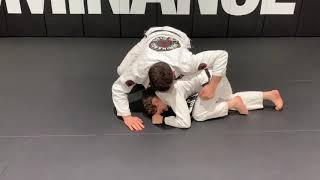
The attacker shuffles the feet and sweeps out the opponent's base, taking them to their back. In wrestling contexts, the opponent typically rolls to their belly. The complete sequence requires repetitive drilling—level change, step to the knee, trail leg elevation, swisher step, deep grip, and final drive—performed as fluid motion rather than isolated movements.
Drilling and Progression
Peterson conducts group drilling with multiple partners to ingrain the movement pattern through repetition. Each element is called out sequentially: stance, level change, step down to knee, trail leg up, swisher, and finish. The instructor emphasizes staying in the fundamental phase without rushing to advanced variations, allowing practitioners to develop proper mechanics before increasing speed.
How to SHOOT the PERFECT Double Leg Takedown for Beginners!
Key Takeaways
- •Introduction and Teaching Philosophy
- •Stance and Initial Positioning
- •Level Change and Entry
- •Grip and Head Position
This video I breakdown the basic double leg form to start a beginner. This is great for BJJ/MMA/Wrestling. Check out the details and you are sure to find something useful! Enjoy! If you have any questions, comments, or suggestions, please comment below. More videos to come! Please like, share, and subscribe!! PLEASE Click this link to SUPPORT the TeachMeGrappling Channel!!! https://www.patreon.com/TeachMeGrappling or https://www.paypal.me/CoachBrianPeterson Your contribution is much appreciated and will help me continue to bring you content! 🙏 www.NextLevelGuy.com The NextLevelGuy Podcast with Coach Brian Peterson has been released!! Check it out!
Related Techniques
Frequently Asked Questions
What does this video teach about leg attack takedown?
This video covers introduction and teaching philosophy, stance and initial positioning, level change and entry. It provides detailed instruction from TeachMeGrappling Coach Brian.
How long does it take to learn leg attack takedown?
The basic mechanics can be understood in a single session, but developing reliable execution requires consistent drilling over weeks of practice. This 8-part breakdown helps structure your training by isolating each phase of the technique.
What are the key details for finishing leg attack takedown?
The attacker shuffles the feet and sweeps out the opponent's base, taking them to their back. In wrestling contexts, the opponent typically rolls to their belly. The complete sequence requires repetitive drilling—level change, step to the knee, trail leg elevation, swisher step, deep grip, and final drive—performed as fluid motion rather than isolated movements.