Setup and Grip Foundation
The snap-down begins with establishing a same-side grip on the opponent, positioned as high as possible on the collar or gi. The opposite hand reaches behind the neck with thumb inserted, creating the primary power source, while the initial grip serves as a guide hand. This two-hand positioning is the foundation for controlling the opponent's movement and preventing escape.
Baiting the Opponent's Response
The instructor moves forward to press the opponent backward, exploiting the natural defensive instinct to retreat into the attacker. By maintaining chest pressure with the elbow in, the practitioner prevents the opponent from shooting a takedown while simultaneously setting up the snap-down mechanics. The opponent's panic and resistance to this pressure actually facilitates the subsequent technique.
The Snap Execution
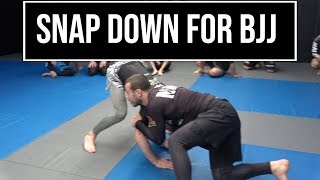
Once an opening is detected, the attacker punches the grip upward, then immediately drives it downward in a snapping motion. The knuckles are positioned directly on the back of the opponent's head rather than the front, allowing multiple control options even if the opponent attempts to pull guard. This positioning maintains control throughout the sequence.
Post-Snap Control and Positioning
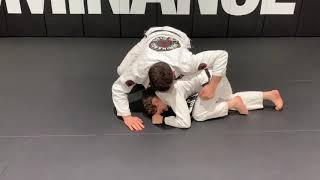
After the snap-down lands, the attacker maintains pressure and walks the opponent around using constant movement and repositioning. The rear hand maintains its grip while the front hand covers to keep the opponent in the desired turtle position. This control structure persists regardless of the opponent's counter-attempts.
Handling Resistance and Bounce Technique
When an opponent resists and does not fall immediately, the attacker may employ a bouncing motion—snapping downward while simultaneously stepping the feet back to avoid being taken down into their legs. Multiple snap attempts may be necessary in a live exchange, and the attacker adjusts based on the opponent's responses. Footwork is critical to prevent being pulled into the opponent's position.
Collar Grip Acquisition
Securing the initial collar grip behind the neck often involves baiting the opponent rather than forcing the grip, as opponents typically defend this position aggressively. Once obtained, the elbow is turned downward to make the grip harder to break, and the grip maintains its integrity even if the attacker goes head-low. Adaptability is necessary since collar grip opportunities vary in live exchanges.
Snap Down using the Gi
Key Takeaways
- •Setup and Grip Foundation
- •Baiting the Opponent's Response
- •The Snap Execution
- •Post-Snap Control and Positioning
Utilizing the Gi to execute a Snap Down
Related Techniques
Frequently Asked Questions
What does this video teach about snap down takedown?
This video covers setup and grip foundation, baiting the opponent's response, the snap execution. It provides detailed instruction from Coach Travis Clark.
How long does it take to learn snap down takedown?
The basic mechanics can be understood in a single session, but developing reliable execution requires consistent drilling over weeks of practice. This 6-part breakdown helps structure your training by isolating each phase of the technique.
What are the key details for finishing snap down takedown?
When an opponent resists and does not fall immediately, the attacker may employ a bouncing motion—snapping downward while simultaneously stepping the feet back to avoid being taken down into their legs. Multiple snap attempts may be necessary in a live exchange, and the attacker adjusts based on the opponent's responses. Footwork is critical to prevent being pulled into the opponent's position.