Why Side Control Escapes Matter
Side control is a dominant position that opponents typically pass through when working past the guard. Learning to escape side control is essential because it builds confidence to attempt new techniques during training, knowing that a failed attempt can be converted into escape practice rather than a wasted opportunity.
Standard Escape vs. Alternative Paths
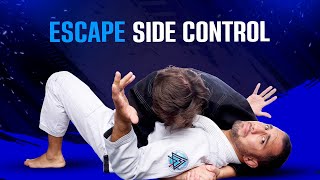
The primary side control escape involves framing the opponent's neck, bridging, shrimping, and executing a knee-elbow escape. However, when the opponent's positioning prevents this standard approach, securing an underhook provides an alternative escape path.
Underhook Positioning and Structure
The underhook must be configured properly to generate lifting power—the knuckles point away from the opponent rather than cupping or gripping. An effective underhook also requires establishing a secondary frame against either the opponent's hip or knee to create the necessary distance for movement.
Bridge and Transition to Side Control
From the underhook position, the escaper pulls their heels tight to their buttocks and bridges upward off the toes. This movement lifts the opponent's weight and allows the escaper to roll onto their side, creating improved structural stability.
Completing the Escape Sequence
Once on the side, the escaper pulls the elbow down to establish a solid base, then turns the knees toward the mat. This creates three possible outcomes: taking the opponent's back if they remain static, the opponent standing to disengage, or the escaper modifying a double-leg takedown by cupping the hip and driving forward.
Practical Application and Position Hierarchy
The underhook escape is most valuable when standard framing techniques are unavailable due to the opponent's control. Even if the escaper cannot achieve the ideal outcome of back control, forcing the opponent to stand results in a neutral position, which is significantly preferable to remaining under side control.
Fundamentals: Underhook escape from side control
Key Takeaways
- •Why Side Control Escapes Matter
- •Standard Escape vs. Alternative Paths
- •Underhook Positioning and Structure
- •Bridge and Transition to Side Control
To get out of side control, we have to control distance. One way we can do this is to get an underhook, which sets up a number of ways to get out. More resources: http://bellinghambjj.com/learning-resources/
Related Techniques
Frequently Asked Questions
What does this video teach about underhook side control escape?
This video covers why side control escapes matter, standard escape vs. alternative paths, underhook positioning and structure. It provides detailed instruction from Bellingham BJJ.
How long does it take to learn underhook side control escape?
The basic mechanics can be understood in a single session, but developing reliable execution requires consistent drilling over weeks of practice. This 6-part breakdown helps structure your training by isolating each phase of the technique.
What are the key details for finishing underhook side control escape?
Once on the side, the escaper pulls the elbow down to establish a solid base, then turns the knees toward the mat. This creates three possible outcomes: taking the opponent's back if they remain static, the opponent standing to disengage, or the escaper modifying a double-leg takedown by cupping the hip and driving forward.
Related videos
Using the UNDERHOOK to Escape Side Control
The Grapple Lab
The Easy Way to Learn Side Control Escape
JonThomasBJJ
Dealing With Frames by Using Your Own Frame - Andre Galvao
Atos Jiu-Jitsu HQ | World's Best BJJ Academy - Home Page
Video 8 - Side Control Escape Bridge and Roll Series
Brazilian Jiu Jitsu Incorporated
The Easiest Way to Escape Side Control (Even Against Bigger Opponents!)
Matt Arroyo Jiu Jitsu