Understanding Opponent Frames in Guard Passing
Frames are defensive structures opponents create to prevent guard passage. The primary frames occur in the lower body—the foot and shin act as the first line of defense, either hooking the passer's hips or posting on the thighs. Understanding frame hierarchy allows the passer to systematically dismantle defensive positions.
Upper Body Frames and Hand Defense
After defeating lower body frames, the passer must address upper body defensive structures created by the hands and forearms. The opponent uses arm frames to create distance and prevent the passer from achieving the dominant position between the thigh and upper arm. Achieving an underhook position with the head positioned below and behind the tricep eliminates these frames.
Hip Escape and Guard Recovery Mechanics
When the passer defeats initial frames, the opponent responds by elevating the hips and attempting to escape laterally or roll to recover guard position. This defensive action requires the passer to reposition and continue applying pressure through positional dominance. The passer must anticipate hip movement and adjust frame control accordingly.
Shin Slide Pass and Leg Trap Management
The shin slide pass uses forward shin movement to escape the opponent's leg lock, but opponents often trap or pinch the legs in response. The passer can escape this trap by sliding toward the trapped shin's side rather than resisting directly. Once the foot clears the entanglement, transitioning to a leg drag becomes significantly easier.
Outside Frame Prevention After Leg Drag
After forcing the opponent to face away through leg drag positioning, the only remaining frame available is the outside frame, where the opponent brings the far leg over to create distance. The passer must maintain positional control to prevent this frame construction. Tight control of the bottom leg and proper weight distribution are essential to finishing the pass.
Split Pass and Grip Control
When the opponent grabs the passer's pants and establishes control, the split pass provides an alternative finishing mechanism. The passer steps over the guard while dropping the knee to the floor, positioning themselves between the opponent's legs. This positioning directly opposes the opponent's remaining frame structures, allowing smashing pressure to complete the pass.
Knee Cut Variations and Positioning
The knee cut pass allows the passer to move from over-the-leg positioning by stepping over and cutting to the bottom, completing the guard passage through leg drag mechanics. This technique requires maintaining frame control while transitioning to side control. Proper weight distribution prevents the opponent from establishing the x-guard or inverting.
Shin Staple and Grip Breaking
The shin staple involves placing the knee on the opponent's hand while maintaining shin-to-shin contact to control and break their gripping structure. The passer must position the leg close to the ankle rather than over the thigh to prevent the opponent from inverting and establishing an x-guard. This positioning creates a foundation for transitioning to the knee cut.
Step-Over Transition and Collar Control
From the step-over position with collar control, the passer moves to the side while bringing the knee across, establishing a shin-to-shin position ready for the knee cut. Foot positioning is critical—the passer rotates the foot to the correct side to prevent the opponent from inverting. This transitional sequence creates an offensive angle for continuing guard passage.
Long Step Pass and Hip Escape
The long step pass involves controlling the opponent's hand while hugging the head to create a large step over the guard. If the opponent locks the leg in response, the passer escapes the hip and transitions to the knee cut from a safe position. This sequence demonstrates how understanding frame mechanics allows for technical flexibility in finishing guard passage.
Dealing With Frames by Using Your Own Frame - Andre Galvao
Key Takeaways
- •Understanding Opponent Frames in Guard Passing
- •Upper Body Frames and Hand Defense
- •Hip Escape and Guard Recovery Mechanics
- •Shin Slide Pass and Leg Trap Management
Discover the full power of this technique with part 2 now accessible on Atos BJJ on Demand! Part 2- https://live.atosbjjondemand.com/videos/dealing-with-frames-by-using-your-own-frame-part-2 Want to learn more from Andre Galvao? Sign up for his FREE 5-Day Takedown Bootcamp: https://atosbjjondemand.com/atos-on-demand-landing-page-letter-bootcamp/ Watch our weekly collection by simply clicking the link below. As a bonus, non-members can enjoy free access to the first technique of each collection. https://live.atosbjjondemand.com/weekly-series Try Our Merch: https://shop.atosjiujitsuhq.com SUBSCRIBE, OR WE'LL TAKE YOUR BACK ╔═╦╗╔╦╗╔═╦═╦╦╦╦╗╔═╗ ║╚╣║║║╚╣╚╣╔╣╔╣║╚╣═╣ ╠╗║╚╝║║╠╗║╚╣║║║║║═╣ ╚═╩══╩═╩═╩═╩╝╚╩═╩═╝ ---------------------------------------------------------------- follow all of these or we will choke you • Facebook - https://www.facebook.com/galvaobjj • Twitter - https://twitter.com/galvaobjj • Instagram - https://www.instagram.com/galvaobjj • About Andre Galvao - https://www.andregalvao.com --------------------------------------------------------------------
Frequently Asked Questions
What does this video teach about frame and reguard?
This video covers understanding opponent frames in guard passing, upper body frames and hand defense, hip escape and guard recovery mechanics. It provides detailed instruction from Atos Jiu-Jitsu HQ | World's Best BJJ Academy - Home Page.
How long does it take to learn frame and reguard?
The basic mechanics can be understood in a single session, but developing reliable execution requires consistent drilling over weeks of practice. This 10-part breakdown helps structure your training by isolating each phase of the technique.
What are the key details for finishing frame and reguard?
From the step-over position with collar control, the passer moves to the side while bringing the knee across, establishing a shin-to-shin position ready for the knee cut. Foot positioning is critical—the passer rotates the foot to the correct side to prevent the opponent from inverting. This transitional sequence creates an offensive angle for continuing guard passage.
Related videos
Using the UNDERHOOK to Escape Side Control
The Grapple Lab
Fundamentals: Underhook escape from side control
Bellingham BJJ
The Easy Way to Learn Side Control Escape
JonThomasBJJ
Video 8 - Side Control Escape Bridge and Roll Series
Brazilian Jiu Jitsu Incorporated
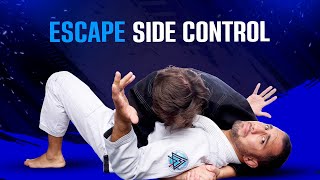
The Easiest Way to Escape Side Control (Even Against Bigger Opponents!)
Matt Arroyo Jiu Jitsu