Introduction & Setup
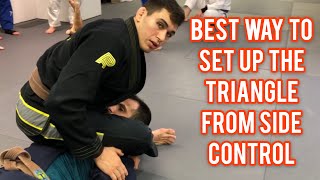
After successfully passing the guard into side control, the instructor establishes a strong base with control of the opponent's arm. This foundational position prevents the opponent from escaping and sets up the transition to mounted triangle.
Arm Isolation in Side Control
Rather than immediately transitioning to mount, the instructor isolates the opponent's arm by controlling the tricep. This deliberate approach prevents common escape routes and maintains dominance before advancing position.
Transitioning to High Mount
Using a controlled shimmy motion, the instructor slides the knees into high mount position while maintaining tricep control. The key is making small, deliberate movements rather than aggressive transitions that allow escape.
Pinching the Arm
From high mount, the instructor uses leg pressure to pinch the opponent's arm between the knee and thigh. This mechanical advantage—where leg strength exceeds arm strength—isolates the limb regardless of the opponent's resistance.
Weight Transfer and Positioning
The instructor transfers body weight onto the supporting knee while bringing the opposite leg high and across the opponent's face. This positioning creates the triangle structure while establishing dominant pressure on the chest.
Creating the Triangle Lock
By bringing one leg high across the opponent's face and pinching with the other leg, the instructor forms the triangle configuration. The legs create the same encircling pressure used in the bottom triangle, but with added top pressure.
Finishing from Top Position
To finish the triangle from top, the instructor controls the shin and sits heavy on the opponent's chest while closing the triangle. Positioning slightly to the side rather than directly on top prevents the opponent from striking or defending.
Fall-Back Safety & Alternative Finish
If the top position fails, the instructor maintains control and transitions into a fall-back finish by controlling the grip. Positioning to the side also prevents the opponent from reaching the face or using striking defenses.
MOUNTED triangle from side control - Brazilian jiu-jitsu submission
Key Takeaways
- •Introduction & Setup
- •Arm Isolation in Side Control
- •Transitioning to High Mount
- •Pinching the Arm
Hey everyone! Welcome back to Grappling Nerds. Today, we're excited to teach you how to set up a mounted triangle starting from side control. This is a slick technique that can catch your opponents off guard and add a powerful submission to your arsenal. We'll guide you through each step to transition smoothly from side control into a mounted triangle choke. Whether you're new to Brazilian Jiu-Jitsu or a seasoned practitioner, this move is a great addition to your game. If you found this video helpful, please subscribe to our channel for more grappling tips and techniques! Don't forget to follow us on Instagram for daily updates and behind-the-scenes content: https://www.instagram.com/grapplingnerds/ Thanks for watching, and we'll see you on the mats!
Related Techniques
Frequently Asked Questions
What does this video teach about triangle from side control?
This video covers introduction & setup, arm isolation in side control, transitioning to high mount. It provides detailed instruction from Grappling Nerds.
How long does it take to learn triangle from side control?
The basic mechanics can be understood in a single session, but developing reliable execution requires consistent drilling over weeks of practice. This 8-part breakdown helps structure your training by isolating each phase of the technique.
What are the key details for finishing triangle from side control?
To finish the triangle from top, the instructor controls the shin and sits heavy on the opponent's chest while closing the triangle. Positioning slightly to the side rather than directly on top prevents the opponent from striking or defending.