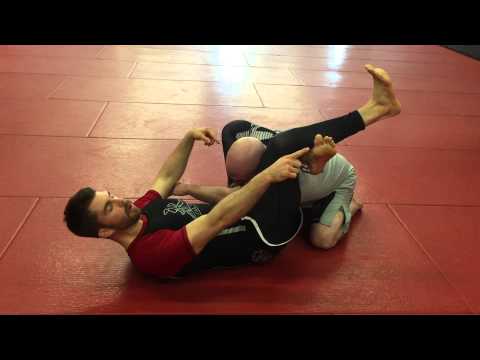
No Gi Triangle Choke From Closed Guard
0
Triangle From Closed Guard·Chewjitsu
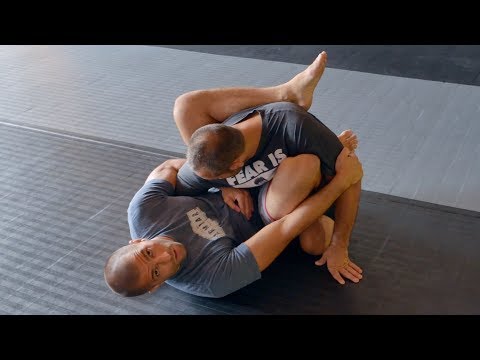
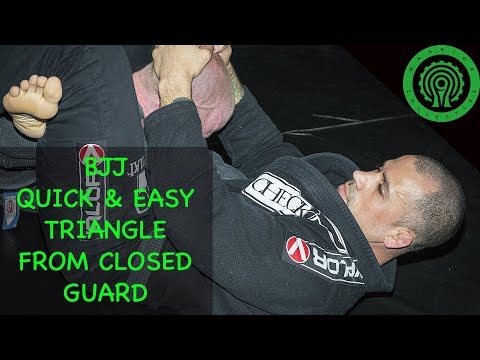
WWW.CHEWJITSU.NET In this video I show a triangle choke from guard. This is a great setup for either gi or no gi Brazil…
Translation: Triangle Strangle — From Closed Guard
The triangle choke from closed guard is the most fundamental application of the technique, where the bottom player traps one of the opponent's arms and their head inside a triangle formed by the legs, then squeezes the thighs together while pulling the head down. [1],[2] The trapped arm acts as a wedge against one carotid artery while the thigh compresses the other side, creating bilateral vascular occlusion. [1] The attacker must cut an angle by pivoting on the shoulder to align the legs perpendicular to the opponent's body for maximum compression effectiveness. [1],[2],[3]
The triangle choke from guard derives from judo's sankaku-jime (三角絞め), codified in the Kodokan shime-waza curriculum. [1],[2] The technique was brought to Brazil through judo and became one of the most iconic submissions in BJJ history. [1],[3] Its effectiveness was demonstrated globally when fighters like Fabricio Werdum and Demian Maia used it in UFC competition, and it remains one of the most commonly taught and attempted submissions in grappling worldwide. [1],[2]
The closed guard triangle is the most common triangle setup, using hip elevation and angle adjustment to lock the triangle from full guard. [1]
The closed guard triangle became a signature BJJ technique after being adopted from judo's sankaku-jime. [1]
The closed guard triangle is one of the most frequently finished submissions at all IBJJF belt levels. [1]
No images yet for this technique.
Sign in to suggest an image.
WWW.CHEWJITSU.NET In this video I show a triangle choke from guard. This is a great setup for either gi or no gi Brazil…
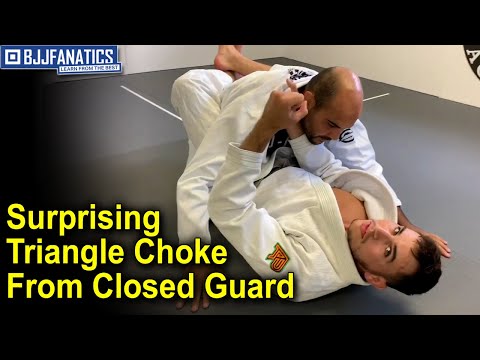
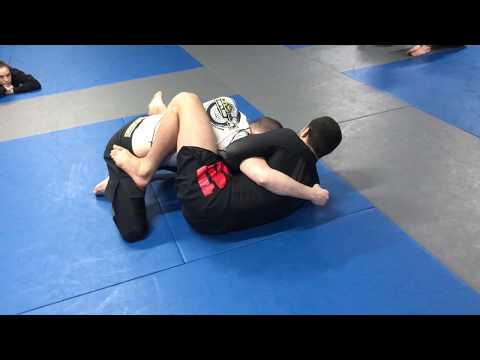
Surprising BJJ Triangle Choke From Closed Guard - In this BJJ Techniques video, Giancarlo Bodoni demonstrates a Surprisi…
Watch our Special FREE Tutorials at http://www.mmaleech.com/free-stuff/ Go to our Facebook page for the latest trends in…
Triangle Choke from Closed Guard by Giancarlo Bodoni - Click Here To Check Out Giancarlo Bodoni's Instructional Videos -…
SALE SALE SALE OVER 50% OFF – BOX SET – ALL 4 COURSES 50% OFF CLICK HERE – https://bit.ly/2lAOHmp • The Blue Belt Sup…
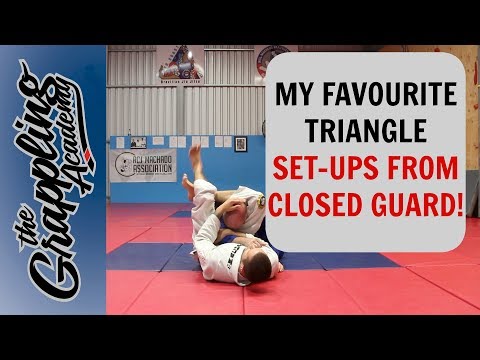
Leo Queiroz, Black Belt, renowned BJJ athlete and head coach of Checkmat Watford is here filmed by the Warrior Collectiv…
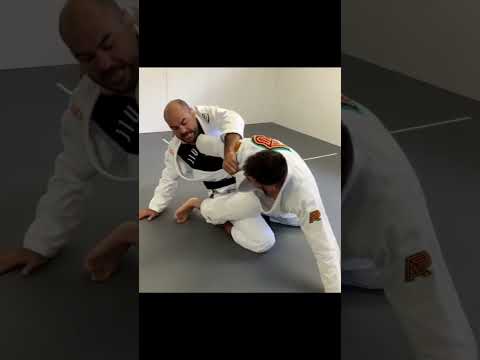
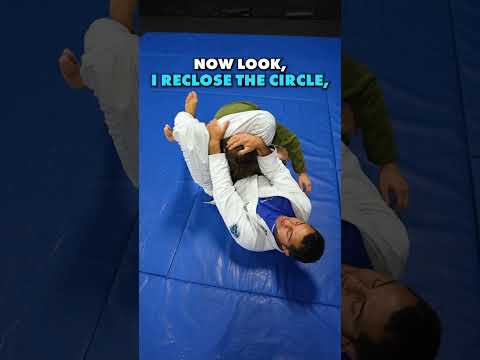
Here's how to set it up. #jiujitsu #jiujitsutips #martialarts #combatsports #tournament
Follow the links below for more detailed instructional series! Check out my half guard DVD "The Half Guard Anthology" h…
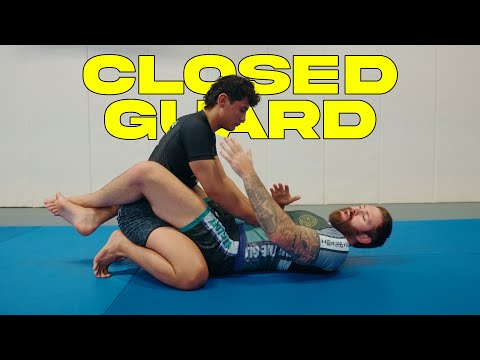
Hi everyone, my name is Gordon Ryan. This is a look into my life. If you enjoy it, watch it. If you hate it, watch it. I…
The triangle choke from closed guard is a fundamental leg-lock submission that begins with posture breaking and arm control. Stuart Tomlinson emphasizes the importance of breaking the opponent's grip with the knee while establishing collar and sleeve control before transitioning into the triangle. Chewjitsu provides detailed no-gi methodology, prioritizing overhook and underhook grips when collar control is unavailable, and highlights critical finishing mechanics: pushing the knee toward the neck rather than simply squeezing, keeping the foot pointed upward to avoid injury, and engaging the hamstring by turning the leg outward for greater mechanical efficiency. Giancarlo Bodoni (via Bernardo Faria) introduces a sophisticated approach using cross-collar grip setup that baits the opponent into posting their hands via a hip-bump sweep feint, then catching the triangle as they react; he stresses controlled posture-breaking through sequential hand placements (head grip, then shin control) and creating a stiff-arm frame by shuffling shoulders backward to prevent escape. MMA Leech focuses on foundational arm control through elbow positioning near the hip bone, using hip escapes to generate space, and sliding shin control up the tricep before shooting the leg over. All instructors agree on the necessity of breaking posture early and establishing dominant arm control, though they differ in grip emphasis: gi-based instructors favor collar control, while no-gi specialists rely on overhooks and body pressure. The finishing position consensus favors external leg rotation and hamstring engagement over pure squeezing.
Synthesized from 4 instructors
No instructional courses yet for this technique.
Sign in to suggest a course.
Risk of injury to the person this technique is applied to
Triangle chokes compress the carotid arteries using the legs; loss of consciousness in 8-12 seconds
Skill level needed to execute this technique reliably
Whether this technique is allowed under major competition rule sets
Kodokan Judo — Sankaku-jime
Japanese terminology sourced from Kodokan Judo — Sankaku-jime
Official Kodokan ground technique classification system
Standard Japanese martial arts terminology (kanji/hiragana)
Established Japanese martial arts naming convention — native Japanese term (和語/漢語)
Japanese terminology sourced from Kodokan Judo — Sankaku-jime
hip flexibility, long legs relative to torso
longer limbs for easier figure-four lock around head and arm
hip adductors, hamstrings, quadriceps
Every move, in any martial art, shares a few universal traits. Mix and match below to pinpoint the right tool — or compare equivalents across styles.
The angle-off finish for the triangle choke from closed guard involves the attacker cutting an angle by pivoting the hips perpendicular to the opponent's body after locking the triangle, maximising compression on the carotid arteries. [1] After locking the triangle with the legs, the attacker shifts the hips to one side — typically toward the trapped arm — creating a diagonal pressure angle that tightens the neck compression dramatically. [1,2] The angle-off eliminates space within the triangle loop and aligns the attacker's leg and hip structure for optimal mechanical advantage. [2] This is widely taught as the essential finishing adjustment, as many triangles fail without the angle-off due to insufficient compression from a square-on position. [2,3]
The standard triangle choke from closed guard is the foundational variety of the triangle family, where the attacker locks a figure-four leg configuration around the opponent's head and one arm from bottom guard. [1] The attacker isolates one arm inside the triangle while pushing the other arm outside, then locks the triangle by hooking the ankle behind the opposite knee, pulling the head down, and squeezing the thighs together. [1,2] The trapped arm's own shoulder compresses one carotid artery while the attacker's thigh compresses the other, creating bilateral vascular occlusion. [2] The standard triangle from guard is one of the most frequently taught and successfully applied submissions across all levels of BJJ competition. [2,3]
According to Bernardo Faria's instruction, grab as little of the gi material as possible and focus on just the lapel. Open the collar first to get your hand deep inside, then make your grip while curling your wrist—this prevents your hand from getting stuck.
Keep your heels heavy and your knees to your chest to make it difficult for them to create space. Immediately grab their head with your hand while maintaining the lapel grip, which allows you to control their posture.
Get your shin parallel with your opponent's shoulders, then take your foot to their hip. Control your shin and avoid pushing—instead create a stiff arm frame and shuffle your shoulders back to extend their body and prevent them from curling your knees over your head.
Turn your heel out and put your heel down to make the triangle tighter, then pull the head and squeeze. Maintain a strong frame throughout by shuffling your shoulders back to prevent your opponent from escaping.
The triangle choke from closed guard is the most fundamental application of the technique, where the bottom player traps one of the opponent's arms and their head inside a triangle formed by the legs, then squeezes the thighs together while pulling the head down. The trapped arm acts as a wedge against one carotid artery while the thigh compresses the other side, creating bilateral vascular occlusion.
The triangle choke from guard derives from judo's sankaku-jime (三角絞め), codified in the Kodokan shime-waza curriculum. The technique was brought to Brazil through judo and became one of the most iconic submissions in BJJ history.
IBJJF: legal — Legal at all belt levels, gi and no-gi — chokes are the safest submission cat…; IJF: legal — Legal (shime-waza) — strangulation techniques are one of three permitted subm…; ADCC: legal — Legal; Unified MMA: legal — Legal — choke submissions are among the most common finishes in MMA; FIAS Sport Sambo: banned — All chokes prohibited in Sport Sambo; FIAS Combat Sambo: legal — Legal
Danger rating 8/10. Triangle chokes compress the carotid arteries using the legs; loss of consciousness in 8-12 seconds
The standard setup chain: Achieve Controlling Position → Isolate the Neck → Set the Grip → Apply Pressure.
Standard counters include: Tuck Chin — protect the neck by lowering the chin to prevent the choke from sinking / Two-on-One Grip Fight — use both hands to strip the choking grip before it locks / Turn Into — rotate toward the choking arm to relieve carotid pressure / Posture Up — straighten the spine and create distance to break the choking angle.
Common variants: Standard triangle (classic figure-four leg lock around the head and one arm …); Reverse triangle (legs locked from behind or inverted angle for different a…); Mounted triangle (applied from mount position with gravity assisting the sq…); No-arm triangle (both arms excluded, legs-only compression on the neck).
The closed guard triangle is one of the most frequently finished submissions at all IBJJF belt levels.
Top errors to watch for: Not breaking posture before attempting the triangle — the leg cannot shoot over the shoulder if the opponent is postu… / Opening the guard too early — open the guard only when the arm is isolated and the hips are positioned to shoot; prem… / Shooting the wrong leg — the leg crosses behind the neck on the side of the freed arm (not the controlled arm) / Not re-closing the guard after an unsuccessful attempt — if the triangle doesn't lock, re-close the guard immediately….
The Triangle From Closed Guard is also known as Sankaku-jime — From Closed Guard, Guard Triangle, Sankaku-jime from Guard, Bottom Triangle.