Introduction to Parry of Sixte
The parry of sixte is a fundamental defensive technique in classical fencing that protects the upper right line of the body. This parry is executed by positioning the blade to intercept incoming attacks while maintaining proper distance and blade control. Mastering sixte is essential for developing a solid defensive foundation.
Guard Position and Stance
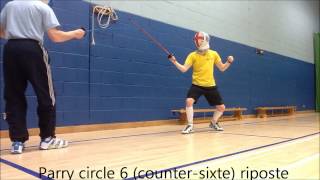
The fencer begins in a balanced en garde position with feet shoulder-width apart and knees slightly bent. The sword arm extends at approximately shoulder height with the blade pointed forward and slightly upward. The off-hand remains chest-height for balance and counterweight.
Blade Placement for Sixte
In sixte, the blade is angled so the tip points upward at a 45-degree angle with the sword hand in pronation, knuckles facing downward. The blade covers the upper right diagonal line from the shoulder to the hip. This positioning allows the fencer to intercept attacks while maintaining clear sight lines.
Executing the Parry Motion
The parry is performed through a subtle rotational movement of the forearm and wrist, directing the incoming blade away from the body. The motion should be economical and controlled, using the forte of the parrying blade against the opponent's foible. Excessive arm movement reduces reaction time and creates openings.
Common Mistakes to Avoid
Fencers often raise the elbow too high, compromising their defensive line and balance. Overextending the arm or rotating the blade too far breaks proper sixte geometry and delays the riposte. Maintain a relaxed grip to allow responsive blade work and quick transitions.
Transitioning to the Riposte
Immediately after deflecting the opponent's blade, the fencer executes a direct thrust or disengage to score. The riposte begins from the secured parry position without resetting to neutral. Explosive extension and quick footwork maximize the advantage gained from a successful parry.
Parry Sixte Riposte
Key Takeaways
- •Introduction to Parry of Sixte
- •Guard Position and Stance
- •Blade Placement for Sixte
- •Executing the Parry Motion
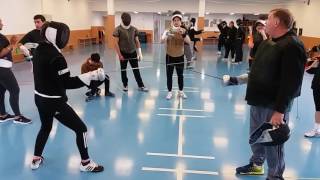
Practice at the Spindletop Cavaliers' old practice facility in Port Arthur, before Hurricane Rita destroyed it.
Frequently Asked Questions
What does this video teach about parry of sixte?
This video covers introduction to parry of sixte, guard position and stance, blade placement for sixte. It provides detailed instruction from John Trojanowski.
How long does it take to learn parry of sixte?
The basic mechanics can be understood in a single session, but developing reliable execution requires consistent drilling over weeks of practice. This 6-part breakdown helps structure your training by isolating each phase of the technique.
What are the key details for finishing parry of sixte?
Fencers often raise the elbow too high, compromising their defensive line and balance. Overextending the arm or rotating the blade too far breaks proper sixte geometry and delays the riposte. Maintain a relaxed grip to allow responsive blade work and quick transitions.