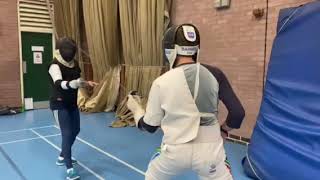
Introduction to Circular Parries
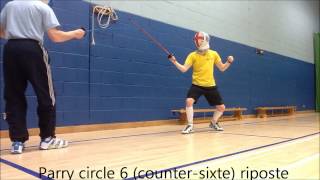
Circular parries can be executed from each of the four basic parries in foil and épée. This defensive technique is performed when an attacker lunges forward, with the defender responding by executing a small circle beneath the opponent's blade and redirecting it to the opposite line from the original attack.
Circular Sixte from Position Four
When an attacker launches a basic attack from the four position, the defender responds with a circular sixte parry directed to the outside line. This fundamental movement demonstrates the core mechanics of circular parry defense in practical application.
Drilling Circular Parries with Remise and Riposte
The attacker initiates a primary attack followed by a remise, while the defender responds to the first attack with a circular sixte and counters the second remise with another circular sixte followed by a riposte. Regular practice of ripostes from parry positions strengthens both defensive technique and offensive response timing.
Parry Five and Riposte Fundamentals
The parry five and riposte is a complex and high-risk maneuver requiring consistent practice to execute effectively in competitive bouts. Épée fencers must exercise particular caution when employing this technique, as the head remains a valid target area.
Parry Five Execution Technique
The defender anticipates the attacker's lunge and executes a reverse lunge or ducks beneath the opponent's blade while bringing the blade arm above the head to form parry five. The blade tip angles toward the opponent so the attacker moves directly into contact for a touch, with arm extension available for increased reach when necessary.
The Stop Thrust Overview
The stop thrust is a specialized counteroffensive technique employed in limited tournament situations, particularly effective against aggressive opponents who advance aggressively and consume significant ground. This maneuver demands speed, agility, coordination, balance, and flexibility.
Stop Thrust Execution and Footwork
The fencer initiates a rapid retreat, then uses the heel of the front foot to drive the heel of the back foot upward and backward, converting backward momentum into an immediate stop. This action places the body at maximum extension while displacing the target area, allowing the aggressive opponent to run directly onto the extended blade for a point.
Fencing 101: Skills to Win: Circular 6, Parry 5 & Riposte, The Stop Cut
Key Takeaways
- •Introduction to Circular Parries
- •Circular Sixte from Position Four
- •Drilling Circular Parries with Remise and Riposte
- •Parry Five and Riposte Fundamentals
This video covers the circular 6 parry, and the riposte from a parry 5 position, and a version of the stop thrust I learned in college and find to be effective in some situations. Performed by: Ryan and Gregg Support us on Patreon: https://www.patreon.com/RecSport Other links: Gregg's Channel, https://www.youtube.com/channel/UCmYimvqLcsPLcoO8Z-k8GHQ
Frequently Asked Questions
What does this video teach about parry of sixte?
This video covers introduction to circular parries, circular sixte from position four, drilling circular parries with remise and riposte. It provides detailed instruction from RecSport Education.
How long does it take to learn parry of sixte?
The basic mechanics can be understood in a single session, but developing reliable execution requires consistent drilling over weeks of practice. This 7-part breakdown helps structure your training by isolating each phase of the technique.
What are the key details for finishing parry of sixte?
The stop thrust is a specialized counteroffensive technique employed in limited tournament situations, particularly effective against aggressive opponents who advance aggressively and consume significant ground. This maneuver demands speed, agility, coordination, balance, and flexibility.