Introduction to Parry of Sixte
The parry of sixte is a fundamental defensive position in classical fencing that protects the upper right side of the body. This technique forms the foundation of circular parry movements and counter-attacks. Proper execution requires precise blade positioning and controlled wrist mechanics.
Guard Position and Blade Alignment
The fencer establishes sixte by positioning the sword arm at a 45-degree angle with the blade extended diagonally across the body. The hand remains at chest height with the palm facing inward, creating a natural barrier against attacks to the upper right quadrant. This positioning allows for seamless transitions to adjacent parries.
Circular Motion Mechanics
The parry circle involves a continuous rotational movement of the blade that traces a complete circle in space. The wrist drives the motion through small, controlled articulations rather than large arm movements. This circular pattern enables the defender to redirect incoming attacks while maintaining offensive readiness.
Counter-Sixte Execution
The counter-sixte parry reverses the circular direction, creating a counterclockwise movement that meets attacks from unexpected angles. This variation exploits openings created when an opponent anticipates a standard sixte defense. The fencer maintains blade contact throughout the movement to control the opponent's weapon.
Timing and Distance Management
Effective parry execution depends on meeting the opponent's blade at the proper distance and moment. The defender must gauge the incoming attack's speed and trajectory to intercept it with minimal blade movement. Proper distance control prevents both being caught too far from the threat and overextending the parrying motion.
Transition to Counterattack
Upon successfully deflecting an attack, the fencer immediately transitions from defensive parry to offensive riposte. The circular motion's momentum carries naturally into a counterattack along the opponent's outside line. This seamless transition maintains the offensive initiative and compounds the defensive advantage.
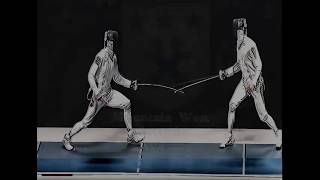
Parry circle 6 (counter-sixte)
Key Takeaways
- •Introduction to Parry of Sixte
- •Guard Position and Blade Alignment
- •Circular Motion Mechanics
- •Counter-Sixte Execution
Fencing - how to do parry circle 6 (aka counter-sixte)
Frequently Asked Questions
What does this video teach about parry of sixte?
This video covers introduction to parry of sixte, guard position and blade alignment, circular motion mechanics. It provides detailed instruction from WaltonSean.
How long does it take to learn parry of sixte?
The basic mechanics can be understood in a single session, but developing reliable execution requires consistent drilling over weeks of practice. This 6-part breakdown helps structure your training by isolating each phase of the technique.
What are the key details for finishing parry of sixte?
Effective parry execution depends on meeting the opponent's blade at the proper distance and moment. The defender must gauge the incoming attack's speed and trajectory to intercept it with minimal blade movement. Proper distance control prevents both being caught too far from the threat and overextending the parrying motion.