Top 5 Wrestling Moves *DOUBLE LEGS*
0
Standard Blast Double·Cayden Henschel
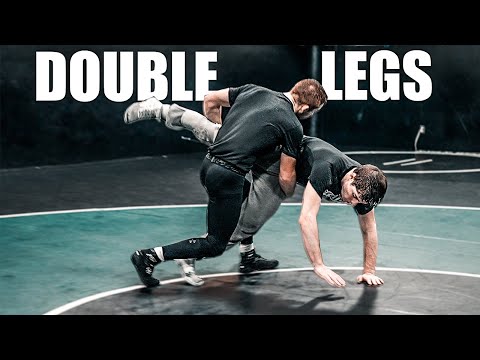
Top 5 Wrestling Moves is back! Here I go over my top 5 double legs you can do. Check out the Patreon! https://www.patre…
Translation: standard blast double
The Standard Blast Double executes the fundamental explosive double leg where the attacker fires a deep penetration step, drives the shoulder into the opponent's midsection, wraps both arms around the thighs, and powers through the opponent using continuous leg drive. [1] The key elements are explosive first-step speed, head placement on the inside (ear to the opponent's hip), and relentless forward pressure after contact. [1],[2] The technique finishes with the opponent driven flat to their back while the attacker maintains chest-to-chest pressure in a dominant top position. [2] The blast double is most effective when the opponent is standing upright with their weight on their heels. [2],[3]
The blast double is one of the highest-percentage takedowns in folkstyle and freestyle wrestling when initiated from a proper set-up. [1] Its reliance on explosive forward drive makes it most effective against upright opponents but vulnerable to sprawl defence when telegraphed. [1] In MMA, the blast double remains a primary takedown tool but carries risk of guillotine choke counters when head position is inside rather than outside the hip. [2]
The blast double is a cornerstone of American collegiate wrestling, systematised through the NCAA folkstyle tradition from the early 20th century onward. [1] Dan Gable's coaching at the University of Iowa (1976-1997) emphasised explosive double-leg attacks as a programme signature, producing numerous NCAA and Olympic champions. [2] In judo, the equivalent technique morote gari was classified as a Kodokan nage-waza technique before its IJF competition ban in 2010. [3]
The double leg (including blast variations) is the most frequently attempted takedown in NCAA Division I wrestling. [1] In UFC competition, the double leg accounts for approximately 32% of all successful takedowns according to FightMetric data. [2] John Smith used blast double entries en route to two Olympic gold medals (1988, 1992) in freestyle wrestling at 62 kg. [3]
No images yet for this technique.
Sign in to suggest an image.
Top 5 Wrestling Moves is back! Here I go over my top 5 double legs you can do. Check out the Patreon! https://www.patre…
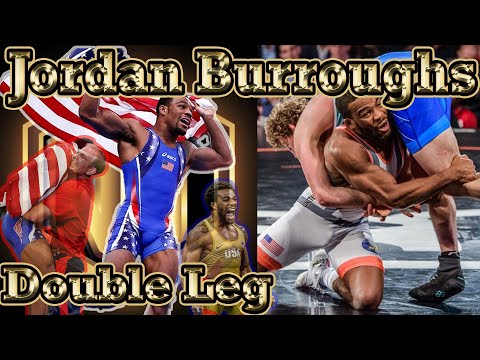
Refined and perfected over a decade, 6x World and Olympic Champion Jordan Burroughs breaks down the Double Leg Takedown …
Hi I'm Coach Fiorito and in this video I have the honor of breaking down the best double leg takedown of this era. As al…
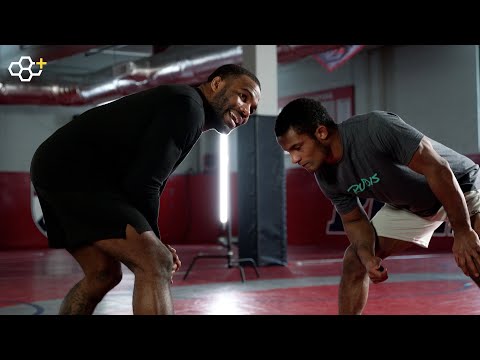
The standard blast double is a direct, explosive leg-attack takedown executed from neutral stance or close range, characterized by a rapid level change and penetration step that drives the attacker's head and chest into the opponent's torso while securing both legs. RUDIS (Jordan Burroughs) breaks the technique into five sequential steps: the post (establishing contact and disrupting balance with one hand while keeping the other available for defense), the club (using heavy hands to maintain pressure and keep the opponent uncomfortable), the circle (footwork to square the opponent's stance and close any gaps), the level change (explosive drop with the hips driven underneath the body as the head is released from the initial grip), and the penetration step (driving through the opponent's hips with force and extension). Cayden Henschel emphasizes the blast double as a shot taken from space with committed level change and head positioning, noting that the attacker's head strikes approximately the chest/upper torso area while feet drive laterally to avoid collision with the opponent's knees. Bradley Fiorito (Wrestling Mastery) focuses on the technical refinement demonstrated by Burroughs, particularly the split-step penetration (back step to load the drive leg while the penetration foot falls forward), the offset foot positioning for maximum surface area and drive, the knee-to-knee progression when standing the opponent up, and the critical role of head position (forehead to chest) in controlling the opponent and preventing sprawls. All three instructors agree on the importance of committed fakes preceding the shot, explosive hip drive, and maintaining head control throughout the finish. Where they differ slightly, Henschel provides broader context by presenting the blast double among five distinct double-leg variations, while Burroughs and Fiorito isolate and deeply analyze the standard version used by a world-class performer.
Synthesized from 3 instructors
No instructional courses yet for this technique.
Sign in to suggest a course.
Risk of injury to the person this technique is applied to
Double leg drives through opponent; moderate impact on landing
Skill level needed to execute this technique reliably
Whether this technique is allowed under major competition rule sets
Japanese amateur wrestling terminology
Japanese amateur wrestling terminology
Standard katakana transliteration of Western martial arts terminology (外来語) — used in Japanese MMA, boxing, and BJJ communities
Standard katakana transliteration used in Japanese wrestling (レスリング)
explosive lower body power, level change speed, forward drive
stocky build with strong legs and low centre of gravity
quadriceps, glutes, hamstrings, core, shoulders
According to Bradley Fiorito's analysis of Jordan Burroughs, instead of shoulder in the gut, place your forehead in the chest. This head position keeps your opponent upright and prevents them from sprawling effectively while you drive them over.
Jordan Burroughs anticipates the incoming tie and uses counter arm snaps to post both arms above the opponent's elbows while loading your drive leg, then fires off the double. This timing of the setup is critical to catching them as they commit to the tie.
According to the RUDIS breakdown, you want to come in low so your head is at equivalent positioning or lower than your opponent's head—coming high exposes you. Maintaining a strong, balanced stance before you attack gives you both offensive and defensive capability.
Bring only one hand up for a heavy post to knock your opponent off balance, while keeping one hand at home to protect and defend your legs. Use fakes, movement, and clubbing with your heavy hands to keep your opponent uncomfortable and out of position before committing to the shot.
The Standard Blast Double executes the fundamental explosive double leg where the attacker fires a deep penetration step, drives the shoulder into the opponent's midsection, wraps both arms around the thighs, and powers through the opponent using continuous leg drive. The key elements are explosive first-step speed, head placement on the inside (ear to the opponent's hip), and relentless forward pressure after contact.
The blast double has been the signature American wrestling attack for decades, refined through the intensive drilling culture of US collegiate and freestyle programmes. Olympic and World Championship medallists have historically relied on this technique as a primary scoring method.
IJF: banned — Banned since 2010 leg grab prohibition — direct hansoku-make for touching opp…; IBJJF: legal — Legal at all belt levels, scored as takedown (2 points); UWW: restricted — Legal in freestyle (2-4 points), banned in Greco-Roman (no attacks below waist); Unified MMA: legal — Legal takedown technique; ADCC: legal — Legal, scored 2-4 points in second half of match; FIAS Sport Sambo: legal — Legal — all takedowns permitted; FIAS Combat Sambo: legal — Legal; NCAA Folkstyle: legal — Legal, scored as takedown (2 points)
Danger rating 4/10. Moderate — double leg drives through opponent; moderate impact on landing
The standard setup chain: Establish Contact → Create Off-Balance → Execute the Takedown → Follow to Ground.
Standard counters include: Sprawl — drop hips back and drive weight down to stuff the takedown attempt / Underhook — establish inside position to control distance and prevent the takedown entry / Post and Circle — post on the attacker's head and circle away to break their angle / Level Change Defence — recognize the shot early and react with appropriate hip defence.
Common variants: Blast double (high-impact forward drive through the opponent without ch…); Snatch double (pulling both legs together and driving laterally); Run-the-pipe double (running through the opponent in a linear drive); Low double (deep penetration step attacking below the knees).
The double leg (including blast variations) is the most frequently attempted takedown in NCAA Division I wrestling. In UFC competition, the double leg accounts for approximately 32% of all successful takedowns according to FightMetric data.
Top errors to watch for: Stopping your feet on contact — the blast double is named 'blast' because you drive through / Shoulder contact too high (chest) or too low (knees) — aim for the midsection / Reaching for the legs before driving the shoulder in — the shoulder initiates, hands follow / Head hanging outside the hip, giving away an easy guillotine.
The Standard Blast Double is also known as Burasuto Daburu, Power Double TD, Blast-Through Double Leg, Morote Gari (Blast Variation).