Introduction to the Blast Double Leg
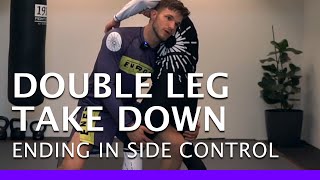
Coach Feorito introduces Jordan Burroughs, a once-in-a-generation wrestler whose technical mastery complements his elite athleticism. This instructional breakdown focuses on Burroughs' signature blast double leg takedown, a technique refined through five world-level championship victories. Every detail from setup to finish execution is essential for practitioners seeking to develop this fundamental skill.
Double Leg from Distance: Setup and Penetration
Burroughs initiates the technique by using committed level-change fakes combined with jab steps to lull his opponent into complacency. Upon detecting the opponent's passivity, he executes a split-step penetration, loading his drive leg while simultaneously raising his penetration leg. Key positioning includes chest over thigh for stability, full extension through the drive leg, and head up with eyes focused on target contact points.
Head Position and Leg Control at Finish
Upon reaching the legs, Burroughs drives his forehead into his opponent's chest rather than the shoulder, maintaining pressure that keeps the opponent upright and prevents sprawl. With both legs controlled, he drives through with extended hip drive, standing his opponent up and converting the position into a four-point takedown. This head placement and dual-leg control are critical defensive mechanisms against sprawl attempts.
Integration with Hand Fighting: Olympic Finals Example
In a 2012 Olympic finals sequence, Burroughs combines heavy club strikes with deep level-change fakes, posting his arm to the mat to efficiently reset. He arm-snaps incoming collar ties back into committed fakes, maintaining constant pressure while his opponent searches for counters. When his opponent finally commits fully to a double collar tie, Burroughs is perfectly positioned to fire his penetration step.
Knee-to-Knee Drive and Second Level Transition
From bottom position with both legs controlled, Burroughs offsets his drive-side foot for increased surface area contact with the mat, enabling maximum power transfer. He drives progressively from knee to knee, maintaining head position and leg control until standing his opponent fully upright. Once upright, he steps with his trail leg and transitions to second level, lifting and driving his opponent backward for the takedown.
Snap-Down Entry to Blast Double
Burroughs strategically uses pressure and collar-tie control to set up the snap-down, then immediately capitalizes on his opponent's reactive elevation. He loads his drive leg with a backstep while lowering his level, positioning himself to explode into the shot the moment his opponent begins rising. This timing principle—recognizing and attacking the opponent's upward reaction—is essential to the technique's success.
Wrist Control and Coordinated Entry
By establishing collar-tie control with one hand and wrist control with the other, Burroughs creates a framework for coordinated entry. He loads his drive leg and pre-positions his penetration foot with an offset stance before snapping both ties simultaneously. This synchronized snap triggers the opponent's elevation at precisely the moment Burroughs executes his level change and penetration, creating a timing advantage.
Anticipatory Posting Against Counters
Burroughs demonstrates advanced timing by posting both arms against his opponent's anticipated tie-up attempt, creating a temporary base while simultaneously loading his drive leg. With perfect anticipatory timing, he beats his opponent to the inside, securing leg control and immediately driving through. This proactive approach defeats the opponent's counter before it fully develops.
Re-Attack from Bottom Position
When his initial shot is defended, Burroughs maintains his low position and keeps his feet firmly grounded, ready to explode upward the moment his opponent begins to elevate. He capitalizes on the opponent's upward movement with a immediate second blast double, maintaining head position and leg control throughout. This demonstrates the importance of staying engaged and timing the opponent's reaction rather than abandoning the shot prematurely.
Jordan Burroughs Blast Double Leg
Key Takeaways
- •Introduction to the Blast Double Leg
- •Double Leg from Distance: Setup and Penetration
- •Head Position and Leg Control at Finish
- •Integration with Hand Fighting: Olympic Finals Example
Hi I'm Coach Fiorito and in this video I have the honor of breaking down the best double leg takedown of this era. As always I'll be covering from set up to finish and all the finer details in between. Welcome to Wrestling Mastery! Check out my other videos and there are much more to come. I welcome any and all feedback in the comments. If you'd like to support me on Patreon: https://www.patreon.com/wrestlingmastery FOR MY DUNDEE HIGHLANDERS: Find Coach Pat cleverly hidden in the introduction. For a future prize, post the time in the comments. 0:00 Intro 1:13 Blast double from open shot, Emphasis split step, head position 2:30 Blast double from hand fighting, Emphasis level change fakes, knee to knee penetration 4:14 Blast double from snap down, Emphasis seamless transition to double position, timing 5:02 Blast double from snap down, Emphasis seamless transition, timing opponents elevation 5:32 Blast double from inside ties, Emphasis anticipating set up, timing 6:16 Blast double from Re-attack, Emphasis maintaining a position to attack, timing 6:58 Blast double from Re-attack, Emphasis shooting double from knees 7:30 Blast double from Defense, Emphasis double from knees, countering opponents defense 8:09 Blast double from the whistle, Emphasis baiting a tie up, drive leg loaded 8:35 Blast double from Re-attack, Emphasis using opponents momentum, timing 9:21 Outro, THANK YOU SUBSCRIBERS and PATREON SUPPORTERS and NEW FANS
Frequently Asked Questions
What does this video teach about standard blast double?
This video covers introduction to the blast double leg, double leg from distance: setup and penetration, head position and leg control at finish. It provides detailed instruction from Bradley Fiorito (Wrestling Mastery).
How long does it take to learn standard blast double?
The basic mechanics can be understood in a single session, but developing reliable execution requires consistent drilling over weeks of practice. This 9-part breakdown helps structure your training by isolating each phase of the technique.
What are the key details for finishing standard blast double?
Burroughs demonstrates advanced timing by posting both arms against his opponent's anticipated tie-up attempt, creating a temporary base while simultaneously loading his drive leg. With perfect anticipatory timing, he beats his opponent to the inside, securing leg control and immediately driving through. This proactive approach defeats the opponent's counter before it fully develops.