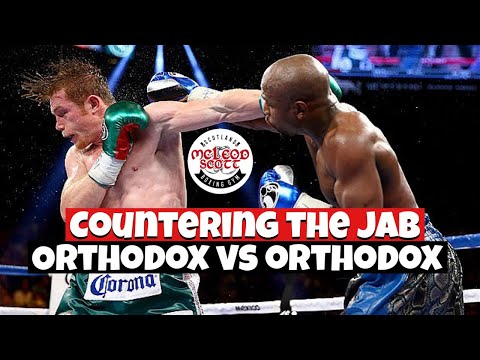
How to counter the Jab | Orthodox vs Orthodox | McLeod Scott Boxing
0
Orthodox Jab·McLeod Scott Boxing
80% OFF‼️ Soviet Boxing Online Course 🎥🇷🇺 Use the coupon code SOVIETBOX80 for 80% OFF. Don’t miss out on this incre…
Translation: orthodox jab
The orthodox jab is the standard jab thrown from an orthodox (left-foot-forward) stance, making it a left-hand punch. [1] The orthodox stance became the default fighting position in Western boxing because the majority of fighters are right-handed and benefit from having their power hand in the rear position. [2] Dempsey documented the orthodox jab as the most common fighting stance configuration, noting that approximately 85-90% of boxers fight from the orthodox position. [1] The orthodox jab has been the most studied and documented punch in boxing history. [3]
The orthodox jab is thrown from the left hand in orthodox stance. [1]
The fundamental jab for orthodox (left-hand-forward) fighters. [1]
The most commonly thrown punch in boxing and MMA. [1]
No images yet for this technique.
Sign in to suggest an image.
80% OFF‼️ Soviet Boxing Online Course 🎥🇷🇺 Use the coupon code SOVIETBOX80 for 80% OFF. Don’t miss out on this incre…
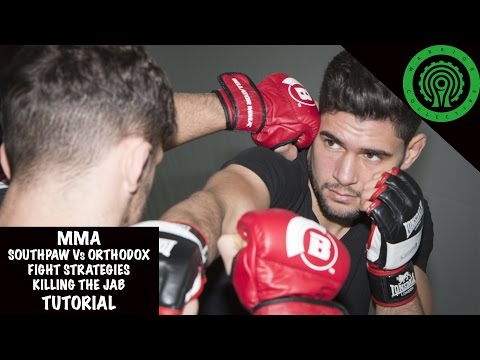
Pietro Menga, Bellator Pro Fighter, undefeated Top UK prospect and head instructor of One MMA Academy in Swinton is here…
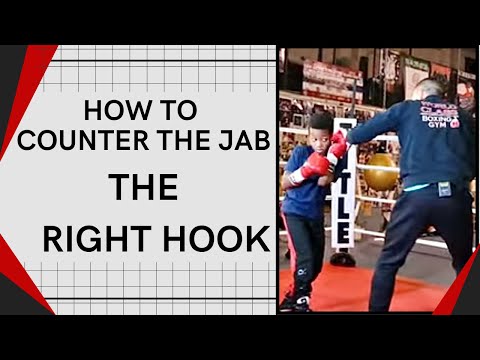
How To Counter The Jab With The Right Hook - Southpaw vs Orthodox. Tom Yankello of the @World Class Boxing Channel te…
The orthodox jab serves as a foundational offensive tool in both boxing and MMA, typically delivered by the lead hand in orthodox stance. Instructors across disciplines emphasize the jab's role in range-finding and combination setup. World Class Boxing Channel demonstrates that the jab establishes distance and can be deliberately thrown to bait defensive responses, setting up counter-opportunities for the opponent. Stuart Tomlinson's MMA instruction highlights defensive principles applicable to jab-heavy offense: parrying the incoming jab and countering with high-percentage opposite-side or same-side combinations. The jab's effectiveness in southpaw versus orthodox matchups is noted by both World Class Boxing and Stuart Tomlinson as a key engagement tool requiring specific defensive mechanics. World Class Boxing emphasizes the mechanical principle that faster jabs generate greater deflection when parried with minimal effort, while Tomlinson stresses that defensive responses to the jab should immediately transition into counter-strikes or takedown setups rather than passive blocking. Both boxing and MMA applications treat the jab as the initiating strike in multi-punch combinations, with the understanding that single-shot exchanges favor the jab's speed advantage, necessitating defensive strategies that employ numerical advantage through combination counters.
Synthesized from 3 instructors
No instructional courses yet for this technique.
Sign in to suggest a course.
Risk of injury to the person this technique is applied to
Jab/cross; fundamental striking tool, cumulative brain trauma risk
Skill level needed to execute this technique reliably
Whether this technique is allowed under major competition rule sets
Karate-Do Kyohan: The Master Text (Gichin Funakoshi, 1935)
Alias sources — [1] Championship Fighting (Dempsey, 1950) [2] Boxing (Fleischer, 1958) [3] The Sweet Science (Liebling, 1956)
History sources — [1] Championship Fighting (Dempsey, 1950) [2] Boxing (Haislet, 1940) [3] The Art of Boxing and Manual of Training (Price, 1867)
Standard katakana transliteration of Western martial arts terminology (外来語) — used in Japanese MMA, boxing, and BJJ communities
Alias sources — [1] Championship Fighting (Dempsey, 1950) [2] Boxing (Fleischer, 1958) [3] The Sweet Science (Liebling, 1956)
History sources — [1] Championship Fighting (Dempsey, 1950) [2] Boxing (Haislet, 1940) [3] The Art of Boxing and Manual of Training (Price, 1867)
hand speed, shoulder endurance, quick retraction
longer reach for keeping opponents at distance
anterior deltoid, triceps, serratus anterior, core
Every move, in any martial art, shares a few universal traits. Mix and match below to pinpoint the right tool — or compare equivalents across styles.
A jab directed at the opponent's midsection, typically accompanied by a slight bend of the knees and lowering of the stance to change the angle of attack.
A loose, whipping jab thrown from a low guard with the arm nearly fully extended, popularized by Thomas Hearns and Naseem Hamed.
A jab thrown with increased commitment and hip rotation to deliver greater impact, sacrificing some speed and recovery time.
A rigid, forceful jab that locks out fully on impact to push the opponent back and disrupt their forward movement, prioritizing stopping power over speed.
Use a parry to divert the jab while turning your hips counterclockwise, then counter with your right hook. Stuart Tomlinson recommends following this by throwing a cross and leg kick to create a high-percentage counter combination.
Practice the counter on the pads and with partners, use shadow boxing with visualization, and develop the timing against different opponents. Visualization is emphasized as essential when shadow boxing to build proper technique.
Yes, you can add a hook to the body or hook to the head after your initial counter. You can also layer in additional punches like a cross, or for MMA add a leg kick to set up takedowns.
A standard jab thrown from an orthodox (left-foot-forward) stance, extending the left fist straight toward the target.
The orthodox jab is the standard jab thrown from an orthodox (left-foot-forward) stance, making it a left-hand punch. The orthodox stance became the default fighting position in Western boxing because the majority of fighters are right-handed and benefit from having their power hand in the rear position.
Unified MMA: legal — Legal striking technique; WBC/Boxing: legal — Legal — punches are the core technique of boxing; WKF: legal — Legal, jodan/chudan punch scores 1 point (yuko) — controlled contact required; Kyokushin: restricted — Body punches legal at full power, head punches banned; WT: restricted — Punches to trunk only (1 point), punches to head banned; ITF: legal — Legal — hand techniques to head and body both permitted; WAKO: legal — Legal in Full Contact and Low Kick formats; K: legal — 1/GLORY — Legal — full power punches to head and body; IFMA: legal — Legal
Danger rating 5/10. High — jab/cross; fundamental striking tool, cumulative brain trauma risk
The standard setup chain: Fighting Stance → Weight Transfer → Extend → Snap Back.
Standard counters include: Slip — move the head off the centre line to evade the punch / Parry — deflect the incoming punch with a quick hand redirection / Counter Cross — time a straight punch over the incoming attack.
Common variants: Standard jab (quick, straight lead-hand punch from orthodox stance); Power jab (stepping into the jab with more body weight for increased…); Double jab (two rapid jabs to set up a follow-up power shot); Body jab (targeting the midsection instead of the head).
The most commonly thrown punch in boxing and MMA.
Top errors to watch for: Standing too square so the jab has to travel farther and exposes the centre of the body / Stepping with the rear foot first, which crosses the feet and kills balance / Throwing the jab without any lead shoulder turn, reducing both reach and power / Letting the right hand drift from the chin during the jab — the cross counter comes from this opening.
The Orthodox Jab is also known as Ōsodokkusu Jabu, Right-Handed Jab, Standard Orthodox Lead, Left Jab.