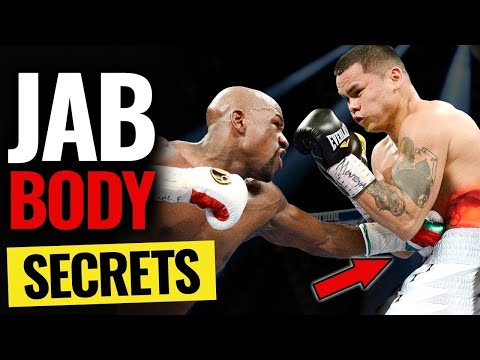
Body Jab

Variety

Translation: body jab

Range & classification

Category
Strike & defenceLocksClose rangeFighting multiple people
Distance
CloseMiddleLong
Limb angle
Zero180–135Β°135–90Β°90–45Β°45–0Β°
Body target
Upper bodyMiddle bodyLower body

Overview

A jab directed at the opponent's midsection, typically accompanied by a slight bend of the knees and lowering of the stance to change the angle of attack.

Also known as
Jab to the BodyBoxing[1]Low JabBoxing[2]Downward JabBoxing[3]

History & Origin

The body jab is a lead-hand straight punch directed at the opponent's midsection, requiring the puncher to dip slightly at the knees to align the fist with the body target. [1] Dempsey emphasised the importance of the body jab in Championship Fighting, noting that it disrupts the opponent's breathing, lowers their guard, and opens the head for follow-up punches. [1] The body jab was a key tactical element in the 'body first, then head' strategy that characterised many great fighters' approaches, including Henry Armstrong's relentless body-punching style in the 1930s-1940s. [2]

Country of originΒ· shown in random order

  • EnglandBoxing
  • GreeceBoxing
  • BrazilMMA
  • USAMMA, Kickboxing
  • JapanKickboxing
  • ChinaSanda

Effectiveness

The body jab targets the opponent's midsection with a straight lead punch. [1]

Lineage

A boxing technique for body work. [1]

Competition Record

Used in boxing and MMA. [1]

Images

No images yet for this technique.

Sign in to suggest an image.

Biomechanical Mechanism

Primary Action β€” Ballistic extension of the arm β€” kinetic chain transfers force from the ground through the hips to the fist
Joints Involved β€” Shoulder (flexion/rotation), elbow (rapid extension), wrist (stabilised on impact), hips (rotation)
Force Vector β€” Linear (jab, cross) or circular (hook, overhand) depending on the punch type
Kinetic Chain β€” Ground reaction force β†’ hip rotation β†’ torso rotation β†’ shoulder extension β†’ fist impact β€” each link amplifies velocity

Position & Entry

From orthodox stance β€” Extend the lead hand straight toward the target, snap back to guard, keep rear hand protecting the chin
From southpaw stance β€” Same mechanics from the opposite side β€” lead left hand becomes a right jab
As range finder β€” Use the jab at long range to measure distance before committing to power shots

Variants

Standard jab β€” quick, straight lead-hand punch from orthodox stance
Power jab β€” stepping into the jab with more body weight for increased impact
Double jab β€” two rapid jabs to set up a follow-up power shot
Body jab β€” targeting the midsection instead of the head

Videos

Master the Jab to the Body

0
Body JabΒ·Tony Jeffries

Tony Jeffries on how to master the jab to the body. This jab punch is the most unused punch in boxing but could be good …

1 video

Learn This Technique

No instructional courses yet for this technique.

Sign in to suggest a course.

Ratings

Danger Rating

Risk of injury to the person this technique is applied to

5
High5/10

Jab/cross; fundamental striking tool, cumulative brain trauma risk

Difficulty

Skill level needed to execute this technique reliably

Beginner
Competition Legality

Whether this technique is allowed under major competition rule sets

Restricted
Kyokushin β€” Body punches legal at full power, head punches banned {srcβ€” IKO Kyokushin Tournament Rules}
β€” 1 point
WT Competition Rules 2024PDF
Legal
β€” Unified MMA β€” Legal striking technique
Unified Rules of MMA, August 2025PDF
WBC/Boxing β€” Legal β€” punches are the core technique of boxing {srcβ€” WBC Rules of Boxing}
β€” ITF β€” Legal β€” hand techniques to head and body both permi...
ITF Competition RulesPDF
β€” WAKO β€” Legal in Full Contact and Low Kick formats
WAKO Competition RulesPDF
K-1/GLORY β€” Legal β€” full power punches to head and body {srcβ€” K-1/GLORY Kickboxing Rules}
β€” IFMA β€” Legal
IFMA Muay Thai RulesPDF

Training Notes

βœ“Bend at the knees to drop your level β€” do not bend at the waist, which exposes the head
βœ“The fist travels on a slightly downward angle to the solar plexus or liver area
βœ“Use the body jab to change the opponent's guard height: once they start looking low, the head opens up
βœ“Time the body jab when the opponent's elbows lift, such as after they throw a hook or uppercut
βœ“Step to a slight angle as you dip to avoid being in the direct line of a counter
βœ“The body jab is underused but highly effective at draining an opponent's stamina over rounds
βœ“Gennady Golovkin's body jab demonstrated how a stiff jab to the midsection freezes opponents and opens up the head

Common Mistakes

!Bending at the waist instead of the knees β€” your head drops forward directly into uppercut range
!Dropping both hands to go low instead of keeping the rear hand on the chin
!Not changing level before throwing, which telegraphs the body shot as the hand drops
!Coming straight back up to head height after the body jab without moving the head offline
!Jabbing the body without stepping off the centre line, staying in range for a counter
!Throwing the body jab too softly β€” it must have snap to actually affect the opponent
!Using the body jab only as a single shot rather than incorporating it into level-changing combinations

Related Techniques

Counter Techniques

Setup Chain

1Fighting Stance β€” begin from a balanced stance with hands protecting the chin
2Weight Transfer β€” shift weight from rear to lead foot (jab) or rotate hips (cross)
3Extend β€” drive the fist straight toward the target along the centre line
4Snap Back β€” retract the hand quickly to defensive position

Sources & References

Primary Source

Muay Thai: The Art of Fighting (Yod Ruerngsa, Khun Kao Charuad & James Cartmell, 2002)

1BookBoxing (Dempsey, 1950)

Alias sources β€” [1] Championship Fighting (Dempsey, 1950) [2] Boxing (Fleischer, 1958) [3] Boxing Mastery (Hatmaker, 2004)

2BookThe Boxing Register (Roberts & Skutt, 2006)

History sources β€” [1] Championship Fighting (Dempsey, 1950) [2] Boxing's Greatest Fighters (Sugar, 2006)

3OtherJapanese Combat Sports Katakana Convention

Standard katakana transliteration of Western martial arts terminology (ε€–ζ₯θͺž) β€” used in Japanese MMA, boxing, and BJJ communities

4CitationBoxing (Dempsey, 1950)

Alias sources β€” [1] Championship Fighting (Dempsey, 1950) [2] Boxing (Fleischer, 1958) [3] Boxing Mastery (Hatmaker, 2004)

5CitationThe Boxing Register (Roberts & Skutt, 2006)

History sources β€” [1] Championship Fighting (Dempsey, 1950) [2] Boxing's Greatest Fighters (Sugar, 2006)

Community

Athletics

Requires

hand speed, shoulder endurance, quick retraction

Favours

longer reach for keeping opponents at distance

Key muscles

anterior deltoid, triceps, serratus anterior, core

Frequently Asked Questions

When should I throw a body jab, and what should I watch out for?

Tony Jeffries warns that throwing a body jab leaves you open to a cross or overhand right from your opponent, so you need to be aware of this counter-attack risk when you commit to the shot.

How should I execute a body jab to avoid getting countered?

Focus on speed rather than power and step with the jab to get the punch there fasterβ€”if your opponent sees the punch coming, they're less likely to catch you with a counter.

How does the Body Jab work?

A jab directed at the opponent's midsection, typically accompanied by a slight bend of the knees and lowering of the stance to change the angle of attack.

Where does the Body Jab come from?

The body jab is a lead-hand straight punch directed at the opponent's midsection, requiring the puncher to dip slightly at the knees to align the fist with the body target. Dempsey emphasised the importance of the body jab in Championship Fighting, noting that it disrupts the opponent's breathing, lowers their guard, and opens the head for follow-up punches.

Is the Body Jab legal in competition?

Unified MMA: legal β€” Legal striking technique; WBC/Boxing: legal β€” Legal β€” punches are the core technique of boxing; WKF: legal β€” Legal, jodan/chudan punch scores 1 point (yuko) β€” controlled contact required; Kyokushin: restricted β€” Body punches legal at full power, head punches banned; WT: restricted β€” Punches to trunk only (1 point), punches to head banned; ITF: legal β€” Legal β€” hand techniques to head and body both permitted; WAKO: legal β€” Legal in Full Contact and Low Kick formats; K: legal β€” 1/GLORY β€” Legal β€” full power punches to head and body; IFMA: legal β€” Legal

How dangerous is the Body Jab?

Danger rating 5/10. High β€” jab/cross; fundamental striking tool, cumulative brain trauma risk

How do I set up the Body Jab?

The standard setup chain: Fighting Stance β†’ Weight Transfer β†’ Extend β†’ Snap Back.

How do I defend against the Body Jab?

Standard counters include: Slip β€” move the head off the centre line to evade the punch / Parry β€” deflect the incoming punch with a quick hand redirection / Counter Cross β€” time a straight punch over the incoming attack.

What are the variants of the Body Jab?

Common variants: Standard jab (quick, straight lead-hand punch from orthodox stance); Power jab (stepping into the jab with more body weight for increased…); Double jab (two rapid jabs to set up a follow-up power shot); Body jab (targeting the midsection instead of the head).

How effective is the Body Jab in competition?

Used in boxing and MMA.

What are common mistakes when doing the Body Jab?

Top errors to watch for: Bending at the waist instead of the knees β€” your head drops forward directly into uppercut range / Dropping both hands to go low instead of keeping the rear hand on the chin / Not changing level before throwing, which telegraphs the body shot as the hand drops / Coming straight back up to head height after the body jab without moving the head offline.

What are other names for the Body Jab?

The Body Jab is also known as Bodi Jabu, Jab to the Body, Low Jab, Downward Jab.