The Jab - Striking Tools Video Example
0
Standard Jab·corejkd
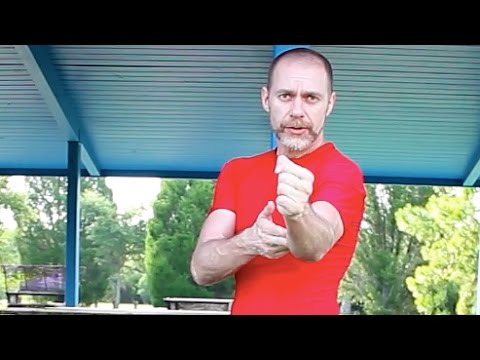
Ming details the Core JKD Jab. The specific technique and how to execute it and the Wing Chun Vertical Fist. This is a s…
Translation: standard jab
The standard jab is the basic lead-hand straight punch thrown from a conventional fighting stance, forming the single most important technique in boxing. [1] Dempsey described the standard jab as the 'foundation upon which all combination punching is built,' noting that a sharp jab keeps opponents defensive and creates openings for power punches. [1] Haislet documented the standard jab as requiring a quick extension of the lead hand with minimal body movement, returning to guard immediately after impact. [2] The standard form has remained essentially unchanged since the late 19th century, though hand positioning and guard styles have evolved. [3]
The jab is widely regarded as the single most important punch in boxing, serving as the primary tool for range-finding, setting up power shots, disrupting rhythm, and scoring points. [1] Jack Dempsey described the jab as the foundation upon which all combination punching is built, noting that a sharp jab keeps opponents defensive and creates openings for the cross and hook. [1] CompuBox statistics from professional boxing consistently show the jab as the most frequently thrown punch, typically comprising 50-60% of all punches landed in a bout. [2]
The jab evolved within the English boxing tradition following the adoption of the Marquess of Queensberry Rules in 1867, which mandated gloves and made lead-hand techniques practical. [1] James J. Corbett (1866-1933) is widely credited as the first heavyweight champion to use the jab systematically as a scientific boxing weapon, defeating John L. Sullivan in 1892. [2] The technique was refined by subsequent champions including Jack Johnson, Gene Tunney, and Muhammad Ali, whose rapid jab became his signature weapon. [2]
Larry Holmes maintained one of boxing's most celebrated jabs, using it to compile a 48-0 record and defend the heavyweight title 20 times (1978-1985). [1] Muhammad Ali's jab was central to his three heavyweight championship reigns, with his ability to double and triple the jab from range considered a defining characteristic of his style. [2] In MMA, the jab has become increasingly valued, with fighters like Max Holloway and Alexander Volkanovski using high-volume jabs to dominate UFC title fights. [3]
No images yet for this technique.
Sign in to suggest an image.
Ming details the Core JKD Jab. The specific technique and how to execute it and the Wing Chun Vertical Fist. This is a s…
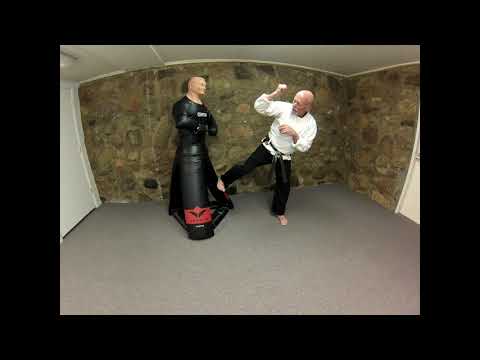
Lesson #7 - The Side Kick, Chin-Jab Attack Combination in the American Combato System. Taught by 7th Degree Blackbelt Pr…
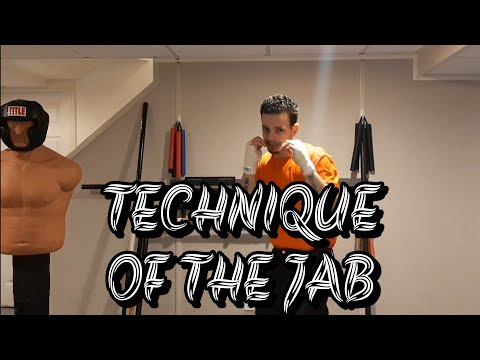
Perfecting the jab for a boxer or mma fighter The jab is the first strike you want to perfect as a fighter As a amazon…
The standard jab is the lead hand's fastest striking tool, fundamental to boxing, MMA, and self-defense. All three instructors emphasize that the jab originates from the lead foot—the left hand in orthodox stance, the right in southpaw—making it the shortest distance to target. CoreJKD and PRIDE MARTIAL ARTS both stress maintaining an upright, relaxed posture with the elbow kept in tight to the body, rotating from the hips and shoulders to generate power while preserving defensive position. The strike should travel in a straight line from the face, with the rear hand remaining as cover throughout. PRIDE MARTIAL ARTS and CoreJKD agree on proper foot placement, with the stance width maintained to support follow-up techniques; CoreJKD specifically emphasizes keeping hips square to the opponent to facilitate rear-hand techniques and rear kicks. PRIDE MARTIAL ARTS details progressive training methods—shadowboxing, heavy bag work, pad drills, then step jabs with forward momentum—and highlights the jab's utility in controlling distance, setting combinations, and creating angles. CoreJKD introduces the vertical-fist variation from Wing Chun as an alternative when 'being serious,' with the elbow firing from the hip for maximum efficiency. Real World Self Defense contextualizes the jab within the chin-jab combination used in self-defense scenarios, though their emphasis is situational awareness rather than striking mechanics per se. All instructors agree relaxation during the movement, with tension applied only at impact, prevents telegraphing and preserves mobility.
Synthesized from 3 instructors
No instructional courses yet for this technique.
Sign in to suggest a course.
Risk of injury to the person this technique is applied to
Jab/cross; fundamental striking tool, cumulative brain trauma risk
Skill level needed to execute this technique reliably
Whether this technique is allowed under major competition rule sets
Karate-Do Kyohan: The Master Text (Gichin Funakoshi, 1935)
Alias sources — [1] Championship Fighting (Dempsey, 1950) [2] Karate-Do Kyohan (Funakoshi, 1935) [3] Boxing (Fleischer, 1958)
Effectiveness sources — [1] Championship Fighting (Dempsey, 1950) [2] CompuBox Punch Statistics (CompuBox Inc., est. 1985)
Standard katakana transliteration of Western martial arts terminology (外来語) — used in Japanese MMA, boxing, and BJJ communities
Alias sources — [1] Championship Fighting (Dempsey, 1950) [2] Karate-Do Kyohan (Funakoshi, 1935) [3] Boxing (Fleischer, 1958)
Effectiveness sources — [1] Championship Fighting (Dempsey, 1950) [2] CompuBox Punch Statistics (CompuBox Inc., est. 1985)
hand speed, shoulder endurance, quick retraction
longer reach for keeping opponents at distance
anterior deltoid, triceps, serratus anterior, core
Every move, in any martial art, shares a few universal traits. Mix and match below to pinpoint the right tool — or compare equivalents across styles.
A standard jab thrown from an orthodox (left-foot-forward) stance, extending the left fist straight toward the target.
A jab thrown from a southpaw (right-foot-forward) stance, extending the right fist straight toward the target.
The jab is the foundation punch for boxers, MMA fighters, and self-defense practitioners because most combinations are built off it, such as the basic 1-2 (jab-cross). Since the shortest distance between two objects is a straight line, the jab's straight trajectory makes it efficient and foundational to develop first.
Keep your elbow in and the jab traveling straight forward, stay relaxed throughout your body, turn your fist as you extend, and exhale on the strike. Land your shot before full extension with a slight bend still in your elbow, then snap it back to your starting position at the jaw.
Start with shadowboxing in front of a mirror, keeping your hands loose and relaxed to maintain defensive mobility. Focus on stretching the punch out using your full reach, then snapping it back to your jaw, and keep your elbow in throughout. Repetition is key before moving on to other techniques.
A good jab keeps your opponent off you by sticking them at the end of your reach as soon as they step into range. If you have less reach than your opponent, a strong step jab allows you to move forward safely while giving your opponent something to deal with, helping you close the gap and get into striking range.
Never stand tall and throw down to the body; instead, use your legs to get low and maintain a straight line from shoulder to fist, jabbing straight into the body. Move your head as you drop, ensuring you stay defensive while throwing.
The fundamental lead-hand straight punch thrown from a stationary stance with a quick snap of the arm and minimal hip rotation.
The standard jab is the basic lead-hand straight punch thrown from a conventional fighting stance, forming the single most important technique in boxing. Dempsey described the standard jab as the 'foundation upon which all combination punching is built,' noting that a sharp jab keeps opponents defensive and creates openings for power punches.
Unified MMA: legal — Legal striking technique; WBC/Boxing: legal — Legal — punches are the core technique of boxing; WKF: legal — Legal, jodan/chudan punch scores 1 point (yuko) — controlled contact required; Kyokushin: restricted — Body punches legal at full power, head punches banned; WT: restricted — Punches to trunk only (1 point), punches to head banned; ITF: legal — Legal — hand techniques to head and body both permitted; WAKO: legal — Legal in Full Contact and Low Kick formats; K: legal — 1/GLORY — Legal — full power punches to head and body; IFMA: legal — Legal
Danger rating 5/10. High — jab/cross; fundamental striking tool, cumulative brain trauma risk
The standard setup chain: Fighting Stance → Weight Transfer → Extend → Snap Back.
Standard counters include: Slip — move the head off the centre line to evade the punch / Parry — deflect the incoming punch with a quick hand redirection / Counter Cross — time a straight punch over the incoming attack.
Common variants: Standard jab (quick, straight lead-hand punch from orthodox stance); Power jab (stepping into the jab with more body weight for increased…); Double jab (two rapid jabs to set up a follow-up power shot); Body jab (targeting the midsection instead of the head).
Larry Holmes maintained one of boxing's most celebrated jabs, using it to compile a 48-0 record and defend the heavyweight title 20 times (1978-1985). Muhammad Ali's jab was central to his three heavyweight championship reigns, with his ability to double and triple the jab from range considered a defining characteristic of his style.
Top errors to watch for: Winding up by pulling the hand back before punching — the jab fires from wherever it currently sits / Lifting the elbow before extending, which flares the punch outward and reduces accuracy / Not rotating the shoulder forward, which costs several inches of reach / Leaning forward instead of extending the arm — moves the head into danger.
The Standard Jab is also known as Sutandādo Jabu, Standard Lead Punch, Kizami Tsuki, Straight Lead.