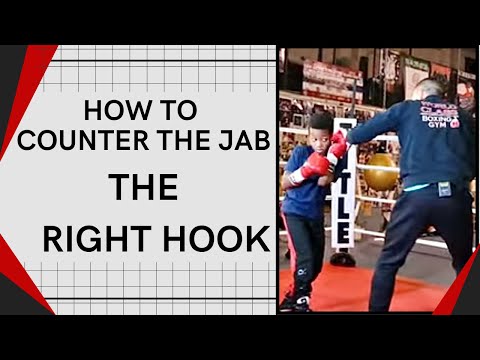
How To Counter The Jab With The Right Hook - Southpaw vs Orthodox
0
Stiff Jab·World Class Boxing Channel
How To Counter The Jab With The Right Hook - Southpaw vs Orthodox. Tom Yankello of the @World Class Boxing Channel te…
Translation: stiff jab
The stiff jab locks the wrist and elbow at impact to deliver a jarring, pushing force rather than a snapping blow, designed to stop the opponent's forward momentum. [1] The stiff jab was particularly associated with Lennox Lewis, whose 84-inch reach and rigid jab stopped opponents in their tracks. [2] Dempsey documented the stiff jab as a variation that sacrifices the snap-back speed of the standard jab for greater stopping power and range control. [1] The technique is especially effective against pressure fighters who attempt to walk through lighter jabs. [2]
The stiff jab emphasises full arm extension and forward push for maximum stopping power. [1]
Used by tall, rangy fighters in boxing and MMA. [1]
No images yet for this technique.
Sign in to suggest an image.
How To Counter The Jab With The Right Hook - Southpaw vs Orthodox. Tom Yankello of the @World Class Boxing Channel te…
No instructional courses yet for this technique.
Sign in to suggest a course.
Risk of injury to the person this technique is applied to
Jab/cross; fundamental striking tool, cumulative brain trauma risk
Skill level needed to execute this technique reliably
Whether this technique is allowed under major competition rule sets
Karate-Do Kyohan: The Master Text (Gichin Funakoshi, 1935)
Alias sources — [1] Championship Fighting (Dempsey, 1950) [2] Boxing (Fleischer, 1958) [3] The Sweet Science (Liebling, 1956)
Effectiveness sources — [1] Championship Fighting (Dempsey, 1950)
Standard katakana transliteration of Western martial arts terminology (外来語) — used in Japanese MMA, boxing, and BJJ communities
Alias sources — [1] Championship Fighting (Dempsey, 1950) [2] Boxing (Fleischer, 1958) [3] The Sweet Science (Liebling, 1956)
Effectiveness sources — [1] Championship Fighting (Dempsey, 1950)
hand speed, shoulder endurance, quick retraction
longer reach for keeping opponents at distance
anterior deltoid, triceps, serratus anterior, core
Turn your hips counterclockwise to divert the incoming jab, then deliver your right hook as a counter. World Class Boxing Channel demonstrates this by parrying the jab while rotating the hips to generate power for the hook.
Practice on the heavy bags and pads with a partner, and use shadow boxing with visualization. World Class Boxing Channel emphasizes that visualization is crucial when shadow boxing to develop proper technique.
A rigid, forceful jab that locks out fully on impact to push the opponent back and disrupt their forward movement, prioritizing stopping power over speed.
The stiff jab locks the wrist and elbow at impact to deliver a jarring, pushing force rather than a snapping blow, designed to stop the opponent's forward momentum. The stiff jab was particularly associated with Lennox Lewis, whose 84-inch reach and rigid jab stopped opponents in their tracks.
Unified MMA: legal — Legal striking technique; WBC/Boxing: legal — Legal — punches are the core technique of boxing; WKF: legal — Legal, jodan/chudan punch scores 1 point (yuko) — controlled contact required; Kyokushin: restricted — Body punches legal at full power, head punches banned; WT: restricted — Punches to trunk only (1 point), punches to head banned; ITF: legal — Legal — hand techniques to head and body both permitted; WAKO: legal — Legal in Full Contact and Low Kick formats; K: legal — 1/GLORY — Legal — full power punches to head and body; IFMA: legal — Legal
Danger rating 5/10. High — jab/cross; fundamental striking tool, cumulative brain trauma risk
The standard setup chain: Fighting Stance → Weight Transfer → Extend → Snap Back.
Standard counters include: Slip — move the head off the centre line to evade the punch / Parry — deflect the incoming punch with a quick hand redirection / Counter Cross — time a straight punch over the incoming attack.
Common variants: Standard jab (quick, straight lead-hand punch from orthodox stance); Power jab (stepping into the jab with more body weight for increased…); Double jab (two rapid jabs to set up a follow-up power shot); Body jab (targeting the midsection instead of the head).
Used by tall, rangy fighters in boxing and MMA.
Top errors to watch for: Pushing the opponent away with a straight arm without any snap at the point of contact — it becomes a foul (pushing) / Locking the arm before reaching the target, which reduces impact and looks like an extended arm rather than a punch / Leaving the stiff jab out too long — even though it lingers more than a snap jab, it must still return to guard / Using the stiff jab in close range where the opponent can slip under the extended arm and counter inside.
The Stiff Jab is also known as Sutifu Jabu, Power Jab, Posting Jab, Ramrod Jab.