The History of the Jab
0
Jab·TheoryFighter
#streetfighter #gaming #fightinggames Had to make a few generalisations here, there is normally at least one or two un…
Translation: jab
The jab is the lead-hand straight punch and the most frequently thrown technique in boxing, serving as both an offensive and defensive tool. [1] The jab evolved within the English boxing tradition following the adoption of the Queensberry Rules in 1867, which mandated gloves and made lead-hand techniques practical for scoring. [2] James J. Corbett (1866-1933) is widely credited as the first heavyweight champion to use the jab systematically, defeating John L. Sullivan in 1892 with what was described as 'scientific boxing.' [3] The jab was subsequently refined by every major boxing champion, with Dempsey describing it as 'the most important single punch in fighting' in his 1950 manual. [1]
The jab is the cornerstone of boxing technique, developed alongside the sport's evolution from bare-knuckle fighting. [1]
The jab is the most frequently thrown punch in boxing and MMA, used for range-finding, scoring, and setting up power shots. [1]
No images yet for this technique.
Sign in to suggest an image.
#streetfighter #gaming #fightinggames Had to make a few generalisations here, there is normally at least one or two un…
🎥UNLEASH THE THRILL OF AGGRESSION MINI-COURSE Calling all Ladies!!! Download your course here: https://www.salbox.co.u…
No instructional courses yet for this technique.
Sign in to suggest a course.
Risk of injury to the person this technique is applied to
Jab/cross; fundamental striking tool, cumulative brain trauma risk
Skill level needed to execute this technique reliably
Whether this technique is allowed under major competition rule sets
Karate-Do Kyohan: The Master Text (Gichin Funakoshi, 1935)
Alias sources — [1] Karate-Do Kyohan (Funakoshi, 1935) [2] Championship Fighting (Dempsey, 1950) [3] Boxing (Fleischer, 1958)
History sources — [1] Championship Fighting (Dempsey, 1950) [2] The Art of Boxing and Manual of Training (Price, 1867) [3] Boxing's Greatest Fighters (Sugar, 2006)
Standard katakana transliteration of Western martial arts terminology (外来語) — used in Japanese MMA, boxing, and BJJ communities
Alias sources — [1] Karate-Do Kyohan (Funakoshi, 1935) [2] Championship Fighting (Dempsey, 1950) [3] Boxing (Fleischer, 1958)
History sources — [1] Championship Fighting (Dempsey, 1950) [2] The Art of Boxing and Manual of Training (Price, 1867) [3] Boxing's Greatest Fighters (Sugar, 2006)
hand speed, shoulder endurance, quick retraction
longer reach for keeping opponents at distance
anterior deltoid, triceps, serratus anterior, core
Every move, in any martial art, shares a few universal traits. Mix and match below to pinpoint the right tool — or compare equivalents across styles.
Two consecutive jabs thrown in quick succession with the lead hand, often used to set up the cross or to disrupt the opponent's timing.
A jab thrown while stepping backward, used to maintain distance, score points, and discourage opponents from pursuing aggressively.
The fundamental lead-hand straight punch thrown from a stationary stance with a quick snap of the arm and minimal hip rotation.
A jab thrown while simultaneously stepping forward with the lead foot, closing distance and adding body mass to the punch for increased power.
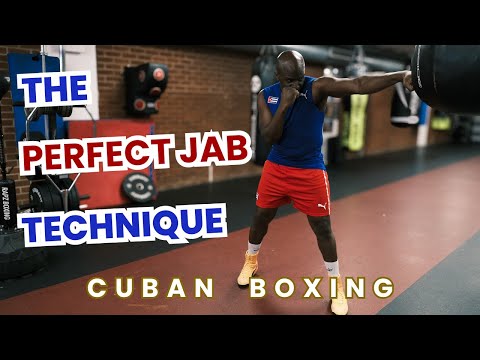
According to Charles Salbox, the jab is the most important punch in boxing and serves primarily as a point-scoring punch rather than a power punch. It should be a fundamental tool in every boxer's toolkit.
Charles Salbox emphasizes that you should make contact with your knuckles rather than the front phalanges, which is why a slight bend in the wrist is important. He recommends using your bent wrist 'like an iron sight' positioned in front of your face.
According to Charles Salbox, weight transfer begins from the rear foot pushing your body forward slightly toward your lead foot, which develops momentum. This allows you to generate power while maintaining the ability to return to your original position and counter attack.
Charles Salbox explains that if you bring the lead hand back too close to your face, it becomes purely defensive and loses its ability to attack, which limits the jab's effectiveness.
A quick, straight punch thrown with the lead hand from the guard position, used primarily as a range finder, setup tool, and defensive weapon.
The jab is the lead-hand straight punch and the most frequently thrown technique in boxing, serving as both an offensive and defensive tool. The jab evolved within the English boxing tradition following the adoption of the Queensberry Rules in 1867, which mandated gloves and made lead-hand techniques practical for scoring.
Unified MMA: legal — Legal striking technique; WBC/Boxing: legal — Legal — punches are the core technique of boxing; WKF: legal — Legal, jodan/chudan punch scores 1 point (yuko) — controlled contact required; Kyokushin: restricted — Body punches legal at full power, head punches banned; WT: restricted — Punches to trunk only (1 point), punches to head banned; ITF: legal — Legal — hand techniques to head and body both permitted; WAKO: legal — Legal in Full Contact and Low Kick formats; K: legal — 1/GLORY — Legal — full power punches to head and body; IFMA: legal — Legal
Danger rating 5/10. High — jab/cross; fundamental striking tool, cumulative brain trauma risk
The standard setup chain: Fighting Stance → Weight Transfer → Extend → Snap Back.
Standard counters include: Slip — move the head off the centre line to evade the punch / Parry — deflect the incoming punch with a quick hand redirection / Counter Cross — time a straight punch over the incoming attack.
Common variants: Standard jab (quick, straight lead-hand punch from orthodox stance); Power jab (stepping into the jab with more body weight for increased…); Double jab (two rapid jabs to set up a follow-up power shot); Body jab (targeting the midsection instead of the head).
The jab is the most frequently thrown punch in boxing and MMA, used for range-finding, scoring, and setting up power shots.
Top errors to watch for: Reaching with the jab by leaning forward — step into range instead of lunging / Throwing the jab from the hip or chest instead of the chin — it takes longer and exposes your face / Telegraphing by pulling the hand back before extending, or by shifting the shoulder visibly / Jabbing without purpose — every jab should set something up or score, not just fill space.
The Jab is also known as Jabu, Kizami Tsuki, Lead Straight, Jab Punch.