Introduction to Safe Hand Placement
White belt practitioners often create unnecessary vulnerabilities through poor hand positioning during grappling exchanges. This segment emphasizes the foundational importance of controlling hand placement to maintain safety, increase defensive effectiveness, and deny opponents submission opportunities.
Hand Positioning in Opponent's Guard
When positioned in an opponent's guard, practitioners should avoid placing hands flat on the mat, which creates exposure to arm lock submissions. Instead, effective positioning involves placing closed fists into the opponent's armpits with forward pressure, creating space to breathe while making submission attacks difficult.
Transitioning from Armpit Control to Guard Break
From secure armpit control, practitioners can transition into a guard break by moving hands to the stomach while simultaneously positioning the knee against the opponent's tailbone. This position enables practitioners to apply downward pressure through the hands while opening their hips and moving the opposite leg backward to facilitate a guard pass or ankle lock setup.
Guard Position Grip Strategy
Rather than using same-side lapel grips, which feel safe but lack effectiveness, practitioners should employ cross-grip techniques by grabbing the sleeve with one hand and the opposite-side lapel with the other. This grip configuration creates spinal rotation that breaks down the opponent's posture more efficiently while appearing more threatening to experienced practitioners.
Spider Guard Setup and Control
Spider guard is achieved by gripping both sleeves and placing the feet against the opponent's biceps near the elbows. This position provides significant control over the opponent's upper body while creating discomfort through foot pressure, forcing the opponent to address the grip configuration before attempting any offensive techniques.
Triangle Choke Execution from Spider Guard
From spider guard, practitioners can set up a triangle choke by loading pressure on one foot against the opponent's arm, then sliding that foot over the arm while pushing away with the opposite leg. Once positioned behind the opponent's head, the practitioner locks the legs to complete the triangle choke submission.
GUARD BASICS-A WHITE BELT GUIDE
Key Takeaways
- •Introduction to Safe Hand Placement
- •Hand Positioning in Opponent's Guard
- •Transitioning from Armpit Control to Guard Break
- •Guard Position Grip Strategy
Today we're covering safe zones, being more effective through better decisions/tactics, and overall being more difficult to tap in Jiu Jitsu. Having a strong defense can really play a number on your opponents mentality, and frustration can begin to creep in which will continue to create opportunities for you. So sit back, relax, and enjoy the video. Train well, Will -Jiu Jitsu drip - https://www.xmartial.com/?ref=WILLBROOKS - code IRONWILL -My coaching - https://info.jackedvegans.com/willbrooks-free-consultation -Vedge Nutrition supplements - code IRONWILL - www.vedgenutrition.com -No Cow protein bars - https://amzn.to/3zLwUwa -My camera - https://amzn.to/3SK6MsX -This camera lens - https://amzn.to/3SXgMio -Electrolyte tabs - https://amzn.to/3yr6YoN -Polar H10 Heart Monitor - https://www.amazon.com/dp/B07H3B1HV6/ref=cm_sw_r_as_gl_api_gl_i_HEPV3MRAK7M9CFVGABCD?linkCode=ml1&tag=willbrooks-20 -Beta Alanine - https://amzn.to/3F02hWq -Weighted Jump Rope - https://amzn.to/3C6Vyb3
Related Techniques
Frequently Asked Questions
What does this video teach about guard position?
This video covers introduction to safe hand placement, hand positioning in opponent's guard, transitioning from armpit control to guard break. It provides detailed instruction from Will Brooks Official.
How long does it take to learn guard position?
The basic mechanics can be understood in a single session, but developing reliable execution requires consistent drilling over weeks of practice. This 6-part breakdown helps structure your training by isolating each phase of the technique.
What are the key details for finishing guard position?
Spider guard is achieved by gripping both sleeves and placing the feet against the opponent's biceps near the elbows. This position provides significant control over the opponent's upper body while creating discomfort through foot pressure, forcing the opponent to address the grip configuration before attempting any offensive techniques.
Related videos
Beginners Guide: Types of Guard in Jiu Jitsu
Absolute MMA St Kilda - Melbourne
Mounted Rubber Guard - 10th Planet Jiu Jitsu
Brandon Mccaghren
Boxing Stance | Learn Long Range vs Short Range Fighting
FightCamp
5 Tips For Fighting At Long Range
Warrior Martial Arts
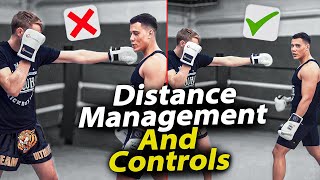
Be A Master Of DISTANCE MANAGEMENT: The Most Important Part Of Fighting | BAZOOKATRAINING.COM
Bazooka Joe Valtellini